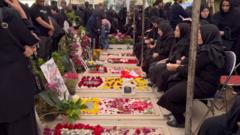
The domestic stability of Iran is currently tethered to a feedback loop of escalating military expenditures and the rapid degradation of civilian purchasing power. While traditional news reporting focuses on the emotional toll of regional conflict, a structural analysis reveals that the Iranian state is navigating a three-front economic crisis: currency debasement, supply chain fracture, and the systemic depletion of the middle-class asset base. Understanding the current environment requires moving beyond anecdotal accounts of hardship to examine the specific mechanisms through which geopolitical friction converts into domestic inflationary pressure.
The Triad of Economic Erosion
The primary driver of instability within the Iranian borders is the synchronization of three distinct failure points. When conflict escalates, these variables do not act in isolation; they compound, creating a non-linear decline in living standards.
- Monetary Velocity and Currency Flight: The Iranian Rial functions as a barometer of regional tension. As the risk of direct kinetic engagement increases, private capital seeks exit strategies, driving the demand for hard currency and gold. This creates a downward spiral where the anticipation of inflation triggers the very capital flight that guarantees it.
- The Supply Chain Risk Premium: Iran’s geography and the existing sanctions regime make its import channels fragile. Potential threats to maritime routes or domestic infrastructure introduce a "risk premium" on basic goods. Importers factor in the probability of loss or delay, passing these costs directly to the consumer before any physical shortage even occurs.
- Fiscal Reallocation: The state’s necessity to fund military readiness and regional proxies necessitates a diversion of capital from domestic subsidies. In a command-leaning economy, the removal of a price floor for fuel or food acts as an immediate tax on the lowest-income deciles, sparking civil unrest.
Structural Inflation vs. Seasonal Scarcity
Observers often mistake the Iranian economic struggle for simple "high prices." In reality, the country is experiencing a transformation of its inflation model. Standard inflation is usually driven by excess demand; Iran is suffering from cost-push inflation exacerbated by asset-bubble psychology.
The price of protein, specifically red meat and poultry, has decoupled from standard CPI metrics. This is the result of the "Feedstock Bottleneck." Because Iran relies heavily on imported soy and corn for livestock, any disruption in the banking sector or shipping lanes results in a direct contraction of the national herd. Farmers, unable to project the cost of feed three months into the future, choose to slaughter livestock early. This creates a temporary glut followed by a permanent, structural supply deficit that pushes prices beyond the reach of the average urban worker.
The Psychology of Anticipatory Hoarding
The Iranian consumer does not behave like a Western consumer. Decisions are made based on the Expected Value of Scarcity. If a citizen believes that a conflict will escalate within the next 30 days, their rational move is to convert all liquid Rial holdings into storable commodities—flour, oil, and medicine.
This behavior creates "phantom shortages." The goods exist within the country’s borders, but they have shifted from retail shelves to private domestic storage. This shift increases the "search cost" for those who did not hoard, further driving the black market rate for essentials. The state’s inability to police these micro-inventories signals a loss of administrative control, which further degrades trust in the central government’s ability to manage the war economy.
The Middle-Class Wealth Cleansing
The most significant strategic shift in the last 24 months is the erosion of the Iranian middle class's ability to hedge against disaster. Historically, real estate in Tehran and other major hubs served as a reliable store of value. However, the current conflict trajectory has introduced a liquidity trap.
- Real Estate Illiquidity: While paper values remain high, the volume of transactions has cratered. Middle-class families find themselves "asset rich but cash poor," unable to liquidate property to fund migration or emergency reserves.
- The Gold Standard of the Street: The unofficial economy has moved almost entirely to gold coins (Bahar Azadi). This creates a bifurcated society: those with access to gold-denominated assets and those trapped in Rial-denominated wages. The gap between these two groups is the primary fault line for future internal conflict.
Energy Infrastructure as a Single Point of Failure
The Iranian state relies on a centralized power and fuel grid that is highly vulnerable to both cyber and kinetic disruption. The "Comfort Threshold" of the Iranian populace is tied directly to the reliability of this infrastructure.
Unlike the 1980s Iran-Iraq war, the modern Iranian economy is digitized and urbanized. A failure in the electrical grid does not just mean dark homes; it means the failure of the digital payment systems that have replaced cash in most urban centers. If the Rial cannot be traded digitally, the "informal" economy of barter and hard currency becomes the only functional system, effectively de-legitimatizing the state's financial apparatus overnight.
Mapping the Logistics of Dissent
Discontent in Iran is not a monolithic sentiment; it is a segmented reaction based on the "Pain-to-Benefit" ratio of the state’s foreign policy.
- The Urban Professional: Views regional conflict as a drain on technical resources and international integration. Their dissent is rooted in the "Opportunity Cost" of war.
- The Industrial Laborer: Faces the direct impact of manufacturing shutdowns due to raw material shortages. Their dissent is driven by "Survival Necessity."
- The Rural Base: Traditionally the state's stronghold, this group is now pressured by the rising cost of agricultural inputs and the failure of rural infrastructure projects as funds are diverted to the defense budget.
The intersection of these three groups occurs when the state can no longer provide the "Social Contract" of subsidized essentials. The current conflict pushes the Iranian budget toward a "War Only" footing, which fundamentally breaks this contract.
The Mechanism of Sanction Adaptation and its Limits
Iran has developed sophisticated "grey market" networks to bypass trade restrictions. However, these networks operate on a "Diminishing Returns" curve. The more intense the regional conflict, the higher the "Bribe and Friction" costs associated with these networks.
Each layer of a grey market transaction adds a percentage to the final cost of the good. In a peaceful but sanctioned environment, this might be 15-20%. In an active conflict environment, where surveillance and risk are heightened, these costs can balloon to 50% or more. The state eventually reaches a point where it can no longer subsidize the friction, leading to a collapse in the import of non-military goods.
Data Gaps and the "Dark Economy"
Any analysis of the Iranian home front must acknowledge the "Statistical Mirage." Official government data regarding inflation and unemployment often fails to account for the "Dark Economy"—the unrecorded exchange of goods, services, and currency that sustains a significant portion of the population.
The true inflation rate is best measured by the "Street Rate" of the US Dollar, which often moves at double the speed of official CPI reports. This discrepancy creates a "Reality Gap" where government policy is being designed for an economy that no longer exists in the eyes of the citizens.
Strategic Trajectory of the Iranian Domestic Front
The Iranian state is currently banking on "Strategic Patience"—the idea that the population can endure extreme economic hardship longer than the state's adversaries can maintain military or diplomatic pressure. However, this strategy ignores the "Elasticity of Endurance."
The domestic population has been under varying degrees of economic pressure for over four decades. The current "Conflict Stress" is being applied to a foundation that is already brittle from years of high inflation and limited capital investment.
The immediate strategic priority for the Iranian leadership is not just military victory, but the prevention of a "Total Market Disconnect." If the civilian population loses all utility for the Rial and moves to a purely decentralized, gold-or-barter economy, the state loses its primary lever of social control: the ability to distribute resources. The transition from a state-managed economy to a fragmented, survivalist economy is the greatest threat to Iranian internal stability, far outweighing the threat of external kinetic strikes.
The next move for observers is to monitor the "Subsidized Goods Index." Any sharp reduction in the availability or the massive price hike of bread and fuel will serve as the terminal trigger for widespread domestic volatility. The state will likely attempt to mitigate this by further tightening capital controls and increasing the presence of internal security forces in logistics hubs, effectively turning the economy into a militarized zone. This pivot will provide short-term stability at the cost of long-term economic viability, cementing a cycle of poverty that will take decades to reverse.