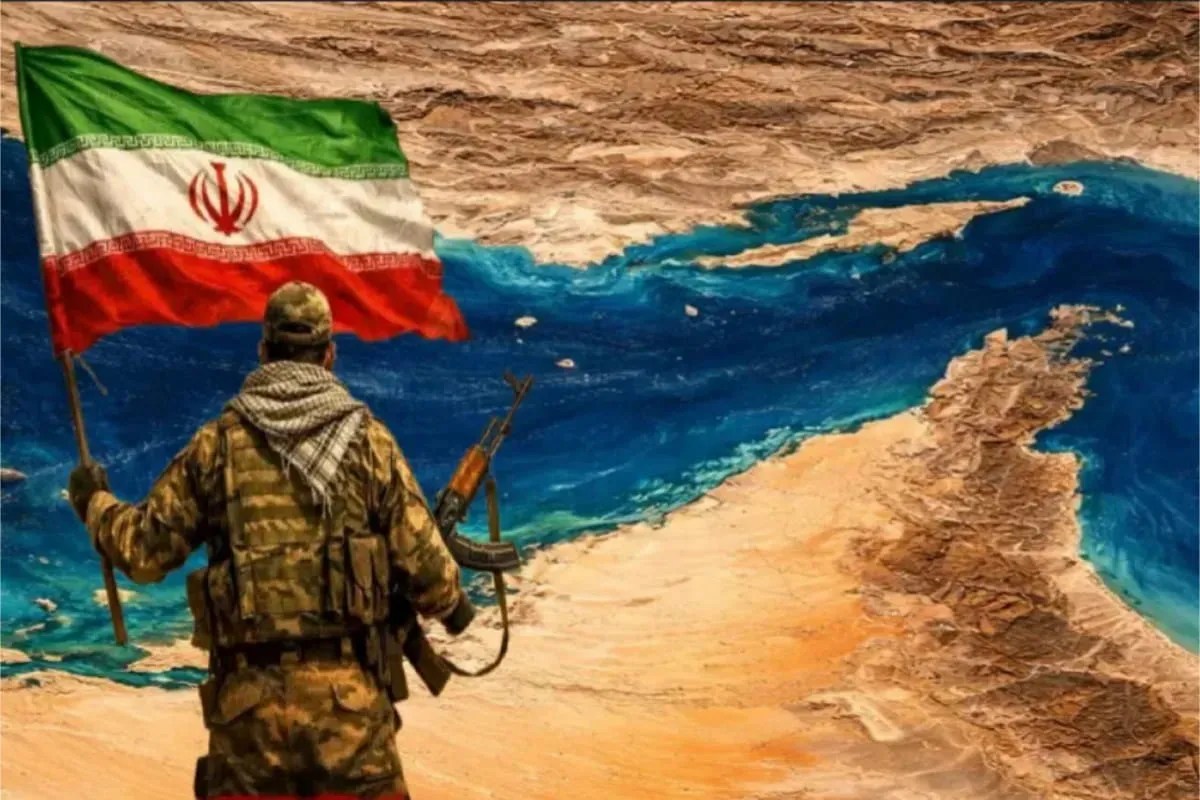
Read the headline again. "आईआरजीसी की चेतावनी – ‘कभी नहीं खुलेगा होर्मुज स्ट्रेट अगर नहीं मानी ईरान की शर्तें’" — the IRGC warning that the Strait of Hormuz will never reopen unless Iran’s conditions are met.
Panic sells. Fear clicks. Headlines like that treat a narrow waterway between Iran and Oman like a light switch sitting on a general’s desk in Tehran. Flip it down, and global oil goes dark forever.
Wrong. Dead wrong.
A full, indefinite closure of the Strait of Hormuz is not a masterstroke of asymmetric warfare. It is economic suicide on a national scale for the very regime issuing the threat. Anyone reading a breathless warning about a permanent chokepoint and picturing an unbreakable naval lock is falling for political theater dressed up as military inevitability.
The real story is not whether the Islamic Revolutionary Guard Corps (IRGC) can make shipping miserable, expensive, or terrifying for a stretch. They can. The real story is the asymmetry of pain, the geography of the chokepoint, and the wrong question almost every panic-driven commentary asks.
You Are Asking the Wrong Question About the Strait of Hormuz
When an IRGC commander declares that the strait will stay shut until Tehran’s demands are met, the reflex question from traders, analysts, and nervous readers is: Can Iran actually pull it off?
Ask a sharper question. What happens to Iran the morning after it tries?
Geography makes the Strait of Hormuz look dramatic on a map. At its narrowest point between Musandam in Oman and the Iranian coast, the waterway is roughly 21 nautical miles wide, with inbound and outbound shipping lanes each about two miles wide separated by a two-mile buffer zone. Deep-draft Very Large Crude Carriers (VLCCs) need sufficient depth and navigable channel width to move safely without running aground or getting trapped in confined waters.
To a headline writer, 21 miles sounds like a keyhole you can slam shut with a few fast-attack craft, shore-based anti-ship missiles, naval mines, and drones. To a maritime strategist or commodity risk manager, a keyhole works both ways.
Chokepoint Reality vs. Blockade Fantasy
In maritime law and naval doctrine, a blockade is a specific legal and operational act aimed at preventing vessels from entering or leaving defined ports or coasts, backed by sustained enforcement. Closing an international strait used for transit passage—a regime governed under the United Nations Convention on the Law of the Law of the Sea (UNCLOS) for straits used for international navigation—is an escalation that crosses straight into armed conflict with major naval powers.
Even short of a formal declaration, harassing tankers with mines, swarms of fast boats, coastal batteries, or drones creates an immediate shock. Insurance premiums spike. War-risk coverage gets pulled or repriced overnight. Shipowners hesitate. Freight rates jump.
That is real disruption. Nobody serious denies that the Strait of Hormuz is a vital artery for global crude oil and liquefied natural gas (LNG), carrying roughly a fifth of global petroleum liquids consumption in normal markets alongside huge volumes of Gulf LNG from exporters like Qatar.
Yet treating temporary harassment or a brief crisis as a "permanent" closure ignores how markets, navies, and economies actually behave under pressure.
The Lazy Consensus Around "Permanent Closure"
Lazy commentary relies on two clichés whenever tensions flare in the Persian Gulf.
First cliché: Iran holds the keys to the world’s oil supply, so if Washington or Riyadh crosses Tehran, Iran simply locks the door and names its price.
Second cliché: Oil prices will rocket into orbit forever until everyone caves to Iranian conditions.
Both clichés miss the basic incentives governing Tehran.
Who Gets Strangled First?
Iran exports its own crude by sea—primarily through Kharg Island in the northern Persian Gulf—out through the exact same waters. A sustained, comprehensive shutdown of the Strait of Hormuz does not neatly seal off Western or Gulf tankers while leaving Iranian exports flowing smoothly to buyers. It bottles up the Persian Gulf itself.
Worse, Iran relies heavily on seaborne trade and regional commerce to keep its economy breathing under sanctions pressure. Strangling maritime traffic in the Gulf invites overwhelming naval and air retaliation against Iranian coastal infrastructure, radar and missile sites, naval bases, and export terminals.
I have watched commodity desks and corporate supply-chain teams blow millions chasing tail-risk headlines after a single inflammatory speech. They hedge blindly at peak fear, buy expensive protection after the spike has already priced in maximum drama, or freeze capital decisions based on worst-case slogans rather than hard operational constraints. Fear is expensive when you trade on rhetoric instead of mechanics.
Why "Never" Doesn't Survive Contact with Reality
Words like "never" belong in speeches for domestic audiences and adversaries, not in serious risk assessments.
In geopolitics, threats of permanent closure are bargaining leverage. The harder a state claims it will never back down without its conditions met, the more it is trying to convince rivals to pay a concession before a shooting war starts—because once a shooting war starts, the threatener loses control over escalation.
Think about that paradox. The value of the threat lies in not having to carry it out completely, or in keeping the disruption calibrated just below total self-destruction. Once you cross the line into an all-out attempt to permanently seal the strait, you turn a regional standoff into a direct confrontation with naval coalitions that have spent decades training specifically for Gulf mine warfare, surface action, and air-defense suppression.
Imagine a Scenario Where Tehran Actually Tries
Imagine a scenario where an IRGC commander orders a full-scale campaign to close the Strait of Hormuz tomorrow morning unless sweeping political and economic demands are accepted within 48 hours.
Walk through the first two weeks logically rather than emotionally.
- Hours 1–24: A handful of vessels are struck, threatened, or warned off by VHF radio. AIS transponders go dark or spoof positions. Brent and WTI jump sharply as traders price in supply risk and panicked headlines flood social feeds.
- Days 2–5: Marine insurers—led by syndicates in London and global P&I clubs—reclassify the zone as high-risk or war-risk excluded without specific premiums. Commercial operators pause transits. Energy-importing economies in Asia and Europe feel the squeeze immediately because Gulf crude and Qatari LNG are harder to replace on short notice than light sweet barrels.
- Days 6–14: Naval escorts, mine countermeasures, surveillance aircraft, and strikes on launch sites and coastal assets ramp up. Meanwhile, major producers with spare pipeline capacity—such as Saudi Arabia’s East-West Pipeline to Yanbu on the Red Sea and the UAE’s Habshan–Fujairah pipeline to the Gulf of Oman—push harder to bypass the strait where infrastructure allows, even though bypass capacity cannot replace 100% of Gulf flows overnight.
Now look at the endgame of that thought experiment. Either Tehran’s demands are met—which requires an unprecedented capitulation under duress that major powers have every incentive to resist rather than reward—or the campaign degrades into a grueling attrition fight where Iran’s own ports, navy, and economy take severe punishment while global markets scramble for alternative grades, strategic reserves, and rerouted cargoes.
A "permanent" closure under those conditions is a fantasy. Sustained military pressure against superior naval and air power cannot hold a 21-mile international chokepoint indefinitely without paying a catastrophic price.
What Serious Analysts Look at Instead of Slogans
If you want to understand Gulf risk like an insider rather than a doomscroller, stop counting fiery quotes and start tracking four concrete indicators.
| Signal to Watch | What Headline Chasers Do | What Insiders Actually Check |
|---|---|---|
| IRGC rhetoric | Treat every ultimatum as a literal timetable | Separate domestic/deterrence signaling from operational deployment |
| Maritime insurance & freight | Guess price targets from cable news | Track war-risk premiums, tanker day rates, and vessel queuing |
| Mine & missile activity | Assume total paralysis on day one | Distinguish isolated harassment from systematic mining/anti-ship fire |
| Bypass & inventory buffers | Panic over gross strait volume alone | Check pipeline flows (Yanbu, Fujairah), SPR releases, and refinery runs |
1. War-Risk Insurance and Vessel Behavior
Money talks before diplomats do. When real danger rises in the Persian Gulf, commercial shipowners and charterers react through war-risk insurance availability, crew refusal premiums, and routing choices. Watch whether tankers linger outside the strait, slow-steam, switch off Automatic Identification System (AIS) broadcasts, or divert. That reveals actual perceived risk far better than a press release.
2. Asymmetric Tactics vs. Total Denial
The IRGC Navy is built around asymmetric warfare: fast-attack craft, anti-ship cruise and ballistic missiles, unmanned surface/aerial vehicles, and naval mines. Those tools are lethal for raising costs, sinking or damaging individual ships, and creating chaos. They are far less effective at maintaining a permanent, airtight blockade against determined naval counter-operations.
3. Pipeline Bypass Limits
Pipelines offer partial relief, not a magic wand. Saudi Arabia’s East-West pipeline and the UAE’s Abu Dhabi Crude Oil Pipeline (ADCOP) to Fujairah give those two producers routes outside the strait, yet total bypass capacity is constrained and doesn't cover all crude grades or LNG exports. Knowing those exact limits keeps you from swinging between "zero risk" and "total blackout."
4. Escalation Control
Every serious defense analyst—from maritime historians to energy economists—knows the hardest part of a chokepoint crisis is off-ramp management. Once shots are fired or mines are laid, both sides face domestic political pressure not to look weak. Miscalculation is the real danger. A stray strike, a misread radar track, or an attacked tanker can trigger a cycle nobody planned to sustain for years.
The Honest Downside of Taking the Contrarian View
Being contrarian does not make you invincible. If I tell you a permanent closure of the Strait of Hormuz is a strategic trap for Iran rather than an unbreakable lock, I owe you the catch.
Here is the downside: you can be right about the long-term strategic logic and still get wiped out by short-term volatility.
Markets do not wait for a six-month geopolitical equilibrium to settle before repricing risk. A single successful attack on a tanker, a credible mining report, or a sudden spike in regional strikes can send oil prices surging in hours, freeze LNG deliveries, disrupt manufacturing schedules, and punish leveraged positions long before naval escorts clear a channel or diplomacy finds a face-saving exit.
Contrarian analysis is not about pretending the risk isn't real. It is about refusing to confuse temporary, painful disruption with permanent geopolitical checkmate.
What You Should Actually Do When the Headlines Scream "Closed Forever"
If you run a business exposed to energy or freight costs, manage capital, or simply want to stop getting played by sensationalist news cycles, take three practical steps the next time an ultimatum hits your feed:
- Audit your physical and contract exposure, not your news feed. Map where your fuel, petrochemicals, freight, or raw materials actually originate and check force-majeure and freight-surcharge clauses before reacting to speeches.
- Separate tail risk from base case. Treat a full strait closure as a high-impact, low-duration shock scenario with serious spillover—not a permanent new baseline—and size hedges or cash buffers accordingly.
- Demand proof of physical friction. Look for confirmed vessel incidents, insurance market shifts, and port/transit slowdowns rather than treating every tough statement from Tehran as a done deal.
The Strait of Hormuz is a dangerous flashpoint, and the IRGC has plenty of ways to make passage costly. Threatening to keep it shut forever unless every demand is met is bluster designed to extract concessions on the cheap—because trying to enforce it permanently would bury the threatener first.


