The headlines look like a massive win. An agreement to end the war, open the Strait of Hormuz, and get energy flowing again sounds like the ultimate relief valve for skyrocketing fuel prices. Brent crude immediately slipped over three bucks down to $83.89 a barrel, while U.S. benchmark crude dropped four dollars to $80.85.
But you shouldn't celebrate just yet.
If you think this peace deal means an instant return to cheap gasoline and normal energy markets, you are misreading how global logistics work. Turning the global energy supply back on isn't like flipping a light switch. It is more like trying to restart a rusted, massive cruise ship engine that has been sitting dead in the water for months. Energy experts are already warning that it will take months, maybe even a year for specific regions, before supplies truly stabilize.
Here is exactly why the pump won't feel this breakthrough for a long time.
The Massive Bottleneck Inside the Persian Gulf
The Strait of Hormuz is the world's most critical energy artery. Roughly a fifth of global oil and gasoline supplies, alongside 20% of global liquefied natural gas (LNG) mostly from Qatar, travel through this narrow channel. For more than three consecutive months, commercial traffic effectively collapsed after repeated attacks and a subsequent naval blockade.
Right now, a massive backlog of loaded crude oil tankers is literally stranded in the Persian Gulf. They couldn't safely exit during the hostilities. Now that Donald Trump has announced a deal to gradually reopen the strategic waterway, those stranded ships have to move out first.
But clearing the traffic jam is a nightmare. A typical commercial transit through the waterway takes about eight hours. Under the new agreement, Iran must demine the waterway and drop its toll demands, while the U.S. must lift its naval blockade. Even under an optimistic scenario, vessels will have to sail under restricted conditions or tightly coordinated transit systems.
New tankers cannot just rush in to load up either. Daniel Evans, global head of fuels and refining research at S&P Global Energy, points out that shipping companies need to see a stable safety window before risking a billion-dollar asset. You need to be completely confident that you can bring a ship in, load it, and move it out without it getting blown up or seized.
The Nightmare of Maritime Logistics and Production Shut-ins
Let's say a tanker successfully loads its crude today. What next?
Oil tankers move incredibly slowly. It takes months for a tanker to travel from the Middle East to distant refineries in Europe, Asia, or the Americas. Once it arrives, the crude must go through the actual refining process to become the gasoline, diesel, or jet fuel you buy. This logistical lag ensures that the oil traded on paper today won't physically hit the market as a consumer product for a long time.
Then there is the structural damage underground. When the strait closed and storage tanks filled to the brim, Middle Eastern producers had to perform what the industry calls a "shut-in." They literally stopped extracting oil from the ground.
Restarting a shut-in well isn't a simple mechanical process. It is slow, highly technical, and fraught with risk. The recovery speed will vary wildly depending on where the oil is located:
- The Quick Restarters: Saudi Arabia and the United Arab Emirates will likely bounce back fastest. Why? They possess alternative pipelines that bypass the Strait of Hormuz entirely, allowing them to move oil to the Red Sea or the Gulf of Oman. They kept some operations alive.
- The Long Haulers: Iraq faces a much steeper climb. Their shut-in was far more extensive, their oil fields are logistically difficult, and their infrastructure has suffered from years of underinvestment. Alan Gelder, senior vice president of refining at Wood Mackenzie, estimates that it could take Iraq a full year to get back to its pre-war production levels.
The Lingering Sword of Damocles
The biggest barrier to normal prices isn't mechanical. It's psychological.
Companies will not deploy personnel or invest heavy capital to restart massive production facilities if they think fighting will break out again next month. Daniel Sternoff, a senior fellow at the Center on Global Energy Policy at Columbia University, notes that producers want to see a durable ceasefire that lasts longer than 30 or 60 days before they commit real resources.
Furthermore, the structure of the peace deal leaves a lot of geopolitical risk on the table. Analysts like Saul Kavonic from MST Financial argue that because Iran remains in effective physical control of the geography surrounding the strait, a "Sword of Damocles" hangs over the entire global economy. Wall Street traders hate uncertainty. Because Iran can threaten to close the channel whenever tensions flare up again, a permanent geopolitical risk premium will remain baked into every barrel of oil.
Because of this structural anxiety, maritime insurance companies aren't going to lower their sky-high war-risk premiums overnight. Without affordable insurance, many conservative ship owners simply refuse to send their fleets into the Gulf.
What This Means for Your Wallet Right Now
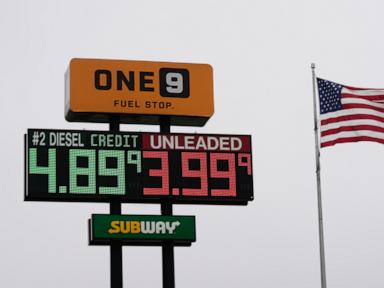
Do not expect your local gas station to change its prices by tomorrow morning. While Wall Street speculators might trade futures contracts down on the initial hype of the peace deal, physical supply remains incredibly tight. Global inventories in the U.S. and Singapore were heavily depleted during the three-month blockade. Every drop of oil hitting the market over the next few weeks will go toward rebuilding those empty reserves, not lowering retail prices.
If you are managing a business dependent on transport, or just trying to budget your daily commute, prepare for an extended period of volatility. MST Financial projects that global energy markets will remain tight through 2027.
Your best move right now is to ignore the immediate media euphoria. Lock in your energy contracts if you run a business, maintain conservative fuel budgets, and expect price dips at the pump to be painfully slow, even if the crude market looks like it's crashing. The road to energy normalization is going to be a long, bumpy ride.