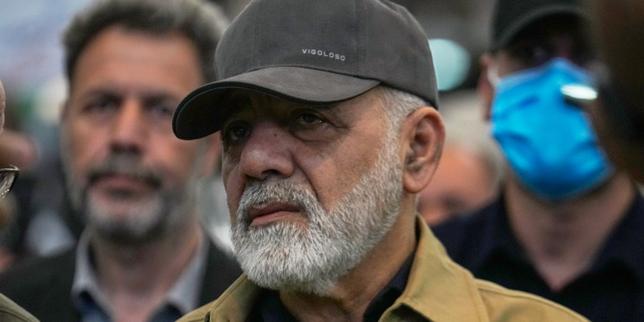
Major General Ali Abdollahi Aliabadi just stepped into one of the most powerful military posts in West Asia. Tehran's leadership named him the new Chief of Staff of the Armed Forces. This isn't just a routine bureaucratic shuffle. It marks a critical structural alignment within Iran’s defense hierarchy.
If you look closely at how power operates inside Iran's security apparatus, this appointment tells a clear story. Let's break down who Ali Abdollahi is, why this shift happened right now, and what it means for regional security dynamics.
Who Is General Ali Abdollahi Aliabadi
Born in 1959 in Gilan Province, Abdollahi brings decades of hardline security and operational experience to the table. He isn't a newcomer thrust into the limelight. His resume spans the crucible of the Iran-Iraq War, regional provincial governorships, senior logistics roles, and high-level internal security management.
Before taking the top armed forces slot, he served in crucial coordination roles, including leading the Khatam al-Anbiya Central Headquarters. That specific command center manages joint military operations across branches. It coordinates between regular military units and the Islamic Revolutionary Guard Corps (IRGC).
Placing an IRGC-affiliated veteran at the absolute summit of the joint armed forces signals tighter consolidation. The boundaries between regular military structures and the Guard are blurring further.
The Immediate Catalyst Behind the Shift
This high-profile reshuffle follows the reported death of Major General Abdolrahim Mousavi. Following that transition, a decree issued by Supreme Leader Ayatollah Seyed Mojtaba Khamenei elevated Abdollahi to the position.
Tehran faces a deeply volatile regional environment. Conventional military threats merge constantly with cyber, cognitive, and hybrid warfare tactics. The official decree appointing Abdollahi explicitly emphasized upgrading national defense readiness against these modern vectors.
Iran wants streamlined command chains. When tensions spike across borders, bureaucratic friction between separate military branches can prove fatal. Abdollahi's background suggests a mandate to eliminate that friction.
What This Means for Regional Defense Integration
For years, analysts tracked a distinct separation between Iran's regular army (Artesh) and the parallel power of the IRGC. While cooperation always existed, institutional rivalries occasionally surfaced beneath the surface.
Abdollahi’s past leadership at Khatam al-Anbiya gives him unique leverage. His primary objective involves completing the structural integration between the General Staff and the central war-planning headquarters.
Expect a tighter, more unified operational doctrine. Intelligence sharing will likely speed up. Strategic responses to external threats will see fewer administrative bottlenecks.
Keep an eye on how defense procurement and industrial research evolve under his watch. Abdollahi previously managed industrial research and logistical readiness within the General Staff. He understands domestic arms manufacturing supply chains. As sanctions pressure persists, indigenous capability remains Tehran's primary focus.
Watch how regional actors respond to this consolidation. The military balance in the region shifts with every stroke of a pen in Tehran, and this appointment hardens the country's defensive posture for the foreseeable future.