The cabin pressure drops slightly as the Airbus A321 begins its descent into Suvarnabhumi Airport. Outside the window, the neon grid of Bangkok splays across the dark Thai gulf like a scattered handful of emeralds. Inside, Rohan checks his phone one last time before switching to airplane mode. He glances at his digital bank balance. He has enough for a week of street food, rooftop bars, and beachside bungalows. His hotel is booked through an app. His return flight is a digital QR code in his email. In his pocket, he carries exactly zero paper bills. Why would he? We live in an era where paper money feels like a relic of the previous century.
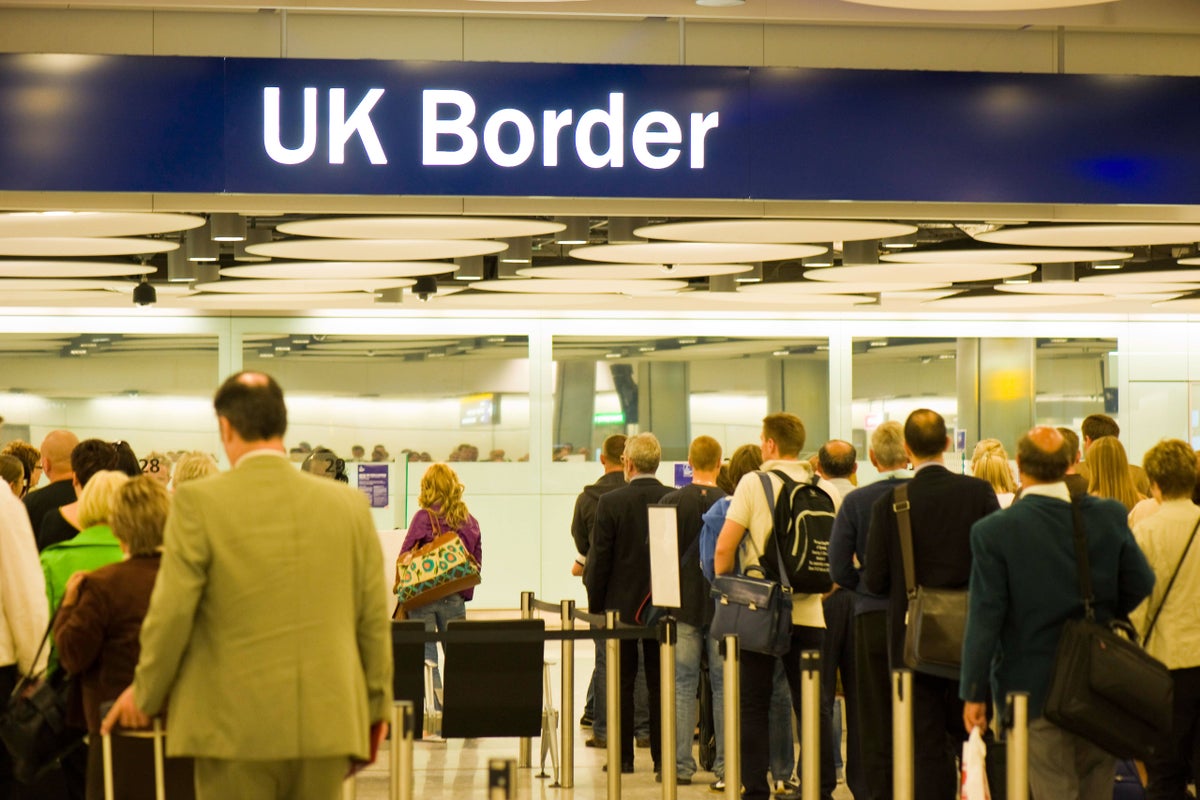
Then he hits the immigration queue. If you enjoyed this article, you should check out: this related article.
The line moves with a agonizing, rhythmic click-clack of rubber stamps. Ahead of him, a young couple is pulled out of line by an officer in a crisp uniform. There is a frantic exchange of words, a desperate flashing of smartphone screens, and then, a slow walk toward a holding room. They had the funds. They just did not have the paper.
A quiet shift has occurred at the borders of Thailand, one that is catching thousands of eager Indian travelers entirely off guard. The Indian Embassy in Bangkok recently felt compelled to break through the vacation euphoria with a stark, uncompromising advisory. It is a warning wrapped in a specific number: 20,000 Thai Baht. At current exchange rates, that translates to roughly 58,000 Indian Rupees. For another look on this event, see the recent coverage from National Geographic Travel.
And it cannot be a digital shadow on a screen. It has to be cash.
The Illusion of the Cashless Traveler
We have become accustomed to a frictionless existence. In major Indian cities, you can buy a roadside cutting chai or a luxury vehicle with the same quick scan of a geometric black-and-white code. This convenience creates a psychological safety net. We assume that because our money is alive and moving in the cloud, it is universally recognized as valid proof of our stability.
But border checkpoints operate on a different timeline.
To an immigration officer at Suvarnabhumi or Don Mueang, a smartphone screen showing a bank app is not proof of wealth. It is a liability. Screens can be photoshopped. Bank apps can fail to load without local connectivity. Wi-Fi networks in arrival halls are notoriously fickle. When a sovereign nation looks at an arriving tourist, it asks a fundamental question: If everything goes wrong for this person tomorrow, can they survive and feed themselves without becoming a burden on our state?
The Thai government’s answer to that question is physical currency.
Consider the mechanics of the law. The requirement dictates that individual travelers must carry at least 10,000 to 20,000 Baht, depending on their visa type, with families needing up to 40,000 Baht. The Indian Embassy’s fresh advisory specifically highlights the 20,000 Baht threshold per individual to ensure absolute compliance and prevent the heartbreak of immediate deportation.
Think about that moment. You have flown four hours. You have planned this itinerary for six months. You are standing thirty feet away from the tropical air of Bangkok, and you are turned back because your wealth is invisible.
The Checklist Beyond the Currency
The cash rule is the headline, but the trap is often wider. The embassy’s warning lays bare a string of criteria that immigration authorities are enforcing with renewed stringency. It is not an interrogation; it is a checklist. And if one box remains unchecked, the system rejects the traveler.
First, there is the matter of shelter. A vague answer like "I'll find a hostel when I get to Sukhumvit" no longer suffices. Officers require a hard copy or a verifiable digital confirmation of accommodation for every single night of the intended stay. If you are staying with a friend, a formal letter of invitation alongside their local identification or lease agreement must be ready for inspection.
Second, the exit strategy must be absolute. A confirmed return ticket is non-negotiable. This is where many budget travelers, attempting to string together an open-ended backpacking trip across Southeast Asia, find their journeys cut short before they even clear customs. The authorities want to see exactly when and how you plan to leave their soil.
The reality behind these rules is simple. Thailand has opened its arms wide with visa-free entries and simplified visa-on-arrival schemes for Indian nationals. But accessibility is not an invitation to casual negligence. The relaxation of entry paperwork has naturally resulted in a tightening of scrutiny at the physical gate.
The Quiet Reality of Border Scrutiny
Let us look at this through the eyes of the system. Border control is an exercise in risk management. Officers process thousands of faces an hour. They look for anomalies. They look for signs that a visitor might intend to overstay or seek unauthorized employment under the guise of a holiday.
When an individual arrives with no physical currency, no clear hotel address, and an ambiguous return date, red flags go up. It does not matter if the traveler is an executive with a high-limit credit card or a college student on a shoestring budget. The law does not differentiate between a wealthy digital nomad who prefers plastic and someone attempting to enter the country with genuine financial instability.
The financial requirement is a blunt instrument, but it works. It acts as a filter. By demanding that a tourist carry 58,000 Rupees in cash, the government ensures that every person walking through the gates has a tangible, immediate stake in their own stay.
This presents a logistical headache for the modern traveler. Carrying that volume of cash requires a shift in behavior. It means finding a reliable currency exchange before departure, dealing with unfavorable airport conversion rates, and worrying about physical security while navigating transport. Yet, compared to the alternative of being placed on the next flight back to Mumbai or Delhi at your own expense, the inconvenience fades into insignificance.
Redefining the Pre-Flight Ritual
The days of simply packing a swimsuit, grabbing a passport, and heading to the international terminal are temporarily suspended. Preparation now requires a methodical approach that mirrors the seriousness of a visa interview.
The strategy for a smooth entry involves three physical pillars:
- The Document Folder: Print everything. Do not rely on your phone’s battery life or international roaming data. Keep your return flight, hotel vouchers, and travel insurance in a physical folder.
- The Currency Pouch: Secure your Thai Baht in a safe, easily accessible place on your person. Do not pack it in your checked luggage. It must be with you when you stand at the immigration desk.
- The Clear Answer: Know your itinerary. Be prepared to state clearly where you are going, what you are doing, and when you are leaving. Ambiguity breathes suspicion.
The Indian Embassy’s advisory is not an attempt to discourage tourism. Rather, it is an act of diplomatic preservation. Every deportation is a bureaucratic knot, a distressed citizen, and a strain on bilateral goodwill. By publishing these reminders, the embassy is trying to save travelers from their own modern assumptions.
The air in the arrival hall is cool, scented with a faint trace of cleaning ozone and industrial air conditioning. Rohan steps up to the counter. He hands over his passport. Inside the pages, tucked neatly, is the crisp stack of Thai Baht notes he hurriedly exchanged during his layover, along with his printed hotel confirmation.
The officer does not look up for long. A quick glance at the paperwork, a swift count of the physical currency, and the heavy thud of the ink stamp echoes through the booth.
"Welcome to Thailand."
The digital world can wait outside. For now, the old rules still govern the border.