Elena wipes a bead of sweat from her forehead, her thumb clicking the worn plastic of the gas pump. The digital numbers roll upward with an agonizing, rhythmic click. Dollar figures leap; the gallon counter crawls. For Elena, a freelance courier whose entire livelihood depends on a 2012 Honda Civic, this flickering screen is not a mere economic indicator. It is a daily verdict on her rent, her groceries, and her peace of mind.
Six thousand miles away, in a muted, wood-paneled boardroom in Vienna, a group of ministers glances at a different set of screens. They do not see Elena. They see barrels, quotas, and baseline projections. Yet, with a brief statement and the metaphorical turn of a valve, the choices made in that room ripple across oceans, down through global stock exchanges, and straight into the fuel tank of a sedan idling in Ohio.
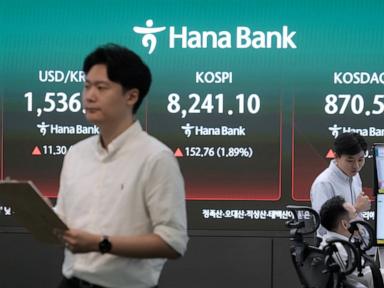
When OPEC+ announced plans to hike oil output, the financial wires reacted with their usual cold precision. "Global shares mixed, oil slips," the headlines read. It sounds sterile. It sounds like a problem for people in tailored suits. But the reality of global markets is never sterile. It is a living, breathing ecosystem driven by fear, calculation, and the fragile balance of human demand.
The Anxiety of the Abundant Barrel
To understand why a few hundred thousand extra barrels of crude oil can shake global markets, we have to look at the psychology of scarcity. For months, the coalition of oil-producing nations kept a tight grip on the world’s energy supply. They kept prices artificially supported by feeding the market just enough to keep it hungry.
Then came the pivot. The decision to gradually restore production signaled something shift-heavy to the trading floors.
Instantly, the price of Brent crude futures dipped. To an outsider, cheaper oil sounds like an unalloyed good. We want cheaper fuel. We want lower shipping costs. But the stock market is a hyper-reactive beast that thrives on predictability. When the energy sector—the literal fuel of the global economy—stumbles even slightly, a tremor runs through every other industry.
Consider the immediate domino effect on Wall Street and European bourses. Banking stocks fluttered. Logistics companies recalculated their quarterly projections. Technology firms, seemingly divorced from the world of physical commodities, saw their valuations twitch as institutional investors shifted billions of dollars out of energy funds and into safer havens. The market was not reacting to a shortage; it was panicking over the prospect of stability.
The Friction of Unequal Recovery
The phrase "mixed global shares" is a journalistic euphemism for a deeper, more troubling reality: a fractured global recovery.
In Tokyo, the Nikkei index dipped as manufacturing giants weighed the cost of fluctuating currency values against cheaper raw materials. In London and Frankfurt, European indexes carved out modest gains, buoyed by the hope that lower energy costs might finally tame the stubborn inflation that has haunted the continent's consumers for years.
This is the great paradox of the modern financial system. One man’s relief is another man’s recession.
+-------------------+-----------------------------------+
| Region            | Immediate Market Reaction         |
+-------------------+-----------------------------------+
| Wall Street       | Industrial slide, Tech volatility |
| Western Europe    | Modest gains on inflation relief  |
| East Asia         | Export anxiety, Currency shifts   |
+-------------------+-----------------------------------+
The underlying tension is driven by a simple question that every trader is whispering but few are answering openly: Is the world actually ready to consume this extra oil?
If OPEC+ pumps more crude because they believe global factories are humming and consumers are spending, it is a sign of immense health. But if they are increasing output simply because individual member states are desperate for cash and breaking rank to secure market share, it means the floor is about to drop out. The ambiguity is what paralyses capital. Investors hate mystery far more than they hate bad news.
The Ledger of Daily Bread
Back at the gas station, the pump finally shuts off with a sharp, mechanical thud. Elena stares at the total. It is three dollars less than it was last week.
To a macroeconomic analyst, three dollars is a rounding error, a microscopic data point lost in a sea of algorithmic trading. To Elena, those three dollars mean a gallon of milk. They mean not having to choose between a late-night delivery run and a hot meal.
This is the true human architecture of the global markets. We speak of indexes, corrections, and bearish sentiments as if they are weather patterns moving across a map, independent of human agency. But every point dropped on the S&P 500 represents collective anxiety. Every cent shaved off a barrel of crude represents a calculated gamble on how hard a factory worker in Guangzhou or a long-haul trucker in Texas will push themselves tomorrow.
The ministers in Vienna will meet again next month. They will look at charts, adjust their spreadsheets, and debate the merits of production baselines. The stock tickers in New York and London will continue their erratic, neon dance against the glass facades of skyscrapers.
Elena turns the key in her ignition. The engine turns over, consuming a tiny fraction of the world's newly recalibrated supply. She pulls out into the traffic, unaware of the specific names of the men who set the price of her journey, but carrying the full weight of their decisions on the passenger seat beside her.