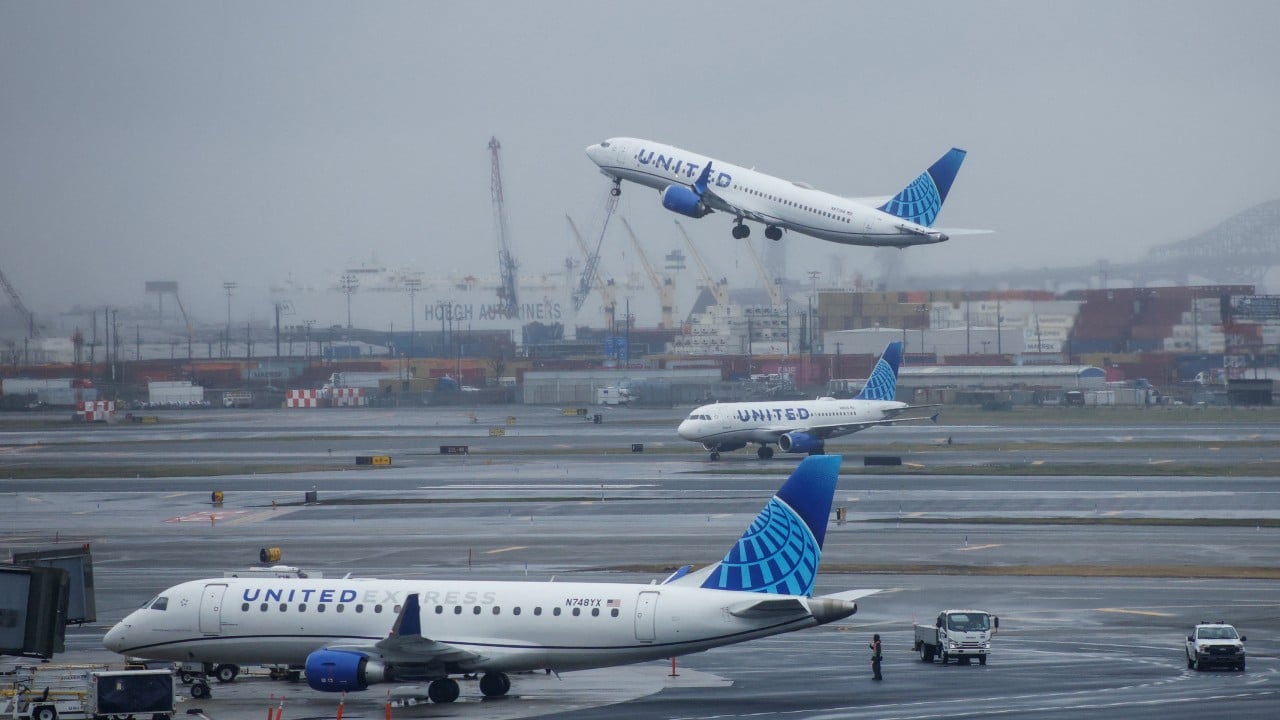
A United Airlines flight bound for Spain from Newark Liberty International Airport was forced to reverse course over the Atlantic Ocean and return to New Jersey following a potential security vulnerability. The decision to abort the international route came after crew members flagged an unresolved security concern that required immediate ground-level intervention. While passengers faced severe delays and rebooking chaos, the incident exposes the high-stakes calculation commercial airlines must make when a threat materializes hours away from land.
Commercial aviation operates on a razor-thin margin of certainty. When that certainty wavers over the open ocean, the cost of turning back is measured in hundreds of thousands of dollars per flight. Yet, modern threat assessments leave little room for mid-ocean gambling.
The Anatomy of an In-Flight Abort
Turning around a fully fueled, wide-body aircraft packed with passengers is a logistical nightmare.
When a security threat is identified after takeoff, the captain does not simply spin the aircraft around. A complex sequence of events triggers across corporate headquarters, air traffic control, and federal agencies. The primary challenge for an aircraft bound for Europe is weight.
Long-haul flights take off heavy. They carry tens of thousands of gallons of jet fuel needed to cross the Atlantic. Landing immediately at that weight risks catastrophic structural damage to the landing gear and the fuselage.
[Takeoff: Heavy Fuel Load] ──> [Threat Detected] ──> [Fuel Dumping / Burning] ──> [Safe Landing Weight]
To return to Newark safely, the flight crew must either dump fuel over designated areas or fly in patterns to burn off weight. This process takes time. It unfolds under intense pressure while federal law enforcement prepares for the aircraft's arrival on the tarmac.
Why a Return to the Origin is the Only Rational Choice
Passengers frequently question why an aircraft flies all the way back to its origin instead of landing at the nearest available airport. The answer lies in infrastructure and jurisdiction.
If an American-flagged carrier encounters a vague or unverified security threat, landing in a foreign territory complicates everything. A diversion to Canada or Greenland drops American citizens, airline property, and a potential criminal investigation into a foreign legal system. Returning to Newark ensures that the Transportation Security Administration, the FBI, and airline mechanics are ready to handle the specific aircraft type immediately.
- Jurisdiction: Federal investigators can board the plane instantly without international diplomatic friction.
- Logistics: The airline has spare aircraft, replacement crews, and passenger accommodation facilities at its primary hub.
- Security: Origin airports possess the exact passenger manifests and baggage screening logs that generated the flight, allowing for rapid auditing.
Domestic hubs offer the path of least resistance for containment.
The Digital Echo in Modern Aviation Security
The nature of aviation threats has shifted away from physical contraband toward digital disruption and psychological warfare.
Airports have never been better at screening physical luggage. Advanced computed tomography scanners and biometric checkpoints make smuggling weapons incredibly difficult. Instead, the modern security apparatus is increasingly vulnerable to digital hoaxes, anonymous Wi-Fi network renamings, and localized electronic threats.
Airdropping a threatening image to fellow passengers or changing a phone's hotspot name to something malicious can ground a multi-million dollar operation.
Airlines must treat every threat as authentic until proven otherwise. This creates a asymmetric vulnerability where a single malicious actor with a smartphone can disrupt international commerce. The financial penalty for a false positive is staggering, but the penalty for an ignored real threat is total failure.
The Financial Fallout of Precaution
When an airline aborts a flight to Spain, the ledger fills with red ink instantly.
+-----------------------------------+-----------------------------------+
| Expense Category                  | Estimated Cost Per Incident       |
+-----------------------------------+-----------------------------------+
| Wasted and Dumped Jet Fuel        | $40,000 - $70,000                 |
| Passenger Hotel & Meal Vouchers   | $30,000 - $50,000                 |
| Crew Exceeded Flight Time Limits  | $15,000 - $25,000                 |
| Airport Landing & Ground Fees     | $10,000 - $20,000                 |
+-----------------------------------+-----------------------------------+
These figures omit the cascading impact on the airline's broader network. The airframe that was supposed to land in Spain and immediately return with a fresh batch of passengers is now stuck in New Jersey. Hundreds of travel plans dissolve across two continents.
Insurance rarely covers the full scope of these operational disruptions unless a specific act of terrorism is confirmed. The airline absorbs the loss as the cost of doing business safely.
The Protocol Beyond the Headline
What the public sees as a sudden U-turn is actually a tightly choreographed playbook executed by the airline's operations center.
The moment a threat is verified by the flight deck, a silent notification alerts the carrier’s network operations manager. A dedicated security cell coordinates with federal authorities to assess the credibility of the information. If the threat is deemed credible enough to abort the mission, the flight path is altered via secure data link. Air traffic control prioritizes the returning aircraft, clearing airspace to ensure a continuous, uninterrupted descent.
Upon landing, the plane is routed to an isolated taxiway far from the main terminals.
Passengers do not stretch their legs or check their phones immediately. They wait as armed law enforcement officers board the cabin. The process is rigid, cold, and calculated to eliminate variables. It is an exhausting exercise for travelers, but it remains the definitive reason why commercial aviation remains the safest mode of long-distance transport on the planet.
The true threat to aviation is no longer just the physical breach of a cabin, but the vulnerability of the systems we use to communicate inside it.