In the glass-walled offices of Singapore and Seoul, the spreadsheets have started to bleed red. For decades, the math of progress in Asia was simple: buy fossil fuels, burn them, and grow. It was a predictable rhythm, a mechanical heartbeat that powered the neon lights of Tokyo and the sprawling factories of Vietnam. But math is a fragile thing when it meets the friction of reality.
When the first reports of escalating conflict in the Middle East hit the tickers, the numbers didn’t just change. They shattered. Read more on a connected subject: this related article.
Consider a hypothetical logistics manager in Osaka named Hiro. He doesn’t spend his days thinking about geopolitical strategy or the intricacies of the Strait of Hormuz. He thinks about the price of a gallon of diesel and the cost of keeping the lights on in a warehouse that spans three city blocks. For Hiro, the "Iran war" isn't a headline; it is a ghost that haunts his balance sheet. Every time a tanker is diverted or an insurance premium spikes due to regional instability, Hiro’s world gets smaller.
This is the vulnerability of the old world. We built an entire civilization on the assumption that the liquid buried beneath the sand thousands of miles away would always be cheap, always be available, and always be ours for the taking. We were wrong. Additional journalism by Reuters Business delves into related perspectives on the subject.
The Mathematics of Chaos
The surge in fossil fuel prices isn't just a temporary blip. It is a fundamental shift in the risk profile of an entire continent. Asia is the world’s largest energy consumer, and for the better part of a century, it has been tethered to the Middle East by a literal and figurative umbilical cord of oil and gas.
When that cord is squeezed, the pain is immediate.
Natural gas prices in Asia have historically been linked to oil, or subject to the whims of a volatile spot market. When conflict erupts, the "security premium" is tacked on. You aren't just paying for the energy; you are paying for the risk that the ship might not arrive. You are paying for the warships that have to escort the cargo. You are paying for the fear of the unknown.
Suddenly, the "expensive" alternatives don't look so expensive anymore.
Green hydrogen—the process of using renewable electricity to split water into hydrogen and oxygen—has long been the "five-years-away" technology. It was the plaything of idealists and the subject of pilot programs that never quite scaled. The criticism was always the same: it’s too costly. Why spend four times the amount on hydrogen when gas is cheap?
But gas isn't cheap anymore.
The volatility of the fossil fuel market has created a floor for green hydrogen. In the world of energy finance, we talk about "parity." It is the moment two technologies cost the same to produce. Because of the soaring costs of traditional fuels, green hydrogen didn't have to get cheaper to become viable; the world just had to get more dangerous.
The Great Decoupling
Imagine a coastal province in Vietnam where the wind never stops. Under the old paradigm, that wind was a nuisance, something that battered fishing boats and moved sand. Now, that wind is a gold mine.
By installing massive offshore wind farms and connecting them to electrolyzers, these regions can produce their own fuel. They are no longer waiting for a ship to cross the Indian Ocean. They are no longer checking the news to see if a drone strike has shut down a refinery in Abqaiq.
This is the human element of the energy transition: sovereignty.
It is the shift from being a customer of a volatile global market to being a producer of your own destiny. For a country like India or Thailand, green hydrogen isn't just a "green" initiative. It is a national security strategy. It is the ability to tell the rest of the world that their wars will no longer turn off the lights in Mumbai or Bangkok.
The Physics of the Pivot
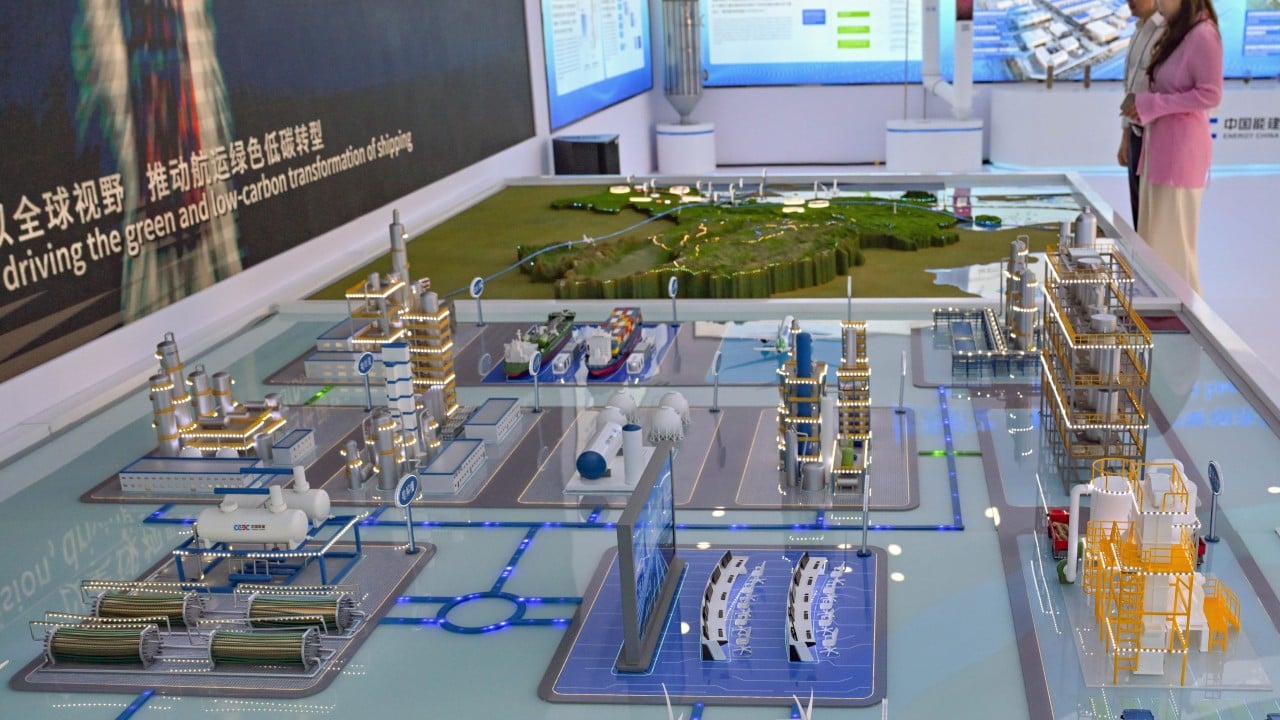
To understand why this is happening now, we have to look at the machinery. An electrolyzer is essentially a box that turns electricity into fuel.
$$2H_2O + \text{electricity} \rightarrow 2H_2 + O_2$$
In a stable world, the "electricity" part of that equation was the bottleneck. Renewable energy was intermittent and required massive batteries. But in a world where the alternative is a fossil fuel price tag that swings 20% in a week, the stability of a wind farm becomes its greatest asset. The sun rises every day. The wind blows. The "fuel" is free; you only pay for the machine.
The scale of what is being built in the Gobi Desert and the Australian Outback is staggering. These are not mere power plants. They are the new oil fields. But unlike the oil fields of the 20th century, these cannot be depleted. They cannot be seized by a local warlord. They cannot be blocked by a naval blockade.
The Silent Winner
While the headlines focus on the tragedy of conflict and the soaring prices at the pump, a quiet transformation is happening in the industrial heartlands of China and Japan.
Heavy industry—steel, cement, and shipping—cannot run on lithium batteries. They need the intense, concentrated heat that only a combustible gas can provide. For years, these sectors were the "hard to abate" holdouts. They were the reason we couldn't quit coal and gas.
Now, the math has changed for them, too.
A steel mill in Hebei that switches to green hydrogen isn't doing it to save the polar bears. They are doing it because they can't afford the uncertainty of the alternative. They are doing it because their customers in Europe and North America are beginning to demand "green steel," and because the cost of carbon is finally being priced into the global economy.
The Iran-related tensions acted as the ultimate accelerator. They stripped away the luxury of waiting.
The Friction of the Transition
We should be honest: this isn't easy. The infrastructure for a hydrogen economy doesn't exist yet. You can't just pour hydrogen into a natural gas pipeline without making significant modifications. It is a smaller molecule; it leaks more easily; it can make metal brittle.
There are massive engineering hurdles to overcome. We need specialized ships to transport liquid hydrogen at temperatures that would make the surface of Pluto feel like a summer day. We need a global network of refueling stations. We need a workforce that knows how to handle a gas that is as energetic as it is invisible.
But humans are at our best when our backs are against the wall.
The "viability" of green hydrogen in Asia isn't a theoretical exercise anymore. It is a lived reality for the engineers working double shifts in Dalian and the investors moving billions of dollars out of LNG terminals and into electrolysis hubs. They are racing against a clock that is being wound tighter by every geopolitical tremor.
The New Map
If you look at a map of the world today, the lines of power follow the pipelines. They follow the shipping lanes. They follow the narrow chokepoints where a single ship run aground can freeze global trade.
The new map looks different.
The new map is decentralized. It is a web of local production nodes. It is a world where energy is harvested where it is used. The "Middle East of the future" might be the sunny plains of Rajasthan or the windy shores of Western Australia.
This shift moves the leverage. It moves the wealth. It changes who has a seat at the table.
We are witnessing the end of the era of "Resource Curse" politics, where a nation’s wealth was determined by the geological lottery of what lay beneath its soil. In the hydrogen age, wealth is determined by the ingenuity of your engineers and the consistency of your weather.
It is a more democratic form of energy. It is a more resilient form of energy.
Back in Osaka, Hiro is looking at a proposal for a hydrogen-powered fleet of delivery trucks. A year ago, he would have laughed at the cost. Today, he is asking how soon they can be delivered. He isn't looking for a "green" solution. He is looking for a way to stop being a victim of a war he didn't start and cannot control.
The transition to green hydrogen was never going to be a slow, polite move driven by environmental white papers. It was always going to be a messy, desperate scramble triggered by the realization that the old way of doing things had become a suicide pact.
The fires of conflict in the Middle East have provided a grim, flickering light. But in that light, Asia has finally seen the path forward. The age of oil is not ending because we ran out of oil. It is ending because we finally found something more valuable than a stable supply of fuel: a world where the fuel doesn't need to be guarded by a fleet of destroyers.
The wind is blowing. The sun is shining. The water is waiting.
The only thing left to do is build.