The cabin air smells of stale coffee, cold leather, and the faint, metallic tang of recycled oxygen at thirty-five thousand feet. Outside the reinforced flight deck door, three hundred passengers sleep against headrests, illuminated by the pale, drifting blue glow of seatback screens. They trust the machinery. They trust the physics of lift, the quiet hum of the high-bypass turbofans beneath the wings, and the men sitting up front who hold the throttles.
We rarely wonder who those men are. We see epaulets on crisp white shirts, three gold stripes or four, a neat haircut, an ID badge clipped to a lanyard. We assume the system is infallible. We assume that every individual guiding twenty tons of aluminum through the stratosphere has been scrubbed clean of ideology, history, and shadow. Recently making waves lately: The Concrete Noose Tightening Around Kyiv.
Then a name leaks
The Invisible Line at Thirty Thousand Feet
news, travel More information into this topic are detailed by Reuters.
The cockpit of a modern commercial airliner is a cathedral of glass, aluminum, and cold logic. Hundreds of switches stare back at the pilots, each one a testament to redundancy, human ingenuity, and the quiet assumption that the person sitting in the left seat is anchored entirely to reality. Outside, the sky is an indifferent blue, masking the jagged borders and ancient hatreds carved into the earth below.
At thirty thousand feet, nationality blurs. Borders become mere wisps of cloud. Yet, the systems that govern who gets to touch the controls—who is trusted with the lives of two hundred souls hurdling through the stratosphere at Mach 0.8—rely on a fragile web of international background checks, bureaucratic oversights, and shared databases.
Consider what happens when that web tears.
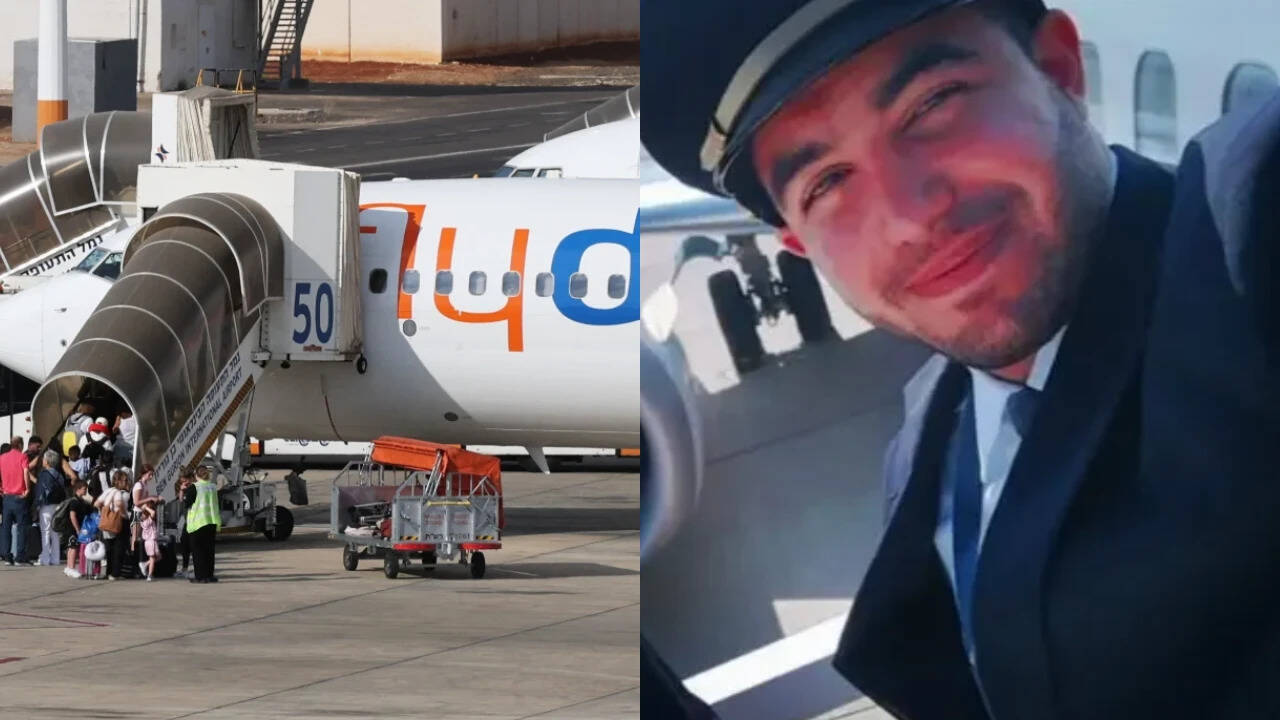
A pilot climbs into the flight deck of a flydubai aircraft bound for Tel Aviv. His uniform is crisp. His credentials check out. His license is valid. But history does not always announce itself with a siren. Sometimes, it wears a quiet smile and a captain's hat.
Reports surface that this Omani aviator had once been flagged for extremism. Not a conviction in a high-profile tribunal, perhaps, but a name caught in the crosshairs of intelligence sharing, a digital footnote in a global security apparatus that struggles daily to balance civil liberties with passenger safety. How does a man with that specific shadow in his past slip through the fine mesh of aviation security and end up at the helm of a commercial flight connecting two cities whose geopolitical relationship is delicate, historical, and perpetually tense?
To understand how this happens, you have to look past the outrage headlines and step inside the labyrinth of modern aviation vetting.
An airline pilot is not vetted by a single, all-seeing global authority. Instead, they are the product of overlapping jurisdictions. Civil aviation authorities in home countries issue licenses. Airlines conduct internal hiring reviews. Interpol flags names. Local intelligence agencies gather chatter. When these systems talk to each other, they often speak different languages. A flag in one database might look like an unresolved suspicion in another, easily dismissed by a local employer desperate for experienced cockpit crew amid a global pilot shortage.
The cockpit shortage is real. It is a slow-moving crisis that forces airlines to cast wider nets, looking to emerging aviation markets for talent. In that rush to fill seats, the friction of deep background checks can sometimes feel like an administrative bottleneck rather than a vital shield.
Imagine the security officer sitting in a dim office, staring at a computer screen late at night. A name flashes red. There is a notation from years prior—vague associations, online rhetoric, a brush with radical elements. But there is no active warrant. There is no extradition request. Legally, under local labor laws, can an airline deny employment or ground a pilot based on a ghost in the machine? If the state has not revoked the pilot’s license, the airline faces a difficult choice: trust the state's sovereign clearance or take matters into their own hands and risk accusations of discrimination or wrongful termination.
Most of the time, the system chooses administrative compliance over proactive intuition. It assumes that if a government lets a person hold a passport and a commercial pilot license, the baseline of trust has been met.
But trust is not a certificate. Trust is an ongoing narrative.
The flight to Tel Aviv touched down safely. Passengers disembarked, scrolling through their phones, complaining about baggage claim or the quality of the in-flight meal, entirely unaware of the invisible fault line they had just crossed. They did not know about the file, the flag, or the quiet discussions happening behind closed doors after the wheels kissed the tarmac.
That is the unsettling reality of our hyper-connected, hyper-vulnerable world. We live surrounded by automated safeguards that promise absolute security while remaining inherently porous. A single human being, carrying a complex ideological past, can sit mere feet away from a crowd of unsuspecting travelers, bridged only by the autopilot and the hum of twin jet engines.
We want our security systems to be omniscient. We want them to catch every threat before it materializes, to weigh every nuance of human behavior, to separate the reformed from the radicalized with surgical precision.
Instead, the world runs on paper trails and delayed updates.
When a pilot with an extremist flag slips into a commercial cockpit, it is rarely a cartoonish villain slipping past guards in the dead of night. It is usually something much more banal and much more terrifying: a bureaucratic oversight in a system too vast to watch everything, trusting that the uniform makes the man, and that the clouds will wash away whatever came before.