The Flash You Never See
It happens in a fraction of a millisecond.
You are driving home under the amber glow of sodium streetlights, your mind tangled in the mundane weight of grocery lists and overdue bills. On the corner, mounted just above the rusted street sign, a small grey housing unit ticks quietly in the night air. Inside that box, an infrared eye opens. It drinks in the reflection of your rear license plate, bouncing invisible light waves off the stamped aluminum. Don't miss our previous post on this related article.
Click.
Your journey is no longer just yours. It has been digitized, timestamped, converted into a string of metadata, and piped across fiber-optic cables into a municipal database before your tires even cross the next intersection. If you want more about the background here, TechCrunch offers an informative breakdown.
For years, we comforted ourselves with the illusion of urban anonymity. Cities were vast, chaotic oceans where a single human life could slip through the cracks, unnoticed and unrecorded. You could drive across town at three in the morning, stop for a late-night coffee, and exist entirely in your own private reality. But concrete is memory now. Every turn, every errand, every ordinary Tuesday night commute is being stitched together into a continuous, unbroken narrative of movement.
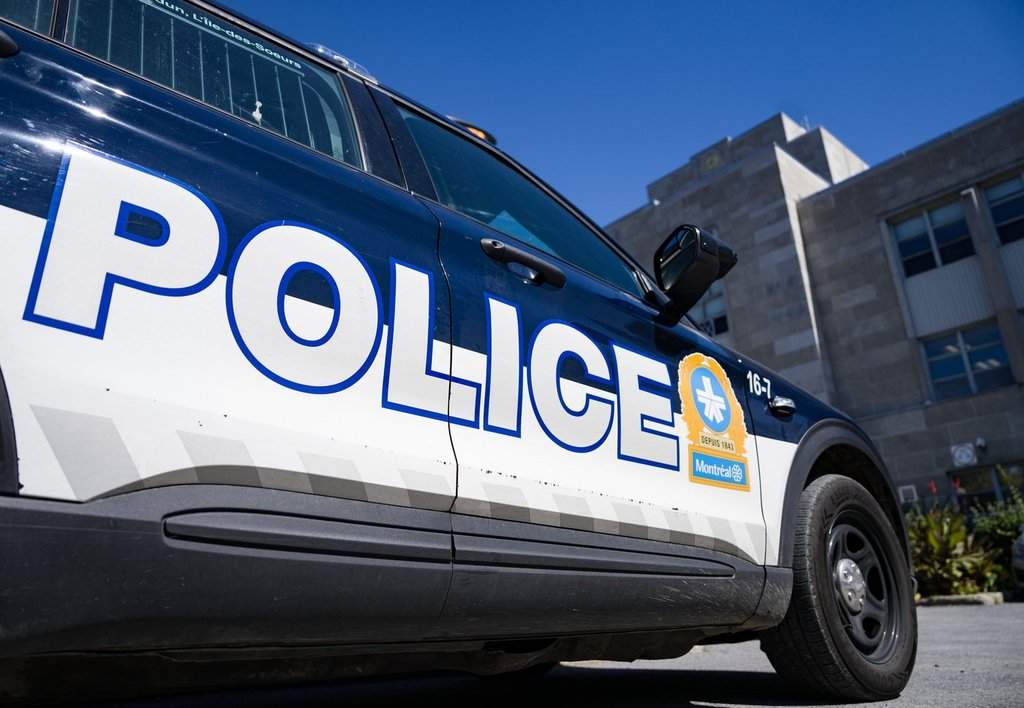
And recent confirmations from Montreal police regarding the targeted deployment of automated licence-plate recognition cameras remind us of a stark truth. The future we were warned about in science fiction did not arrive with a dramatic invasion or a sudden totalitarian decree. It arrived quietly, bolted to utility poles while we were waiting for the light to change.
The Anatomy of a Quiet Surveillance Shift
Consider what happens inside a patrol cruiser parked three blocks off a busy commercial strip.
Officer Marcél turns down his dashboard illumination to avoid the harsh glare. He has been on the force for sixteen years, long enough to remember when police work meant talking to informants, staking out street corners with a stale cup of coffee, and relying on the fragile, stubborn memory of eyewitnesses. It was messy work. It was full of dead ends, human error, and frustrating gaps where criminals simply vanished into the sprawling geography of the province.
Now, his screen glows with a quiet, persistent hum.
Mounted on the exterior of his unmarked cruiser are high-speed optical sensors capable of scanning hundreds of plates per minute. He isn't typing numbers into a terminal. He is simply driving. The system does the heavy lifting, comparing every passing plate against active police databases in real time. When a match hits—a stolen vehicle, a warrant, a vehicle flagged in a targeted criminal investigation—a sharp audio chime cuts through the silence of the cab.
Beep.
In that instant, the ordinary driver three car lengths ahead, perhaps a mother picking up her teenage son from soccer practice or an exhausted night-shift nurse heading home, transforms into a data point of interest. They have no idea the system has flagged them. They don't know that their morning grocery run or their weekend trip out to the Laurentians is being cross-referenced, stored, and cataloged.
Marcél feels a mixture of relief and unease. As an investigator, the utility is undeniable. It cuts through the fog of a sprawling metropolis like a hot knife through butter. It finds the needle in the haystack. But as a citizen who grew up valuing the privacy of the open road, he feels a strange, cold prickle at the back of his neck.
What happens when the haystack itself becomes the object of study?
The Illusion of the Temporary Record
We tend to think of surveillance as something episodic. We imagine a security guard watching a monitor or a cop pulling someone over for a broken taillight. Those are human interactions. They are constrained by human fatigue, human limitation, and human empathy. A human officer can look at a driver, read the situation, and decide that a warning is better than a ticket. A human officer forgets details by morning.
Algorithms do not forget.
When automatic licence-plate reader technology enters a jurisdiction, it changes the fundamental physics of law enforcement. It shifts the paradigm from reactive intervention to continuous sorting. The police confirm that these systems are deployed in targeted investigations, focusing computational power on specific operational goals. Yet, the architectural reality of optical character recognition technology means that thousands of innocent bystanders are swept up in the net to catch a single target.
Imagine walking through a crowded train station where every single person is required to wear a transparent nametag showing where they were born, where they slept last night, and who they spoke to this morning. You might not be the person security is looking for. But your nametag is still being read. It is still being recorded.
Critics and privacy advocates have raised urgent questions about retention periods, data sharing agreements, and the potential for scope creep. Today, the technology is deployed for targeted investigations. Tomorrow, what stops those historical location logs from being queried for minor infractions, civil disputes, or sweeping dragnet operations?
History teaches us a reliable lesson about surveillance infrastructure. Once a tool of mass data collection is built, paid for, and integrated into daily operations, its scope almost never shrinks. It expands. It feeds on its own success. Every solved crime becomes the justification for broader deployment, until the exception quietly becomes the rule.
Living in the Shadow of the Lens
It changes how we move.
When you know that every public movement is susceptible to automated logging, a subtle psychological shift occurs. Psychologists call it the panoptic effect. People who feel they are being watched begin to modify their behavior, not necessarily because they are doing anything wrong, but because the mere presence of the observer creates an instinctual need for self-protection.
You take the longer route home to avoid passing certain intersections. You think twice about attending a political rally or visiting a controversial establishment, knowing that your vehicle’s presence outside that building will sit permanently in a digital archive. The freedom of movement—the constitutional right to travel without unjust government tracking—begins to erode at the edges.
And yet, the public conversation remains frustratingly muted.
Part of the challenge lies in the abstract nature of the technology. You cannot touch a data packet. You cannot smell an algorithm. Unlike a physical checkpoint with armed guards and concrete barricades—which immediately triggers our innate sense of resistance—a small black camera housing on a utility pole looks like nothing at all. It blends into the urban furniture, indistinguishable from a traffic light sensor or a municipal Wi-Fi router.
We accept the trade-off because we are promised safety. We are told that if we just surrender a little bit more of our invisible privacy, the city will become smarter, cleaner, and safer from harm. It is an intoxicating promise, whispered by tech vendors and echoed by overburdened public officials who are desperate for any tool that makes the impossible job of urban policing feel manageable.
The Unresolved Horizon
Back on the dark street, Officer Marcél shifts his cruiser into drive. The amber light overhead flickers once, steadying itself against the night.
His screen goes quiet. The beep does not sound again. He merges back into the flow of traffic, swallowed by the stream of headlights and tail-lights heading toward destinations unknown.
The cameras remain behind him, unblinking, patient, and vast. They do not sleep. They do not care about the fatigue in his eyes or the complex ethical questions turning over in his mind. They simply record the passing of the city, frame by frame, plate by plate, waiting for the next electronic whisper to break the silence.
We are building a glass city. Every pane is transparent, every movement reflected, every route accounted for. The only question left is whether we will realize what we have built before the walls become too high to climb back over.