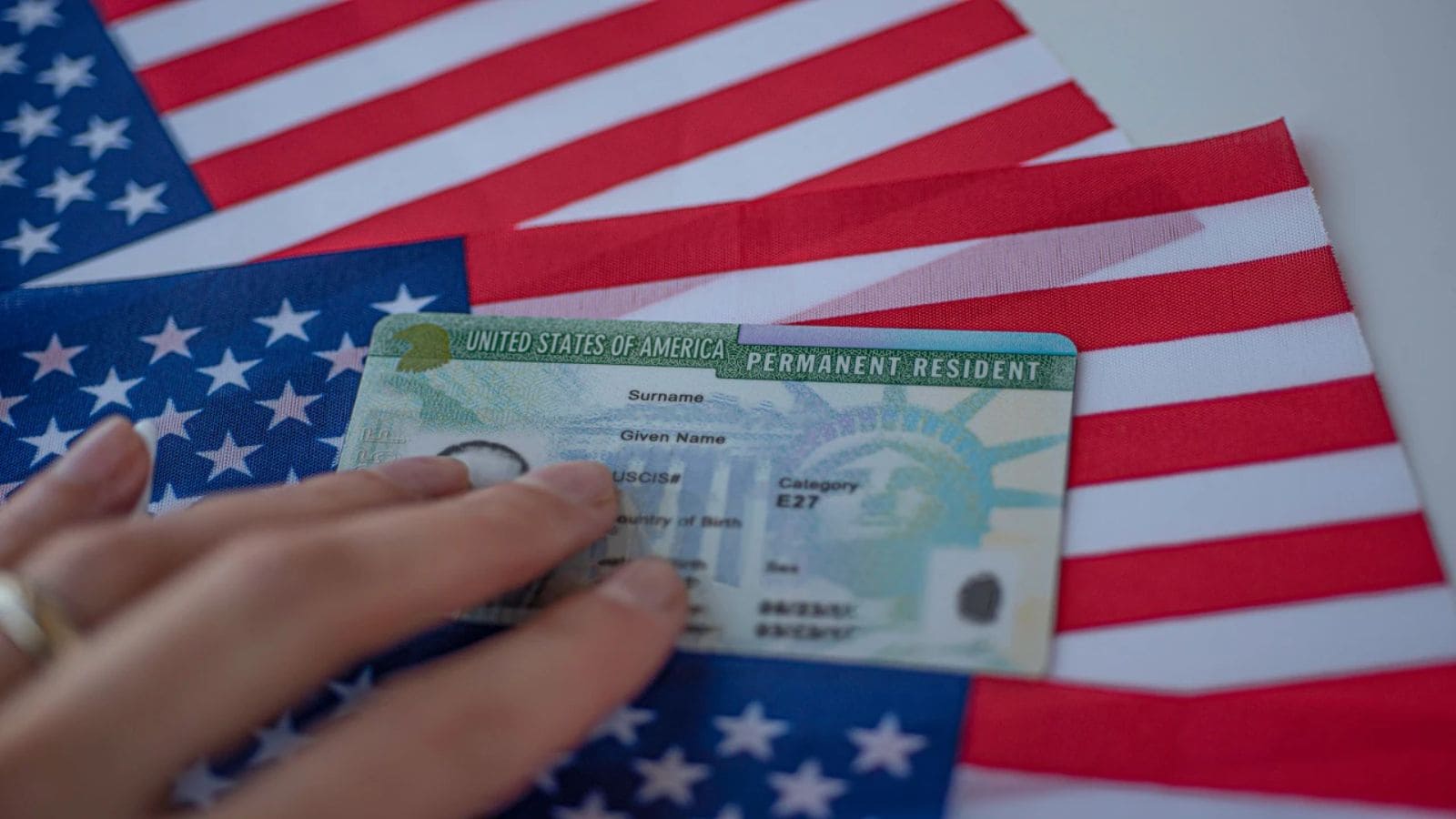
The coffee in the waiting room of the federal building always tasted like burnt copper. Elena knew that taste well. She had tasted it three months ago, and six months before that, each time a fresh stack of tax returns, bank statements, and medical evaluations crossed a wooden desk to be weighed by an invisible scale.
She sat holding her daughter's small, warm hand. Outside, the midday traffic of a cold October morning hummed against the glass. Inside, the air was thick with quiet prayers whispered in a dozen languages. Everyone here was waiting for a permission slip to belong. But belonging, they were learning, had a price tag attached to it that kept shifting in the dark. For an alternative perspective, consider: this related article.
To understand the modern American dream, you have to look at the ledger. Not the financial ledger of a corporation, but the human ledger maintained by immigration officers under a rule known for over a century as the public charge test.
For generations, the concept was simple, almost rustic. Did you have someone to support you, or were you entirely destitute to the point of needing permanent public institutionalization? You arrived with a sponsor, a signed affidavit, and a promise. But laws do not live in museum cases. They breathe. They mutate. And under recent overhauls, that test became a labyrinth of weighted scales, assessing not just what you have, but what you might conceivably need on your worst, most fragile day. Related reporting regarding this has been provided by Reuters.
Consider Elena. She is not a statistic. She is a woman who knits sweaters at night while her husband drives a delivery van across the county until his eyes burn. When the rules changed to scrutinize the use of non-cash government benefits—things like food assistance or Medicaid for children—the math of their survival changed overnight.
Official policy shifts often arrive in dry, bureaucratic language. They speak of the Department of Homeland Security, the Immigration and Nationality Act, and the totality of circumstances. They talk about income thresholds hovering at or above two hundred and fifty percent of the federal poverty guidelines. They list factors like age, health, family status, and skills.
Strip away the acronyms, and you find a very different reality. You find a mother standing in a brightly lit grocery store aisle, staring at a carton of milk, doing calculus in her head. If she signs her American-born toddler up for a supplemental nutrition program because her husband’s hours were cut during a seasonal slump, will an immigration officer three years from now look at that receipt and see a family in need, or a liability to the state?
That is the psychological friction of the public charge overhaul. It turns everyday survival into a high-stakes gamble.
Historically, the public charge assessment focused almost exclusively on cash assistance, such as Temporary Assistance for Needy Families, or long-term institutional care paid for by the government. If you fell on hard times and needed a temporary bridge, you crossed it. The new framework widened the lens to peer into doctor's offices and pharmacy lines. It began counting the use of non-cash benefits—such as the Supplemental Nutrition Assistance Program, housing vouchers, and most Medicaid services—as negative weights against an applicant's character and self-sufficiency.
Except for children. And pregnant women. The rules carved out protective circles around the most vulnerable, recognizing that a child's health should not be a barricade to a parent's legal status. Yet, fear does not read footnotes.
Across the country, participation rates among immigrant communities in health and nutrition programs plummeted not because the rules barred everyone, but because the shadow of the rule was longer than the text itself. People withdrew from clinics. They stopped filling prescriptions for chronic coughs. They chose quiet, mounting agony over the risk of a red stamp on a future petition. That is the invisible toll of policy. It manufactures a culture of prehension where people learn to hide their bruises from the state.
When an immigration officer sits down to evaluate an application under these guidelines, they are playing fortune teller. They must gaze into a crystal ball of probabilities. They look at your credit score. They look at whether you speak English fluently enough to navigate a volatile labor market. They look at your past medical history, hunting for a chronic condition that might someday require expensive treatment.
It is an inherently paradoxical exercise. We invite people to build a life in a land of dynamic opportunity, yet we penalize them for experiencing the normal human vulnerabilities that make life unpredictable. Sickness does not check your visa status. Layoffs do not consult your naturalization timeline.
Elena knew this better than anyone. During her interview, the officer did not shout. There was no theater. There was only the steady, rhythmic clicking of a keyboard as the officer reviewed her file.
"Your husband's income fluctuated last winter," the officer said, not looking up.
"The delivery truck broke transmission," Elena replied, her voice steady though her palms were damp. "He missed two weeks of work."
"And did you seek assistance during that period?"
The question hung in the air like a dropped stone. It was the pivot point of her entire life. Months earlier, a community organizer had handed her a flyer about emergency food banks. She had looked at it, wept quietly at her kitchen table, and then folded it away. She had borrowed money from her brother instead. She had stretched a single bag of rice for six days. She had gambled her family's immediate comfort on the altar of their future paperwork.
"No," Elena said. "We managed."
The officer typed a final note, hit enter, and the screen flashed green. Approval granted.
She walked out of that building into the cold October air, her daughter skipping beside her. She had won. The ledger balanced in her favor. But as she boarded the bus home, watching the gray autumn streets blur past her window, she couldn't shake the bitter iron taste of the victory. She had proven her worth to the state by denying her own fragility. And somewhere across the city, thousands of other Elenas were still sitting in waiting rooms, holding their breath, wondering how little they could afford to need before America decided they were no longer welcome to stay.