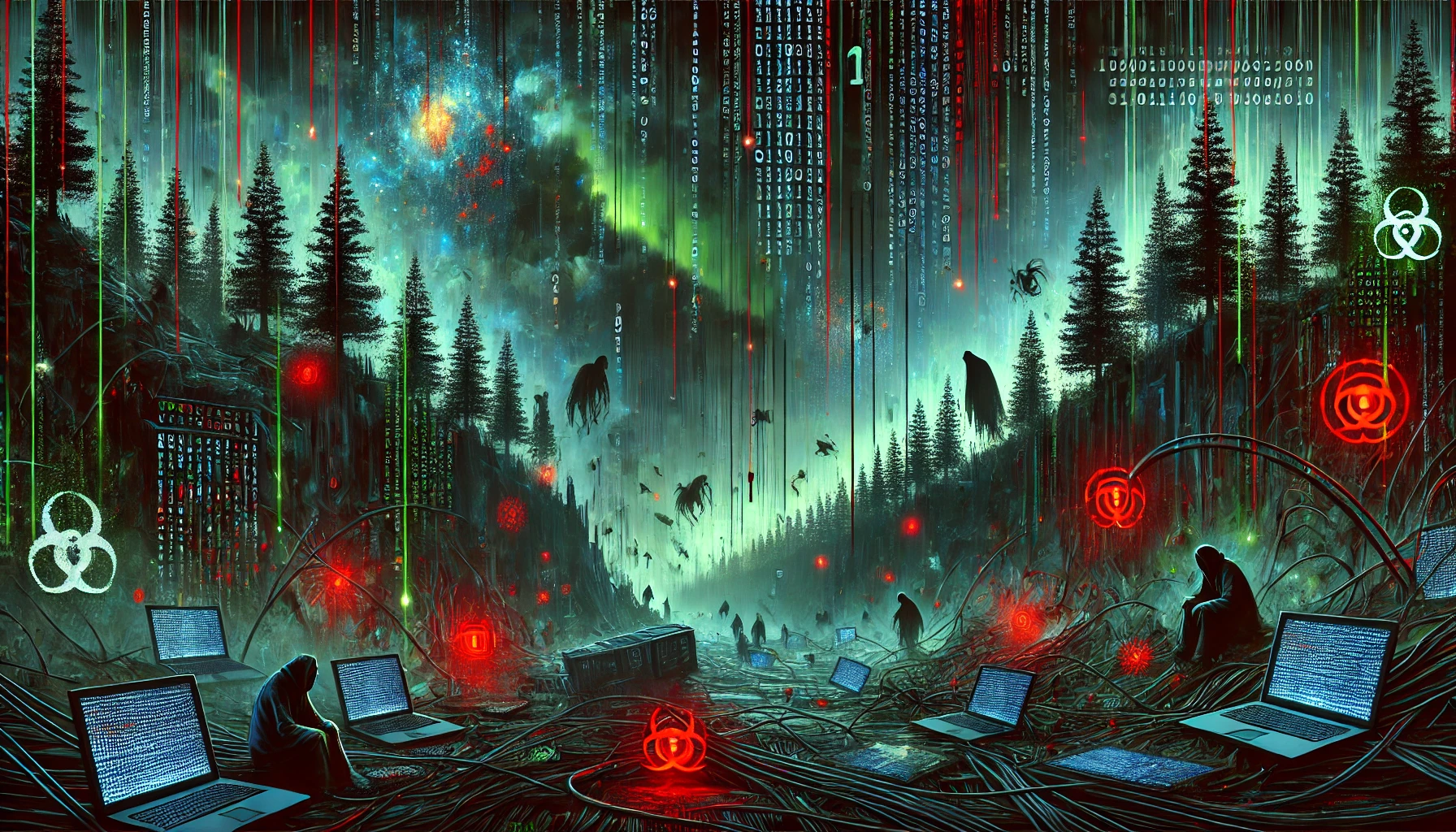
The hum is constant. It is a low, vibrational thrum that vibrates in the soles of your feet if you stand too close to the windowless, corrugated steel monoliths dotting the outskirts of Quincy, Washington, or the data-corridors of Northern Virginia. Inside those walls, billions of tiny electrical gates are snapping open and shut. They are calculating the trajectory of a storm, the brushstroke of a digital painting, or the next word in a sentence that feels eerily human.
But every time an AI dreams, a cooling fan spins. And every time a fan spins, the ledger of the Earth changes.
We have entered the era of the Great Disconnect. On one side of the ledger, we have the ethereal, weightless promise of artificial intelligence—a technology that exists in "the cloud." On the other side, we have the crushing physical reality of heat, water, and carbon. To bridge this gap, the titans of the industry have turned to a controversial, invisible currency: the carbon credit.
Microsoft, a company that has reinvented itself more times than a career politician, is currently the world’s most voracious buyer of these digital indulgences. They aren't just participating in the market. They are the market.
The Ghost Acres
Imagine a forester named Elias. He lives in a region of Brazil where the canopy is so thick it swallows the sound of his own breathing. Elias isn't cutting trees; he is guarding them. His livelihood, and the protection of those ancient hardwoods, is increasingly funded by a check signed in Redmond, Washington.
This is the promise of the carbon credit. One credit represents one metric ton of carbon dioxide either kept out of the atmosphere or sucked back down from it. When Microsoft or Google realizes their latest massive language model has bloated their carbon footprint beyond their "net-zero" promises, they buy Elias’s trees. They buy the wind rustling through a turbine in Iowa. They buy the silence of a capped methane leak in a forgotten landfill.
In 2024, Microsoft’s carbon emissions actually shot up by nearly 30% compared to 2020. The culprit wasn't a lack of trying. It was the "Compute" monster. AI requires chips that run hotter and data centers that drink more electricity than entire small nations. To keep their 2030 goal of being carbon negative alive, Microsoft went on a shopping spree, recently securing a deal for 3.2 million carbon removal credits from BTG Pactual Timberland Investment Group.
It is a staggering number. Three point two million metric tons.
To visualize that, picture a line of standard garbage trucks filled with solid carbon. The line would stretch from Seattle to New York City and halfway back again.
The Alchemy of Guilt
The struggle for the soul of the tech industry lies in the difference between "avoidance" and "removal." For years, the market was flooded with "avoidance" credits. These were the participation trophies of the climate world. A company would pay a landowner not to cut down a forest that they might not have cut down anyway. It was paper-thin protection.
The new race, led by the Big Tech vanguard, is for "removal." This is the hard stuff. It involves massive fans that pull CO2 directly from the sky—Direct Air Capture (DAC)—or bio-char projects that turn agricultural waste into a stable, coal-like substance that stores carbon for centuries.
But there is a tension here that no spreadsheet can fully capture. By cornering the market on these high-quality removals, Microsoft and its peers are driving up the price. They are essentially suburbanites buying every loaf of bread in the bakery because they might be hungry later, leaving the smaller players—the local manufacturing plant or the regional airline—to starve on the scraps of low-quality, questionable credits.
We are watching a redistribution of the Earth’s capacity to heal. The wealthiest companies are purchasing the right to continue their rapid expansion by colonizing the carbon-sequestering potential of the planet’s soil and trees.
The Water and the Wire
Consider the cooling. A standard data center can consume hundreds of thousands of gallons of water a day to keep those AI chips from melting. In drought-stricken regions, this isn't just a business expense. It is a neighborly dispute on a global scale.
When we talk about "carbon credits," we often forget they are a proxy for a much larger footprint. The credit doesn't give the water back to the local farmer. It doesn't silence the hum for the family living down the road from the substation. It is a mathematical reconciliation for a physical intrusion.
The sheer scale of the AI gold rush has forced a pivot. Microsoft’s latest moves indicate they are no longer just buying what’s available; they are financing the creation of new industries. They are acting as a shadow government for climate tech, providing the "off-take agreements" that allow startups to get bank loans. Without the tech giants' desperation to offset their AI growth, the technology to actually scrub the atmosphere might never leave the lab.
It is a symbiotic, perhaps parasitic, relationship. We need the carbon scrubbers to save the sky. The scrubbers need the tech giants' money. The tech giants need the AI to stay competitive. And the AI needs the electricity that puts the carbon in the sky in the first place.
The Ledger of the Unseen
Is it working? If you look at the graphs, the line for "Credits Purchased" is an aggressive upward spike. It looks like success. But if you talk to the scientists monitoring the actual parts-per-million of CO2 in the atmosphere, the needle hasn't moved.
The danger of the carbon credit explosion is that it creates a "moral hazard." It allows us to believe that we can build a god-like intelligence without paying a physical price. It suggests that as long as the check is large enough, the laws of thermodynamics are negotiable.
Microsoft is currently the largest corporate buyer of renewable energy in the world. They have signed deals for wind, solar, and even nuclear fusion—a technology that doesn't even commercially exist yet. They are pre-ordering the future because the present is already too expensive, environmentally speaking.
The frenzy is real. In the last year alone, the volume of high-durability carbon removal purchases increased by over 600%. The vast majority of that was driven by just a handful of companies: Microsoft, Google, Amazon, and Meta. They are building a digital paradise, and they are frantically planting a digital forest to hide the smoke from the engines.
The true cost of a prompt—the simple act of asking an AI to "write a poem about a sunset"—is now measured in grams of carbon and milliliters of evaporated water. We don't see it because the interface is clean. The font is San Francisco or Segoe; the background is a pristine, blinding white.
Behind that white screen is a sprawling, thirsty, hot reality. We are trading the stability of our physical atmosphere for the speed of our digital thoughts. The credits are just the way we keep score while the game outgrows the stadium.
Elias stands in his forest, guarding the trees with a satellite-linked tablet in his hand. The trees are real. The carbon they hold is real. The check from the tech giant is real. But as the data centers multiply, the forest feels smaller every day. We are running out of horizons to buy.
Eventually, the hum of the servers will be louder than the rustle of the leaves, no matter how many credits are signed into existence. The ledger must eventually balance, and nature, unlike a software company, does not accept credit.