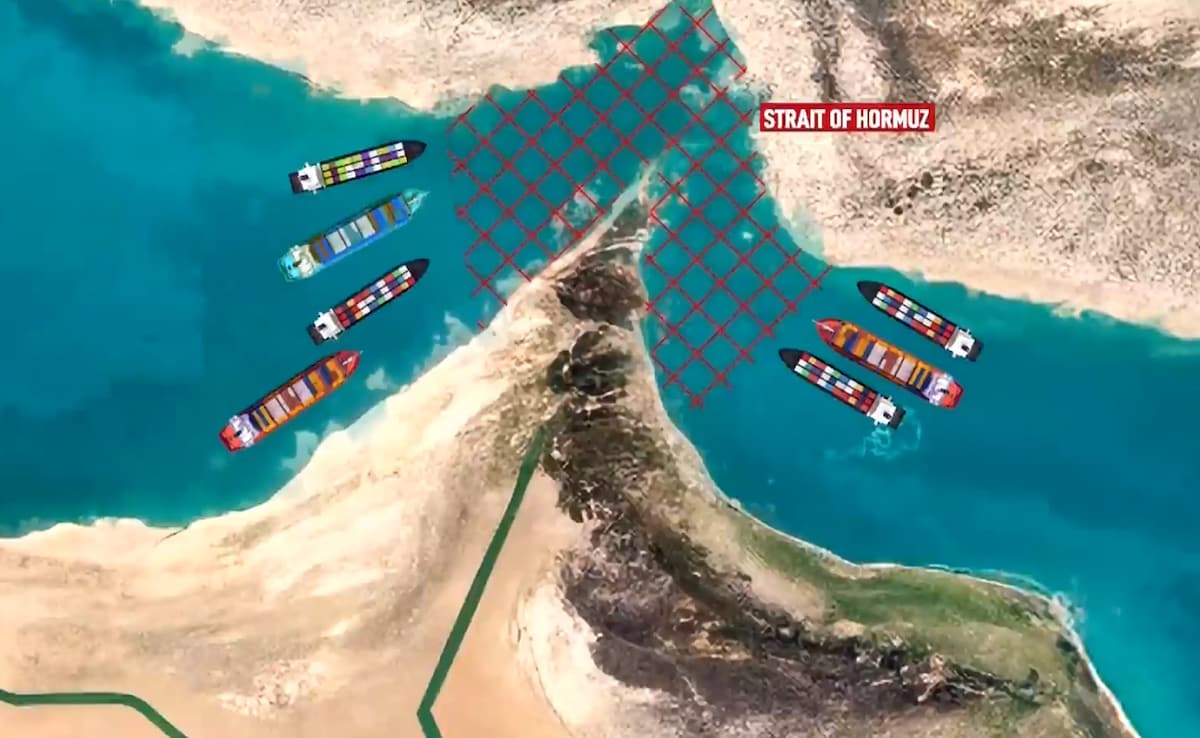
The Strait of Hormuz is widely recognized as the world’s most sensitive oil artery, but for India, it is quietly becoming a food security trigger. While the global markets obsess over the price of a Brent crude barrel, the real crisis for the subcontinent lies in the skyrocketing cost of the inputs required to grow rice, wheat, and sugarcane. India’s agricultural backbone is not just fueled by the monsoon; it is lubricated by a steady flow of phosphatic fertilizers, natural gas, and sulfur that must pass through a narrow, 21-mile-wide lane of water. If that lane narrows or closes, the shockwaves do not just stop at the petrol pump. They end up in the price of a bag of flour in a village in Uttar Pradesh.
The Fertilizer Trap
Most analysts look at Hormuz and see tankers. I look at it and see soil nutrients. India is the world’s second-largest consumer of urea and among the top importers of DAP (Di-ammonium Phosphate). A massive portion of the raw materials required to manufacture these—specifically rock phosphate, phosphoric acid, and elemental sulfur—originates from Middle Eastern hubs like Saudi Arabia, the UAE, and Qatar. These shipments are non-negotiable for Indian farming. For a closer look into similar topics, we recommend: this related article.
When maritime tensions spike in the Persian Gulf, insurance premiums for these vessels do not just rise; they explode. We are talking about "war risk" surcharges that can add thousands of dollars to a single day of transit. For a country that subsidizes its fertilizer to the tune of billions of dollars annually, these costs are a direct hit to the national exchequer. If the government cannot absorb the hike, the farmer pays. If the farmer pays more for DAP, the consumer pays more for vegetables. It is a mathematical certainty.
Natural Gas and the Urea Equation
Urea production is a gas-intensive process. India has made strides in domestic production, but a significant chunk of the "feedstock"—the natural gas used to create the chemical reaction—is imported as Liquefied Natural Gas (LNG). Qatar is India’s largest supplier of LNG. Every molecule of that gas passes through the Strait of Hormuz. For broader background on this development, comprehensive analysis can also be found at Financial Times.
Consider the mechanics of a supply disruption. If a naval skirmish or a blockade occurs, the "spot price" of LNG on the global market hits the ceiling. Indian fertilizer plants, which operate on razor-thin margins and heavy government oversight, suddenly find their primary raw material priced out of reach. This creates a production lag. In agriculture, timing is everything. A two-week delay in fertilizer availability during the sowing season can result in a 10% to 15% drop in total crop yield. You cannot negotiate with a plant’s growth cycle.
The Export Backfire
India is a global powerhouse in the export of Basmati rice and buffalo meat. These products represent a multi-billion dollar revenue stream. However, the logistics of these exports are heavily reliant on the same western maritime routes that are currently under pressure. When the Hormuz region becomes a "hot zone," shipping lines often reroute or cancel calls to regional ports.
The result is a container shortage. Empty containers that should be arriving at Mundra or Jawaharlal Nehru Port Trust (JNPT) are stuck or diverted. When the supply of containers drops, the freight rate for exporting rice to the Middle East or Europe climbs. This makes Indian produce less competitive against rivals like Thailand or Vietnam. It is a pincer movement: the cost of growing the food goes up because of expensive fertilizer, and the profit from selling it goes down because of expensive shipping.
Energy as an Input Cost
It is a mistake to view fuel prices as a separate category from food prices. In the Indian hinterland, mechanized farming is the standard. Tractors, harvest combines, and diesel-powered irrigation pumps are the workhorses of the Green Revolution's legacy. Diesel accounts for a massive portion of a farmer's operational expenditure.
Every time a tanker is harassed or a drone strike hits a processing facility near the Gulf, the Brent crude index jumps. In India, where fuel taxes are high and price floors are sticky, this translates to immediate pain at the rural pump. A 10% rise in diesel costs can wipe out the entire profit margin of a small-scale pulse farmer. This forces a migration of labor and a reduction in acreage planted, leading to a long-term supply contraction that keeps inflation high for years, not just months.
The Phosphorus Monopoly
The concentration of mineral wealth in the Middle East creates a geopolitical monopoly that India cannot easily circumvent. While India has attempted to diversify its sourcing—looking toward Morocco and Jordan—the logistical convenience of the Persian Gulf remains unmatched. The transit time from a Saudi port to India’s west coast is a fraction of the time it takes to sail from North Africa.
This proximity is a double-edged sword. It keeps costs low during peacetime but creates a single point of failure during conflict. We saw a glimpse of this volatility during recent Red Sea disruptions. While the Red Sea is a different body of water, the maritime insurance industry treats the entire region as a single risk block. When one domino falls, the cost of moving sulfur from Kuwait to Gujarat rises just as surely as if the conflict were on India's doorstep.
The Specter of Protectionism
When the cost of inputs rises and yields are threatened, the Indian government’s default reflex is protectionism. We have seen this with export bans on wheat and non-basmati white rice. While these moves are designed to protect the domestic consumer from price hikes, they wreak havoc on international markets and damage India’s reputation as a reliable trade partner.
This protectionism is a direct result of the vulnerability at Hormuz. If the government felt secure in its "input supply chain"—meaning it knew it could get cheap gas and fertilizer regardless of Gulf politics—it wouldn't feel the need to lock down its borders every time a geopolitical ripple occurs. The instability of the Strait is, therefore, a primary driver of global food price volatility, even for countries that don't buy a single grain of Indian rice.
The Infrastructure Blind Spot
India has invested heavily in strategic petroleum reserves (SPR), but where are the strategic fertilizer reserves? The nation has enough crude stored underground to last roughly nine days of net imports. There is no equivalent massive-scale buffer for the chemical precursors of food.
We are operating on a "just-in-time" delivery model for the very chemicals that keep 1.4 billion people fed. This is a gamble. The infrastructure at India's major ports is geared toward rapid offloading and distribution, not long-term storage of volatile ammonia or corrosive phosphoric acid. Without a "Strategic Nutrient Reserve," the country remains at the mercy of whatever happens in the narrow waters between Iran and Oman.
Beyond the Barrel
To understand the future of the Indian economy, you have to stop looking at the price of gas at the station and start looking at the price of DAP at the cooperative. The Middle East is shifting its own economies away from pure crude and toward "downstream" products like petrochemicals and processed fertilizers. This means their leverage over India is not decreasing; it is simply changing form.
If a conflict in the Strait of Hormuz lasts longer than thirty days, the impact on India's GDP will not come from a lack of petrol for cars. It will come from a paralyzed agricultural sector that cannot afford to plant the next crop. This is a structural dependency that no amount of solar power or green hydrogen can quickly solve. Agriculture is a chemical process, and for now, those chemicals are trapped behind a 21-mile wide gate that is increasingly difficult to swing open.
The Hard Realities of Diversification
Seeking alternative routes is often cited as the solution. The International North-South Transport Corridor (INSTC) or moving more trade through the Chahbahar port in Iran are frequent talking points in diplomatic circles. But these are not "solutions" in the short term. They are aspirational projects.
The volume of material required to sustain Indian agriculture—millions of tons of bulk commodities—cannot be moved efficiently via rail or truck across the mountains of Central Asia. The sea is the only way. This leaves India with a stark choice: either develop a massive domestic chemical industry that doesn't rely on Middle Eastern gas, or accept that the price of onions in Delhi will always be decided by the stability of a waterway thousands of miles away.
The next time a headline breaks about a tanker being seized in the Gulf, do not check the stock market first. Check the commodity prices for urea. That is where the real damage is done.
The immediate priority for the Indian state must be the creation of long-term, fixed-price supply contracts for liquid ammonia and rock phosphate that bypass the volatility of the spot market. Relying on the "invisible hand" of the market is a dangerous strategy when that hand is frequently being shoved into a glove of maritime combat. Secure the nutrients, and you secure the nation. Fail to do so, and the next "energy crisis" will actually be a hunger crisis.