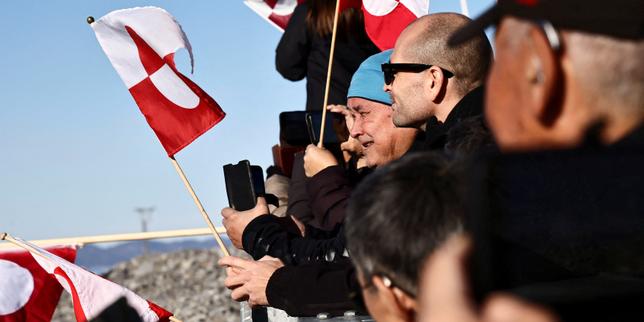
Multilateral agreements in the High North expose a structural divide in modern statecraft between institutionalized treaty frameworks and personalist, transactional diplomacy. While the Trump administration’s approach to foreign policy relies heavily on bilateral loyalty, informal backchannels, and sovereign acquisition rhetoric, the recent trilateral and multilateral frameworks governing Greenland—spanning the United States, Denmark, and the Government of Greenland (Naalakkersuisut)—operate on a fundamentally different set of mechanics. These agreements function as an institutional counterweight to personalized power politics by binding executive discretion to long-term regulatory, defense, and economic infrastructure.
To understand why the Greenland diplomatic architecture neutralizes personalist statecraft, one must analyze the competing operating systems of international relations: Institutional Multilateralism versus Patrimonial Transactionalism. For a different look, check out: this related article.
The Mechanics of Patrimonial Transactionalism
In foreign policy analysis, the approach characterized by critics as the "diplomacy of family and friends" aligns closely with what political scientists define as patrimonialism or personalist statecraft. Under this model, the state apparatus is treated as an extension of the executive’s personal network, and foreign policy is executed through a narrow circle of trusted confidants, family members, and private-sector envoys rather than career diplomatic corps.
This operating model relies on three core mechanisms: Similar insight regarding this has been provided by TIME.
- De-institutionalization of Channels: Career diplomats and established interagency processes are bypassed in favor of ad-hoc envoys. Information flows vertically to the executive rather than horizontally across defense, intelligence, and state departments.
- Bilateral Asymmetry: Personalist negotiators avoid multilateral forums where smaller states can pool bargaining power. Instead, they isolate counterparts in one-on-one settings where raw economic or military asymmetry dictates the terms.
- Zero-Sum Asset Acquisition: Geopolitical value is measured in tangible, sovereign control—real estate, exclusive resource extraction rights, or tariff exemptions—rather than shared security architectures or alliance cohesion.
During the first Trump administration, the 2019 proposal to purchase Greenland from Denmark exemplified this framework. The initiative bypassed standard diplomatic protocols, treated a self-governing territory with an established indigenous population as a distressed real estate asset, and triggered an immediate diplomatic rupture when Danish Prime Minister Mette Frederiksen dismissed the concept. The episode demonstrated the primary vulnerability of personalist diplomacy: when an executive frames a complex geopolitical issue as a personal transaction, any rejection becomes a personal slight, causing immediate institutional paralysis.
The Structural Counterweight of the Greenland Accords
The subsequent diplomatic agreements involving Washington, Copenhagen, and Nuuk—including the reopening of the U.S. Consulate in Nuuk, updated defense frameworks surrounding Pituffik Space Base (formerly Thule Air Base), and joint economic and critical mineral cooperation agreements—represent the exact antithesis of personalist statecraft. Rather than concentrating power in the hands of informal envoys, these accords distribute authority across permanent bureaucratic, legal, and regional institutions.
The stabilizing effect of this institutional framework rests on four structural pillars:
1. Tripartite Sovereignty Recognition
Personalist diplomacy attempts to negotiate over the heads of local stakeholders by dealing exclusively with the perceived "owner" of an asset—in this case, attempting to negotiate with Copenhagen while ignoring Nuuk. Modern Greenlandic agreements invert this dynamic by embedding the 2009 Act on Greenland Self-Government directly into diplomatic execution. Under this legal architecture, Denmark retains control over foreign and defense policy, while Greenland exercises jurisdiction over its subsurface mineral resources and domestic governance. Any functional agreement requires simultaneous buy-in from Washington, Copenhagen, and Nuuk. This tripartite structure makes unilateral, backroom deal-making legally unenforceable.
2. Bureaucratic Embedding and Continuity
When diplomatic commitments are codified through formal consulates, joint committees, and defense cooperation treaties, they acquire bureaucratic momentum. The re-establishment of a permanent U.S. diplomatic presence in Nuuk in 2020 shifted American engagement from sporadic, high-level political theater to continuous, ground-level institutional management. Career foreign service officers, defense attachés, and trade specialists manage daily operations, insulating the relationship from the abrupt personnel shifts and ideological swings of the White House.
3. Regulatory Alignment Over Sovereign Acquisition
In the critical minerals sector, personalist diplomacy seeks exclusive ownership or forced off-take agreements. Institutional statecraft relies on regulatory harmonization, environmental standards, and joint geological surveying. Greenland holds substantial deposits of rare earth elements (REEs), graphite, and zinc—resources essential for defense supply chains and energy transitions. By establishing technical working groups between the U.S. Department of State, the U.S. Geological Survey, and Greenland’s Ministry of Mineral Resources, the agreements create transparent investment environments. Western mining firms require predictable permitting, rule of law, and infrastructure co-financing—variables that personalist favoritism actively undermines by introducing political risk.
4. Alliance Integration via NATO and the Arctic Council
Personalist statecraft views multilateral alliances as constraints on executive freedom. The Greenland accords explicitly reinforce multilateral defense integration. Pituffik Space Base is not merely an American bilateral outpost; it is a critical node in North American Aerospace Defense Command (NORAD) and NATO’s early warning and missile defense architecture. By tying Greenland’s security infrastructure to broader transatlantic defense commitments, the accords ensure that any attempt to weaponize American security guarantees for bilateral concessions would simultaneously degrade U.S. homeland defense capabilities.
Cause-and-Effect Failures in Personalist Arctic Strategy
To evaluate why the institutional approach succeeds where personalist diplomacy stalls, it is necessary to trace the causal chain of transactional failures in the Arctic.
When a foreign power applies transactional pressure to a small, autonomous polity like Greenland (population approximately 56,000), it triggers an immediate sovereignty defense reflex. Greenlandic political parties, despite internal disagreements over the timeline for full independence from Denmark, share a consensus against substituting Danish colonial history for American or Chinese economic hegemony. Personalist overtures—whether direct purchase offers or informal promises of massive cash infusions through private intermediaries—activate local political resistance, empowering anti-Western factions and stalling project approvals.
Furthermore, personalist diplomacy miscalculates the capital expenditure timeline of Arctic development. Extracting resources or building dual-use infrastructure in Greenland requires multi-decade capital horizons due to extreme weather, lack of deep-water ports, and absence of interconnected power grids. Private investors and sovereign wealth funds will not commit billions of dollars to projects guaranteed only by the personal goodwill of a political administration with a four-year electoral cycle. Institutional agreements solve this time-inconsistency problem by anchoring projects in statutory appropriations, bilateral tax treaties, and multilateral development finance.
Operational Limitations of the Institutional Model
While the institutionalized Greenland framework neutralizes the volatility of personalist diplomacy, it is not without operational friction. A rigorous assessment requires accounting for three structural constraints inherent to multilateral governance in the Arctic:
- Decision Latency: Tripartite consensus among Washington, Copenhagen, and Nuuk slows execution. Environmental impact assessments, indigenous consultation mandates, and overlapping jurisdictional reviews extend project timelines by years. While Western institutions deliberate, state-backed competitors operating under centralized command structures can rapidly deploy capital—even if those projects frequently stall later due to local opposition or technical failures.
- The Independence Variable: The institutional equilibrium depends on the current constitutional arrangement between Denmark and Greenland. Should Greenland trigger Article 21 of the Self-Government Act and vote for full independence, the existing legal scaffolding—including the 1951 Defense of Greenland Agreement—would require immediate renegotiation. Institutional frameworks must therefore remain adaptable to a shifting constitutional baseline.
- Resource Nationalism vs. Alliance Needs: Greenlandic policymakers prioritize local employment, environmental preservation, and fiscal revenue over the geopolitical urgency of Western supply chain decoupling. For instance, the 2021 ban on uranium mining in Greenland halted the Kvanefjeld rare earth project, demonstrating that local democratic institutions will prioritize domestic environmental mandates over allied strategic mineral demands.
Strategic Imperatives for Transatlantic Policymakers
To sustain the advantage of institutional statecraft against both personalist disruption from within and authoritarian state capitalism from without, policymakers in Washington, Copenhagen, and Nuuk must execute three specific operational adjustments:
- Institutionalize Dual-Use Infrastructure Financing: Move beyond diplomatic memorandums of understanding by expanding the mandate of the U.S. International Development Finance Corporation (DFC) and the Export-Import Bank (EXIM) to co-finance civilian-military dual-use infrastructure—specifically deep-water ports, airstrips, and satellite ground stations—under joint Danish-Greenlandic oversight.
- Establish Pre-Negotiated Defense Continuity Protocols: Draft contingency legal frameworks within the existing Joint Committee structure to ensure that Pituffik Space Base operations and NATO maritime domain awareness in the GIUK (Greenland-Iceland-United Kingdom) gap remain legally uninterrupted regardless of future changes in Greenland’s constitutional status.
- Decouple Technical Aid from Executive Rhetoric: Route educational exchanges, climate science funding, and telecommunications upgrades through permanent interagency bodies and Nordic multilateral institutions. Shielding operational budgets from executive discretion guarantees that transactional political cycles cannot hold foundational alliance infrastructure hostage.