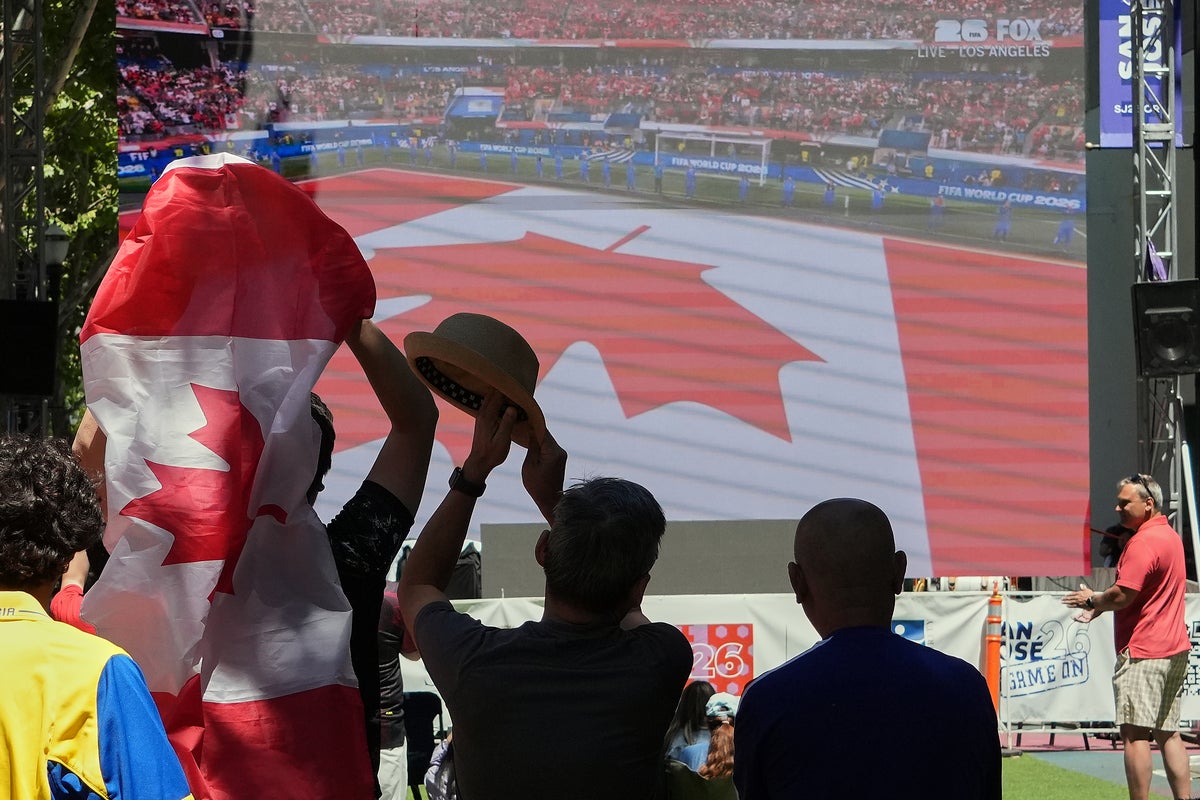
A single gunman shattered the carefully curated security narrative of the San Francisco Bay Area’s World Cup hosting campaign Sunday night, leaving one man dead on a downtown sidewalk and another fighting for his life in a crowded entertainment district. The gunfire erupted at roughly 9:15 p.m. at San Pedro Square in San Jose, a designated FIFA watch party zone that hours earlier had been packed with tournament tourists. City officials immediately scrambled to distance the bloodshed from the tournament itself. But the reality of a homicide occurring directly on the perimeter of a global showcase exposes a glaring structural vulnerability in how modern transit and entertainment hubs are secured during major sports events.
Politicians and organizers love the clean optics of controlled environments. They construct gated perimeters, install metal detectors, and deploy private security within specific boundary lines. The moment a visitor steps outside those invisible boundaries to catch an Uber, grab a meal, or walk back to a hotel, they enter a security vacuum. Sunday night’s shooting occurred at the intersection of North Market Street and West Santa Clara Street. One victim collapsed and died mere meters from a ramen restaurant door; the surviving victim fled bleeding through a parking lot before collapsing directly inside the fan-zone area.
The Soft Perimeter Problem
Major sporting events operate on a flawed defensive doctrine known as fortress security. Municipalities spend millions fortifying stadium gates and fan-zone interiors while leaving adjacent thoroughfares under-resourced. The San Pedro Square site had successfully processed thousands of peaceful soccer fans during daytime match screenings. Because the final whistle had blown hours prior and official programming had concluded for the day, municipal leadership argued the event’s safety record remained intact.
This distinction means nothing to an international tourist or a local family navigating a downtown commercial district.
To understand why these perimeters fail, consider how city centers function during multi-week tournaments. High-profile international events do not merely attract ticket holders; they permanently alter the density and layout of city streets for weeks at a time. Local businesses adapt by expanding outdoor seating, streets are closed to vehicular traffic, and transit hubs become bottlenecked with pedestrian crowds. When security planning focuses exclusively on the hours of active operation, it ignores the reality that these zones remain high-density targets around the clock.
The transition period between official tournament programming and standard nightlife hours represents the most dangerous operational window for local law enforcement. Private security guards hired for the event frequently clock out or scale back operations the moment the screens go dark. Meanwhile, local police forces, already exhausted by extended daytime shifts managing massive tournament crowds, face the immediate return of standard weekend nightlife activity.
When Global Showcases Meet Local Realities
The San Jose shooting is not an isolated breakdown. It is part of a recurring pattern of gun violence bleeding into the margins of the tournament across the country. Earlier this month, a shooting occurred near the English national team's base camp in Kansas City, followed days later by a separate incident where an Uber driver transporting soccer fans was caught in a roadway shooting.
The friction between local crime realities and the idealized expectations of international sports tourism creates a profound logistical headache. Host nations are expected to project an aura of total safety to corporate sponsors and visiting delegations. Yet, the systemic issues plaguing American metropolitan areas, particularly gun violence and understaffed municipal police departments, cannot be temporarily legislated away for a month-long tournament.
Municipalities frequently use short-term federal grants to flood specific tourist corridors with overtime police patrols. While this creates a visible deterrent on specific blocks, it often forces local criminal activity just a few streets over, right into the secondary dining and entertainment districts where budget-conscious fans gather outside the official gates.
The Limits of Political Reassurance
San Jose Mayor Matt Mahan issued a swift statement condemning the brazenness of the crime, explicitly noting that because Sunday’s programming had ended hours earlier, there was no indication the violence was connected to the tournament.
"San Jose has safely welcomed hundreds of thousands of people downtown, and we are not going to let one criminal act scare our community away from public spaces that belong to them," Mahan stated.
This is standard political crisis management. It treats a public safety failure as an unpredictable anomaly rather than a predictable consequence of modern crowd dynamics. When a city center is rebranded as a international fan zone, the entire district becomes a singular entity in the public consciousness. Attempting to draw a neat line between a homicide at 9:15 p.m. and a soccer celebration that ended at 2:00 p.m. is an exercise in bureaucratic semantics.
The economic model of hosting global tournaments relies entirely on public confidence. If international visitors believe that stepping off an official shuttle bus puts them at risk, the projected economic windfall evaporates. The response to the San Jose shooting requires more than municipal statements emphasizing that the victims collapsed outside official hours. It demands an immediate overhaul of how cities manage soft perimeters during long-duration international events.
Security integration must extend beyond the physical footprint of the fan zones. Municipalities must secure the entire ecosystem supporting the event, including late-night dining corridors, parking structures, and rideshare pickup points, for hours after the main attraction concludes. Until city planners acknowledge that a tournament zone cannot be turned off like a television screen, the space between the fortress and the street will remain a dangerous territory.