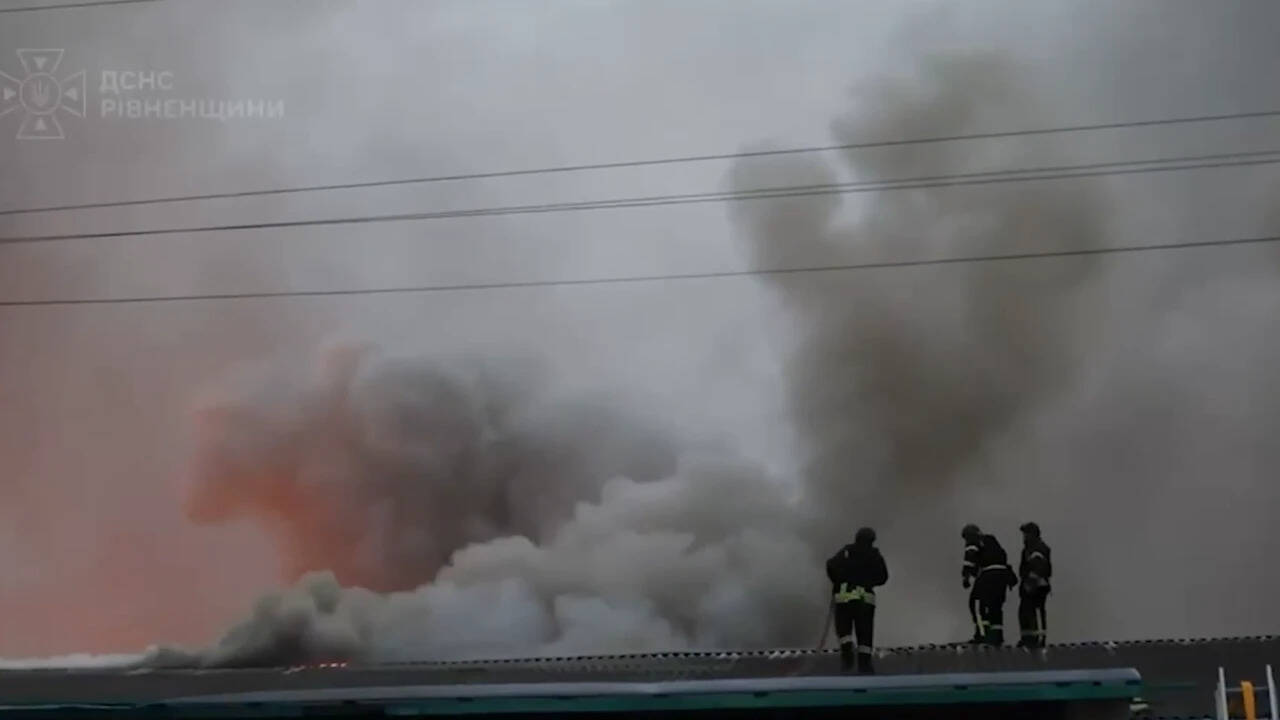
Mass barrages of roughly three hundred and twenty missiles and drones aimed at Ukraine's power infrastructure are not random acts of fury. They are precision-calibrated attempts to break the physical spine of a national electrical system right as temperatures drop and demand spikes. When Volodymyr Zelenskyy warns of winter blackouts, he is pointing to a cold engineering reality: a grid can absorb isolated hits, reroute power across regions, and patch damaged lines in daylight, yet it struggles when high-voltage nodes are struck in coordinated waves during freezing weather.
Headline numbers tell part of the story. The mechanics tell the rest.
To understand why a single large-scale strike carrying more than three hundred aerial weapons threatens an entire season rather than a single afternoon, you have to stop picturing electricity like water sitting in a bucket. A power grid is a live, balancing act moving at fifty hertz in Ukraine and continental Europe. Generation and load must match almost instantaneously. If a major transformer station or generation unit drops offline unexpectedly, frequency shifts, protective relays trip to save expensive gear from burning out, and neighboring segments have to absorb the sudden surge or shed load to stay stable.
Why Three Hundred Weapons Hit Different in Winter
Summer stress and winter stress look nothing alike on a dispatch desk. In July, heat waves push air conditioning loads higher, and crews work in long daylight hours with dry ground and mild nights. In late autumn and winter, heating loads climb, daylight shrinks, snow and ice complicate field repairs, and every hour without heat or power carries compounding risk for residential blocks, hospitals, district heating plants, and water pumping stations.
A three-hundred-plus-weapon package works through saturation and sequencing. Drones arrive in swarms to probe air defenses, exhaust interceptors, draw out radar signatures, or strike dispersed targets. Cruise and ballistic missiles follow to punch through with heavier warheads against high-value electrical nodes that take months to manufacture and weeks to haul into position. Even when air defenses intercept a high share of incoming munitions, falling debris, secondary fires, and shockwaves can still damage exposed switchyards and transmission lines.
Grid defense is rarely a one-to-one contest between an interceptor and a transformer. Air defense batteries protect cities, military assets, and select critical sites, while a national grid spans thousands of kilometers of high-voltage lines and hundreds of substations. You cannot put a thick shield over every pylon and transformer bay across a country that size.
The Bottleneck Behind Every Transformer
Ask veteran utility engineers what keeps them up at night after a major barrage, and they rarely point to copper wire first. Wire can be spliced. Towers can be temporarily bypassed or rebuilt relatively quickly. The real choke point is high-voltage autotransformers and specialized switchgear.
These units step voltage up and down between generation, long-distance transmission, and local distribution. They are massive, oil-cooled, custom-engineered pieces of heavy equipment weighing tens or even hundreds of tons. Manufacturing lead times in peacetime already stretch for many months or longer because specialized grain-oriented electrical steel, copper windings, and skilled shop capacity are scarce globally.
Moving a replacement transformer into place is its own logistics puzzle. Bridges have weight limits. Rail clearances are tight. Roads get torn up by heavy transport and winter weather. Once on site, crews have to crane the unit onto its pad, pull vacuum, fill it with insulating oil, run dielectric tests, and tie it back into a scarred substation that may still face follow-on strikes.
A power grid survives not because nothing breaks, but because engineers can isolate the wound before the infection spreads across the whole network.
When attackers hit the same region or corridor repeatedly, they eat through spare capacity and force engineers into improvisation. Mobile substations, repurposed equipment from decommissioned plants elsewhere in Europe, and creative rerouting keep lights and heat cycling on and off in many areas. Still, improvisation has limits. Every patch introduces stress elsewhere in the system.
What Headlines Miss About Generation Versus Transmission
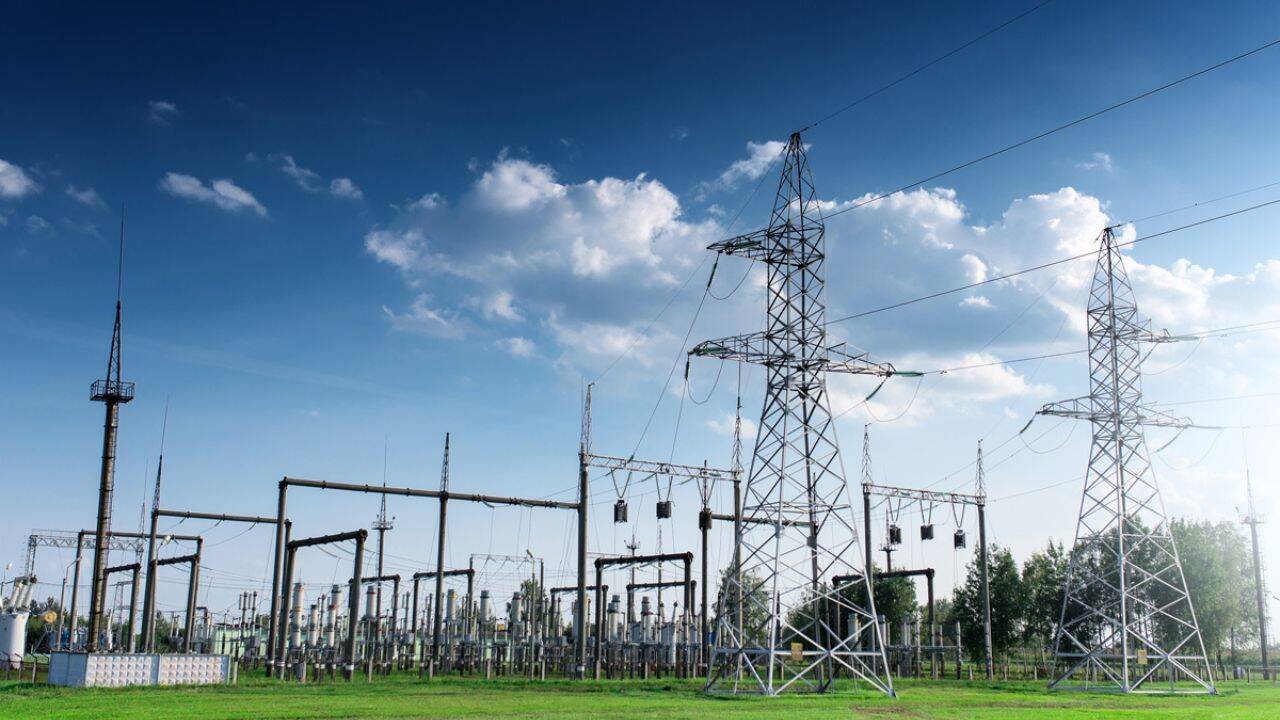
Public coverage often blurs power generation and power transmission, yet treating them as one bucket obscures how blackouts actually happen. Generation is where electricity is made—thermal plants, hydropower stations, nuclear units, wind, and solar. Transmission and distribution are the highways and local streets that carry that power to homes and factories.
You can have generating capacity available on paper and still sit in the dark if the high-voltage lines and substations connecting those plants to load centers are severed or tripped. Conversely, if generation itself is knocked down or forced to curtail output so the remaining grid does not destabilize, rolling outages become unavoidable even where local wires are intact.
Nuclear generation adds another layer of operational complexity that casual observers frequently overlook. Reactors do not operate like gas campfires you can flick on and off at a whim. When external grid connections or substations tied to nuclear plants are damaged or destabilized, operators have to carefully reduce power output or manage off-site power lines to keep safety margins intact. That makes grid stability a direct safety and reliability concern, not merely an economic inconvenience.
The Myth of Quick Fixes and Silver Bullets
Whenever a major winter grid campaign hits the news, familiar remedies pop up in commentary feeds. Decentralized solar, small battery banks, diesel generators, and undergrounding lines all get billed as neat answers. Each has a real role. None is a magic wand for a cold, war-torn industrial grid.
Start with solar power in late autumn and winter at northern latitudes. Short days, low sun angles, cloud cover, and snow cut output sharply right when heating demand peaks. Rooftop and small commercial solar helps shave daytime load in milder weather and powers localized needs, yet it cannot carry a national winter peak through dark nights and multi-day overcast spells.
Backup generators keep hospitals, telecom towers, bakeries, and municipal pumps running during outages. They are indispensable stopgaps. They are also noisy, expensive to fuel, constrained by fuel logistics, and impractical as the primary backbone for millions of apartments during a months-long winter squeeze.
Burying high-voltage transmission lines sounds sensible until you look at the physics and economics of extra-high-voltage power. Undergrounding high-voltage cables costs vastly more per kilometer than overhead lines, takes years of trenching and specialized jointing work, and creates capacitive charging challenges over long distances. Even more fundamentally, substations—the aboveground hubs where lines converge and voltage is transformed—remain exposed and high-value targets regardless of whether the incoming cable is buried.
Why Economic and Psychological Pressure Are Twins
Energy infrastructure is a dual-purpose target in modern warfare. Physically, knocking out substations and generation slows industrial output, complicates rail and logistics schedules, disrupts cold storage and food processing, and forces factories to run on erratic schedules or costly backup power.
Psychologically, winter outages target daily endurance. Going without heat, hot water, elevator service in high-rises, or reliable internet during sub-freezing stretches wears down morale and strains municipal services. When people face cold apartments alongside air raid alerts, domestic resilience is tested hour by hour rather than in dramatic single moments.
There is also a strategic ledger on the attacker's side. Firing hundreds of missiles and drones costs serious money and consumes stockpiles that take time to replenish. Attackers keep running these packages because they calculate that the physical damage, repair burden, air-defense depletion, and winter hardship imposed on Ukraine outweigh the cost of the salvos. Whether that calculation holds depends on how fast air defenses can intercept, how fast crews can restore, and how much strain the grid can absorb without cascading failure.
A Hypothetical Look at a Cascading Winter Hit
Suppose, in a purely hypothetical scenario, an incoming wave of long-range drones and missiles targets three regional high-voltage hubs feeding a major winter city during a minus-ten-degree Celsius cold snap. Air defenses shoot down a large share of the inbound weapons, yet fragments and a handful of hits damage two key autotransformers and sever two incoming transmission lines.
Even if the city's local distribution network is untouched, the sudden loss of import capacity forces grid operators to shed load immediately to keep frequency steady. District heating plants that rely on electric pumps or co-generation ties face pressure. Water booster stations lose steady pressure. Crews work through the night in freezing wind to isolate damaged bays, route power through remaining links, and restore heat first, followed by rotating power blocks to households.
Notice what happens next in that hypothetical case: the city is not necessarily dark for five straight months, yet life runs on a fragile schedule of scheduled and emergency outages. Every subsequent strike while repairs are half-finished hits a system with thinner margins than before.
What Actually Determines Survival Through Winter
Predicting exact blackout hours across an entire winter is a fool's errand because too many variables move at once: weather severity, strike cadence, munition mix, air-defense resupply, and repair speed. Still, anyone watching this conflict closely can track a handful of concrete indicators that separate noise from signal.
- Spare transformer and switchgear inventory: Watch whether damaged high-voltage equipment is being replaced with new or refurbished units or bypassed with temporary workarounds.
- Grid interconnect and import capacity: Cross-border power flows and internal transmission repairs show how well remaining generation can reach deficit regions.
- Air defense interceptor depth: High interception rates on fast missiles matter disproportionately because ballistic and cruise warheads inflict concentrated structural damage that swarms of smaller drones often cannot match alone.
- Municipal heat and water redundancy: Decentralized boiler capacity, mobile heat units, and fuel reserves determine whether power cuts turn into freezing emergencies inside apartment blocks.
Winter grid warfare is a war of attrition fought across transformers, relays, weather forecasts, and supply chains. Every megawatt kept online in freezing weather is a quiet engineering victory bought under fire.