Commercial aviation relies on a razor-thin margin of safety, especially when aircraft are navigating the congested, highly restricted airspace of Washington, D.C. That margin was severely tested when high-intensity production lighting from the temporary Ultimate Fighting Championship (UFC) arena on the White House South Lawn began blinding commercial pilots on final approach to Ronald Reagan Washington National Airport (DCA). As flight crews filed urgent safety hazard reports with the Federal Aviation Administration (FAA) and NASA, the incident exposed a massive oversight in how entertainment spectacle interacts with critical infrastructure.
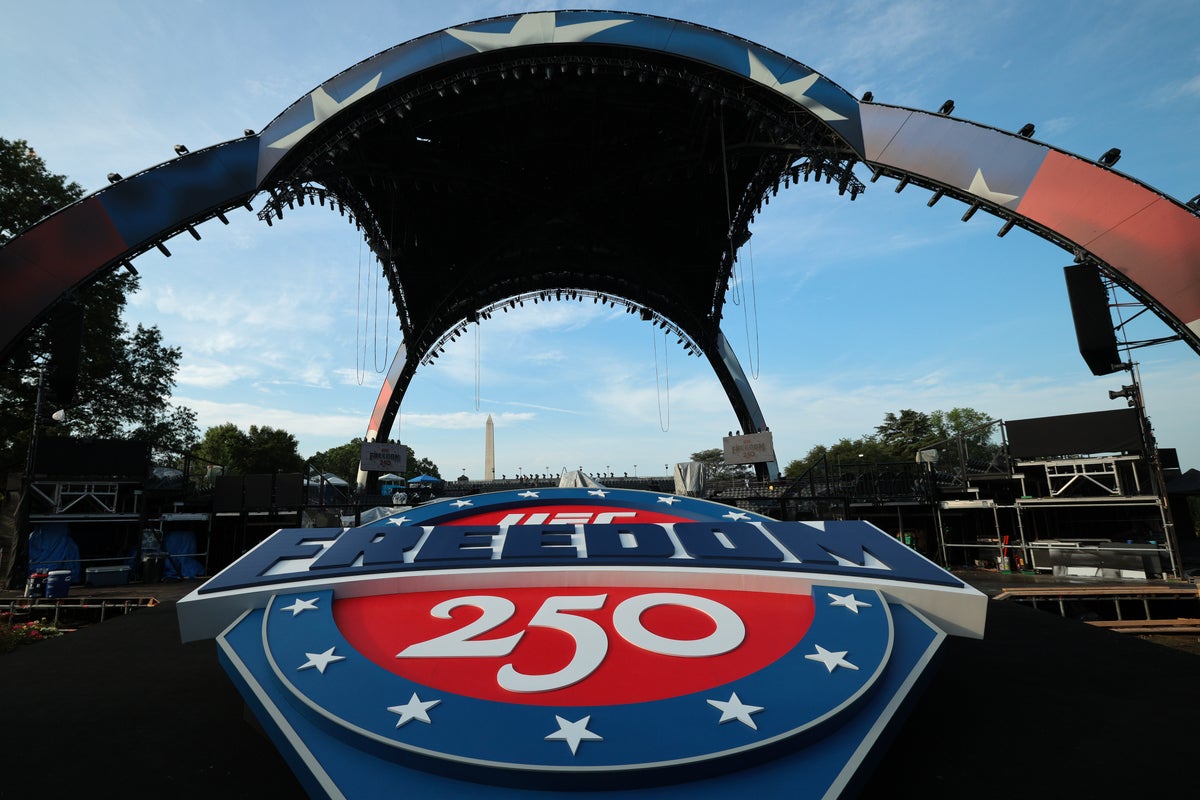
The controversy stems from "The Claw," a massive temporary stadium structure erected on the executive mansion’s grounds to host UFC Freedom 250. Constructed to celebrate Donald Trump’s 80th birthday, the installation features arena-grade, multi-million-lumen production lights designed to illuminate the outdoor octagon for a global television broadcast. During late-night technical calibration and testing of these arrays, the beams projected upward and outward, directly intersecting the flight paths used by aircraft landing at nearby DCA.
An anonymous commercial airline captain filed an official report after encountering the glare while flying a passenger jet into Washington. The pilot described the visual disruption as an overwhelming wash of illumination that flooded the flight deck, characterizing the intensity as ten times more severe than any traditional laser strike event they had ever experienced. Unlike a localized laser pointer, which produces a brief, pinpoint distraction, the arena lights created a sustained wall of glare that compromised the crew's night-vision adaptation at a critical phase of flight.
To understand why this occurred, one must examine the specific geography and visual constraints of Reagan National Airport. Airspace over the White House and the National Mall is permanently restricted under federal law as Prohibited Area 56 (P-56). To avoid this highly sensitive zone, aircraft landing at DCA frequently utilize the River Visual approach for Runway 19. This maneuver requires pilots to manually follow the path of the Potomac River at low altitudes, relying heavily on outside visual references while executing a final, banking turn just seconds before touchdown.
When high-powered searchlights and production rigs are fired into the night sky just hundreds of yards from this flight path, the light scatters across the humid night air. This creates a phenomenon known as atmospheric veiling glare. For an flight crew looking out the windshield to track the river and the runway environment, the sudden introduction of high-intensity ambient light behaves like high beams blinding an oncoming driver in dense fog. The pilot's eyes struggle to adapt, making it difficult to scan the flight instruments inside the dark cockpit while simultaneously searching for ground cues outside.
Aviation safety experts point out that while modern commercial aircraft feature highly sophisticated automated landing systems, DCA lacks the specific Category III Instrument Landing System (ILS) infrastructure that allows for completely blind, hands-off autolandings in zero visibility. Even under instrument flight rules, a human pilot must maintain continuous visual contact with the runway environment or the approach lighting system during the final moments of the descent. If a sudden burst of stadium lighting obscures those references, the crew is forced to abandon the landing and execute a missed approach, a complex maneuver that adds immense workload in a crowded terminal environment.
Organizers of the combat sports event, led by UFC executives, brushed off immediate concerns by emphasizing that the event structures complied with physical height restrictions and did not violate the technical horizontal boundaries of the White House perimeter. The production team designed the lighting array to project upward to create a dramatic television aesthetic, apparently failing to calculate the slant-range trajectory of the beams relative to descending aircraft less than two miles away.
The FAA and NASA’s Aviation Safety Reporting System (ASRS) are currently reviewing the filings to determine whether the event's lighting configuration violated federal aviation regulations concerning hazardous glare near public-use airports. Federal guidelines strictly regulate the use of outdoor laser light shows and high-intensity searchlights near airports, often requiring organizers to submit formal proposals weeks in advance so the agency can issue notices to air missions (NOTAMs) or mandate specific directional shielding.
This oversight underscores a growing tension between massive, pop-up entertainment spectacles and urban infrastructure management. When stadium-level production values are brought outside of traditional, self-contained arenas and dropped into the heart of a metropolitan center, the secondary effects extend far beyond the immediate perimeter. For the aviation community, the incident serves as a stark reminder that even the most secure airspace in the world remains vulnerable to the unintended consequences of a prime-time broadcast.