Anatomy of a Flashpoint
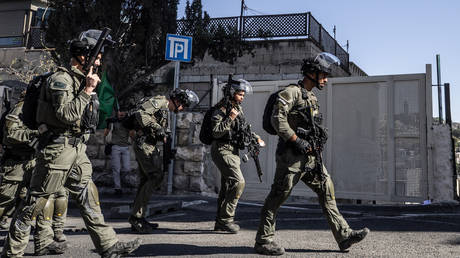
The military jeep idling outside the perimeter gate was not an anomaly. For months, incursions into refugee camps across the West Bank transformed from targeted nighttime operations into persistent, daytime fixtures of urban geography. In this specific instance, the flashpoint centered on a United Nations-administered facility, a designated humanitarian zone that theoretically carried institutional immunity under international frameworks.
When the gunfire cracked across the concrete courtyard, a Palestinian teenager fell. The immediate aftermath followed a depressingly familiar script: conflicting operational accounts from the military, frantic documentation by local bystanders brandishing smartphones, and a formal expression of deep concern from international bodies that lacked teeth to alter the ground reality.
Understanding this incident requires looking past the immediate tactical exchange. This event sits at the intersection of shifting rules of engagement, deteriorating security coordination, and the systematic erosion of neutral spaces in prolonged asymmetric conflicts.
The Institutional Shield That Cracked
International facilities operating under the flag of the United Nations occupy a unique legal and physical space. They are schools, distribution hubs, and medical staging areas. They are built to provide basic civic infrastructure in environments where such infrastructure is scarce or non-existent.
Yet, operational doctrines on the ground have increasingly treated these zones as porous. When armed actors or suspected militants utilize densely populated civilian neighborhoods for cover, the traditional boundaries separating protected zones from combat areas blur. Military planners argue that necessity overrides structural immunity if an active threat emanates from or near these premises. Critics and human rights monitors counter that treating a humanitarian center as a tactical variable creates a dangerous precedent, endangering civilian populations who rely on these institutions for survival.
The shooting of the teenager near the UN-run center crystallizes this tension. It raises an uncomfortable question about accountability. When a protected space is breached by kinetic force, the institutional architecture designed to protect non-combatants fails in real-time.
Ground Realities and Shifting Rules
Decades of reporting from conflict zones reveal a stark truth. Rules of engagement do not exist in a vacuum; they stretch, fray, and fracture the longer an occupation or low-intensity conflict persists.
Soldiers operating in dense urban environments face acute psychological and tactical pressures. Every alleyway can conceal an improvised explosive device or an armed adversary. In this climate of hyper-vigilance, the threshold for the use of live ammunition drops significantly. What military tribunals often categorize as split-second defensive decisions, field investigators describe as systemic recklessness.
Witnesses on the scene of the UN center raid reported a chaotic sequence of events. Stone-throwing youths confronted armored vehicles, a standard form of protest and resistance in the camps. The response transitioned rapidly from crowd dispersal methods, such as tear gas and rubber-coated steel bullets, to live fire.
This escalation points to a broader structural transformation. The normalization of lethal force as a primary tool for managing civil unrest ensures that tragic outcomes remain a statistical certainty rather than an aberration.
The Diplomatic Vacuum
International reaction to incidents of this magnitude follows a predictable cadence. Statements are issued, investigations are demanded, and briefings are held behind closed doors.
However, the efficacy of diplomatic intervention has hit a historic low. Local populations witness the repetition of these cycles without witnessing structural change. Accountability mechanisms, whether internal military investigations or international inquiries, frequently stall or produce findings that fail to satisfy either grieving families or legal watchdogs.
This creates a vacuum filled by deep-seated resentment and a hardening of attitudes on all sides. When institutional channels fail to deliver justice or prevent recurrence, trust evaporates entirely. The teenager shot outside the humanitarian compound is not merely a casualty of a single tactical error; he is a symbol of a system that has abandoned diplomatic resolution in favor of permanent containment through force.
The patrol trucks will eventually roll out of the camp, leaving behind shattered glass, fresh graffiti on concrete walls, and a community counting its losses. The structural conditions that brought them there remain untouched.