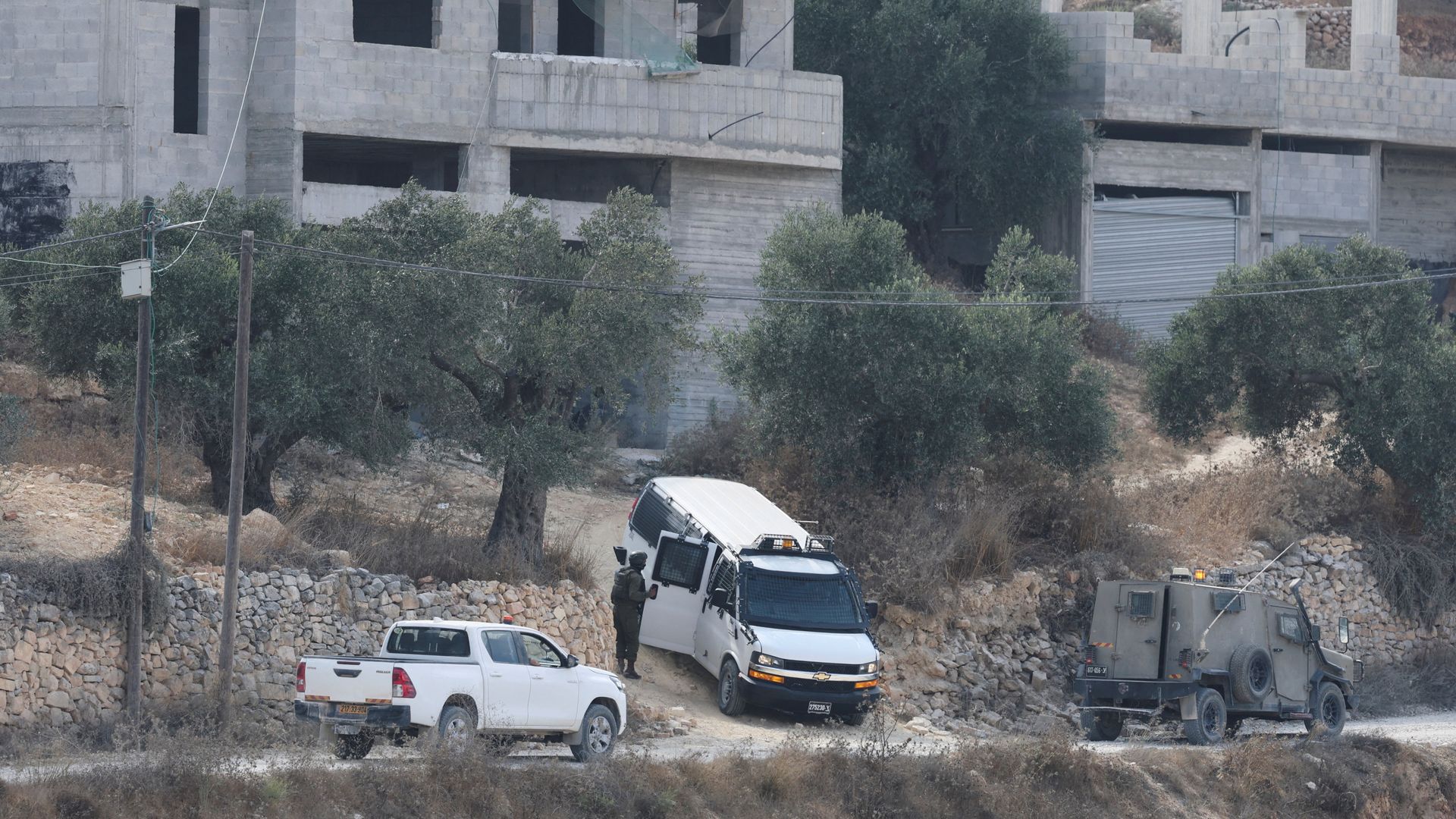
The headlines repeat with a numbing regularity. Israeli settlers cross the boundary, stone a Palestinian home, torch an olive grove, and security forces watch from a distance. The frequency of these incursions has created a dangerous news fatigue, reducing systematic violence to background noise in an already volatile region. Behind the daily reports of property destruction in the West Bank lies a structured, methodical pressure campaign. This is not random vigilantism. It is a calculated strategy designed to reshape demographics, exhaust civilian populations, and accelerate territorial displacement without requiring a formal state decree.
To understand how this dynamic functions, one must examine the mechanics of the ground-level expansion. It operates through economic strangulation, physical intimidation, and a legal framework that treats two populations living in the same geographic space under entirely different sets of laws. For decades, international monitors have documented the slow-motion annexation of Area C, the portion of the West Bank under full Israeli administrative and military control. Yet, focusing solely on geopolitics misses the immediate human cost borne by families waking up to shattered windows and burned livestock.
The Anatomy of a Midnight Raid
Consider a typical incident in a rural village near Ramallah or Nablus. The assault rarely happens in broad daylight. Groups of masked individuals descend upon the outer edges of a community after midnight. They target homes situated on the periphery, places where municipal services are non-existent and police response times stretch into hours.
The immediate objective is terror. Windows are smashed with heavy stones, vehicles parked in driveways are torched, and livestock are either killed or driven away. Families huddle in interior rooms, guarding children against flying glass and tear gas. By the time military patrols arrive, the perpetrators have usually melted back into nearby unauthorized outposts.
This pattern relies on a profound imbalance of power. Palestinian residents possess virtually no legal recourse within the military court system that governs the territories. Filing a complaint at a local police station often results in bureaucratic dead ends or, worse, harassment of the complainant. Consequently, many incidents go unreported, allowing the perpetrators to operate with near-total impunity.
The Legal Dualism Driving the Ground Realities
The persistence of these attacks stems from a bifurcated legal reality. Two neighbors living on the same hill experience entirely different judicial systems. Israeli settlers residing in West Bank outposts are subject to Israeli civil law, enjoy democratic voting rights, and benefit from the protection of military forces. Their Palestinian neighbors live under military martial law, where administrative detention without trial is common and property permits are virtually impossible to obtain.
This dualism creates a perverse incentive structure. When an unauthorized outpost is established on private Palestinian land, the legal battle to remove it can take years through Israeli civil courts. Meanwhile, the settlers dig in, laying water pipes, connecting electricity grids, and expanding their footprint outward.
Human rights organizations have repeatedly pointed out that the military apparatus often acts as a protective shield for the expansionist movement. Soldiers frequently find themselves caught between orders to maintain public order and a political leadership that tacitly supports settlement growth. When clashes occur, the standard intervention tends to penalize the victims rather than the aggressors. Palestinian youth who throw stones in defense of their neighborhoods face immediate arrest, prolonged detention, and military tribunals with conviction rates exceeding ninety percent. Settlers engaging in violent property destruction rarely face similar accountability.
Economic Warfare and the War of Attrition
Physical violence is only one instrument in a broader campaign of economic exhaustion. Agriculture has sustained rural West Bank communities for generations. Olive groves, wheat fields, and grazing lands provide the economic backbone for thousands of families.
Settler expansion systematically targets these economic lifelines. Ancient olive trees, some centuries old, are routinely uprooted or burned down during harvest season. Shepherds are harassed, threatened with firearms, and blocked from reaching traditional grazing pastures. Without access to their land, rural families face immediate financial ruin, forcing younger generations to abandon their ancestral villages for urban centers like Ramallah or to seek low-wage labor inside Israel.
This desertion serves the ultimate strategic goal. When a village is sufficiently depopulated and economically crippled, the pressure to resist evaporates. The land becomes functionally vacant, paving the way for further expansion, retroactive legalization of outposts, and the permanent redrawing of the map.
The Silence of the International Community
Diplomatic condemnation has become a predictable ritual. Statements expressing deep concern issue forth from foreign ministries in Washington, London, and Brussels whenever a major escalation occurs. These declarations are invariably accompanied by calls for restraint on both sides, a rhetorical framing that obscures the vast asymmetry between an occupying military power and an occupied civilian population.
Sanctions targeting violent individual settlers have been introduced by a handful of nations, but their practical impact remains negligible. Freezing the bank accounts of a few extremists does little to alter the structural policies of a state apparatus committed to territorial expansion. As long as diplomatic backing and military aid continue to flow unconditionally, the architects of this displacement have little incentive to change course.
The failure to address the root causes of West Bank violence guarantees its continuation. Until the international community moves beyond empty rhetoric and imposes meaningful economic and diplomatic consequences, the slow-motion erasure of Palestinian communities will proceed unabated, quietly reshaping the Middle East while the world looks elsewhere.