Alphabet-owned Waymo has planted its flag in Europe's premier automotive heartland, announcing plans to launch a commercial robotaxi service in Munich by late 2027.
The move marks the autonomous vehicle giant's first major foray into the European Union. It follows years of scaling up operations across major American metropolitan areas. Yet, translating success from sun-drenched American grids to the dense, unpredictable labyrinth of a historic Bavarian city is an entirely different beast.
Waymo is not merely exporting cars across the Atlantic. It is stepping directly into the backyard of German engineering titan BMW, challenging an automotive establishment that has long viewed self-driving software through a lens of profound caution and regulatory rigor.
The Reality of European Street Scenics
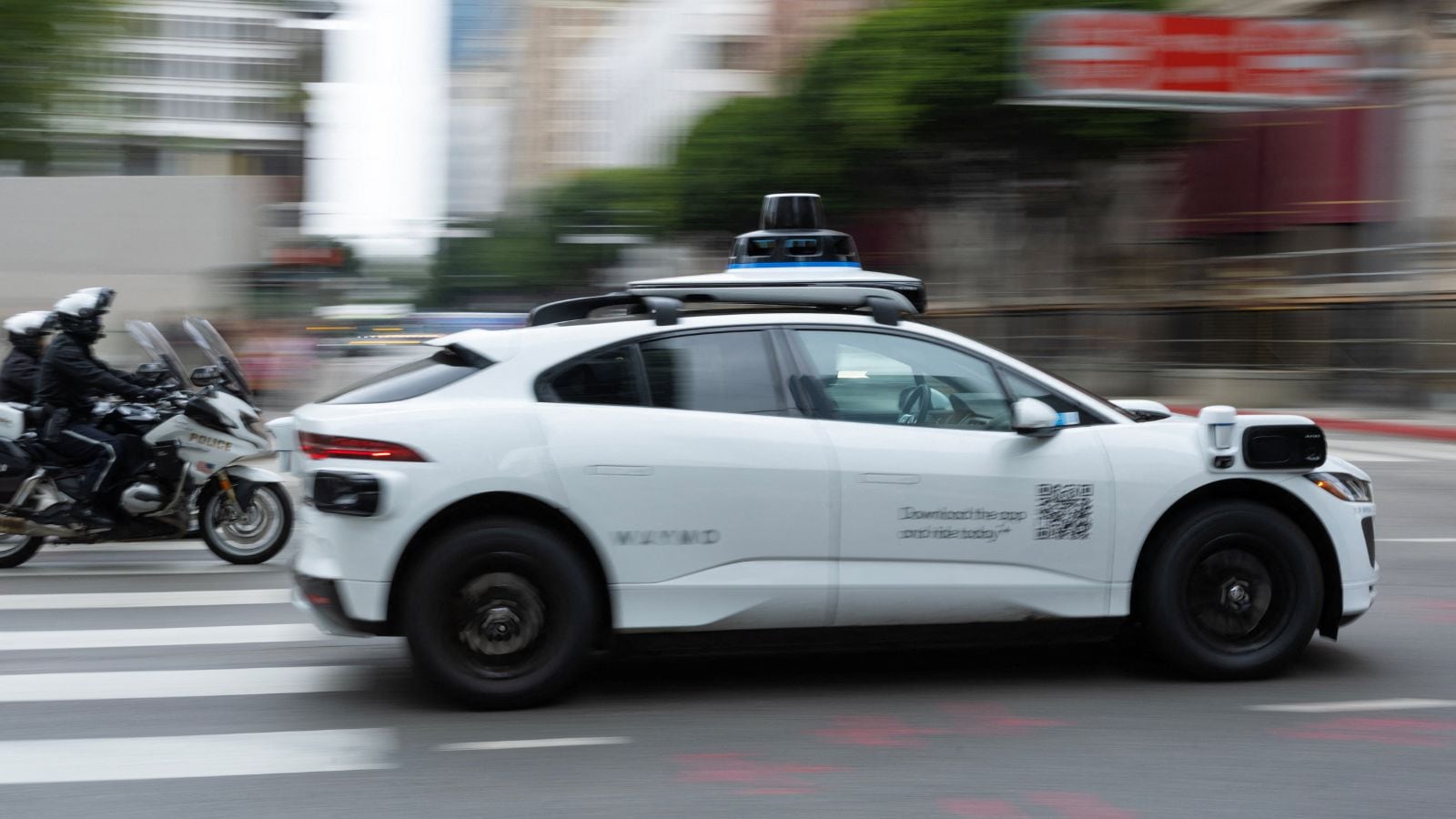
Before a single rider hails a driverless vehicle in Munich, the hard labor of data collection must begin. In the coming weeks, a fleet of all-electric Jaguar I-PACE vehicles will hit the streets of Munich under manual control.
Engineers will log every inch of the urban grid to construct high-definition maps. This phase is foundational. European cities do not operate on the predictable grid layouts found in Phoenix or San Francisco.
Munich presents a dense collage of medieval street planning, erratic bicycle lanes, narrow right-of-way junctions, and complex tram networks sharing tight asphalt with pedestrians. American software models trained on wide boulevards and predictable suburban stop signs will encounter a dense ecosystem of vulnerability. Cyclists weaving through tight urban corridors require a level of predictive nuance that algorithms often struggle to master.
Waymo’s phased approach—moving from manual mapping to supervised autonomous testing with safety specialists behind the wheel—is mandatory. It is also painfully slow. Trust cannot be rushed, particularly in a regulatory climate that views Silicon Valley's typical "move fast and break things" mantra with institutional hostility.
The Regulatory Tightrope and Berlin's Ambition
Germany holds a unique position in the autonomous mobility space. Back in 2021, the federal government enacted a progressive legal framework designed to permit Level 4 autonomous driving on public roads.
Berlin wanted to position the nation as a global leader in manufacturing and software innovation. Federal transport officials have openly welcomed Waymo as validation of that legal framework, framing the arrival as proof that Germany offers the legal certainty necessary for advanced automation.
However, political enthusiasm from federal ministries does not guarantee smooth municipal approvals. Local authorities in Bavaria retain significant oversight regarding traffic management, data privacy, and public transit integration.
European data protection laws are notoriously strict. Streaming continuous high-definition video feeds of public streets back to algorithmic servers triggers rigorous compliance checks from privacy watchdogs. Waymo must prove that its data collection protocols do not breach privacy statutes.
Furthermore, local politicians have made it clear that foreign tech interlopers must complement existing public transit systems rather than cannibalize them. If Munich's municipal council perceives the robotaxis as a net-negative addition that exacerbates downtown congestion, the path to commercial licensing will narrow significantly.
The Domestic Backlash and Local Competitors
Waymo's arrival in Munich also forces traditional German manufacturers into an awkward corner. BMW, Mercedes-Benz, and Volkswagen’s software division, Cariad, have spent billions developing their own autonomous and driver-assistance architectures.
Seeing an American juggernaut set up shop down the street stings the national pride of an industry that considers itself the global benchmark for luxury and safety engineering. Local competitors are not standing still. Ecosystem partnerships involving regional ride-hailing networks and homegrown startups are moving aggressively to claim market share.
Uber has already begun integrating Level 4 testing and partnerships across nearby European capitals, signalling that the fight for European asphalt will be crowded. Waymo cannot rely solely on its American brand equity. European consumers and fleet managers demand uncompromising reliability, and local automakers retain deep, historical relationships with municipal leaders and transport unions.
The Financial Reality Behind the Expansion
Behind the corporate press releases lies a grinding economic reality. Expanding internationally requires massive capital expenditure.
Setting up European subsidiaries, building local fleet operations centers, hiring specialized European engineering talent, and navigating distinct legal jurisdictions across multiple member states drains resources. Waymo is simultaneously pushing into international markets like London and Tokyo while continuing its rapid domestic expansion across dozens of U.S. cities.
Each new geography forces the autonomous driving stack to adapt to entirely new cultural driving habits, road sign variations, and weather patterns. Alphabet investors are increasingly looking for a clear line of sight toward sustainable unit economics. While the headline-grabbing expansion into Munich signals boundless ambition, the financial burn rate associated with international validation remains high.
If the 2027 timeline slips due to regulatory roadblocks or mapping complications, questions regarding the timeline for global profitability will intensify.
The countdown to late 2027 has begun. Waymo has the technology, the capital, and the backing of federal regulators eager to prove Germany is open for high-tech business.
Yet, Munich's narrow tram tracks, skeptical municipal leaders, and fiercely proud automotive establishment will test every line of code the company has written. The streets of Bavaria care little about Silicon Valley valuation metrics. They demand precision, patience, and absolute respect for the chaotic art of European urban navigation.