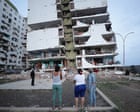
The double earthquake that struck north-central Venezuela on June 24, 2026, represents the most destructive seismic event the nation has experienced in over a century. Striking just 39 seconds apart, the magnitude 7.2 and 7.5 tremors centered in Yaracuy shattered structural foundations from the coastal cities of La Guaira to the high-density districts of Caracas. The catastrophic failure of high-rise apartment blocks and medical infrastructure has left hundreds dead, thousands injured, and tens of thousands missing. While the immediate images show a sudden act of nature, the true scale of this disaster is the direct consequence of long-term economic decay, unenforced building codes, and a paralyzed emergency response framework.
The Anatomy of a Thirty-Nine Second Double Shock
Seismologists refer to this phenomenon as a doublet. The first rupture, an Mw 7.2 shock, fractured the complex tectonic boundary where the Caribbean and South American plates grind past one another. Before civil defense systems could even register the data, a second, more violent Mw 7.5 mainshock tore through the shallow crust at a depth of just 10 kilometers. Read more on a connected topic: this related article.
The energy release was massive. Shallow earthquakes always inflict severe surface damage because the seismic waves travel a shorter distance through the earth, arriving at the surface with minimal attenuation. By striking in such rapid succession, the twin quakes subjected concrete structures to a continuous, shifting storm of lateral forces. Buildings that managed to survive the first wave with minor structural cracking were completely unequipped to handle the secondary shock wave that arrived less than a minute later.
The epicenter in the Veroes municipality sat squarely within a highly active deformation zone bounded by the Boconó fault system. For decades, geological tension had been accumulating along this fault line. When it finally ruptured, the lateral movement triggered widespread ground failure, including severe soil liquefaction along the northern coast. In cities like La Guaira, soils temporarily lost their strength and behaved like a liquid, causing multi-story buildings to tip on their sides or sink directly into the earth. More journalism by NBC News explores comparable views on this issue.
The Structural Rot in High Density Caracas
The destruction was not distributed evenly. In eastern Caracas, affluent neighborhoods like Altamira and Los Palos Grandes saw the total collapse of modern multi-story residential towers, including a prominent 22-story building that pancaked down to its foundation.
This structural failure highlights a systemic vulnerability in the urban architecture of Caracas. During the mid-to-late twentieth century, Venezuela underwent a massive construction boom fueled by oil wealth. Structural engineers drafted advanced seismic building codes modeled after Californian standards. However, the economic collapse of the past decade eroded both municipal oversight and structural maintenance. Concrete requires regular inspection; structural joints weaken over time under the influence of environmental moisture and minor seismic shifts.
The buildings that collapsed in Chacao and Baruta were mostly aging reinforced concrete frames. When the ground shifted violently, the lack of shear walls and unreinforced masonry infill caused the lower floors to fail instantly. Once a single floor collapsed under the weight of the levels above it, a progressive failure sequence became inevitable.
- The Soft Story Defect: Many of the mid-rise apartment blocks featured open-air ground floors used for parking or commercial storefronts. These "soft stories" lack the lateral stiffness of the upper residential floors, making them the weakest link during a severe earthquake.
- Corrupted Concrete Mixes: Decades of unregulated modifications and the use of substandard materials during localized renovations left hundreds of buildings vulnerable to sudden failure.
- Lack of Retrofitting: While cities like Tokyo or San Francisco mandate expensive seismic retrofits for older buildings, no such initiatives were implemented in Caracas due to a persistent lack of public capital.
Away from the concrete high-rises, the informal settlements known as barrios suffered a different kind of devastation. Built precariously on steep hillsides, communities like Pinto Salinas saw countless self-constructed brick dwellings slide down the slopes. These homes completely lack engineered foundations, relying instead on loose retaining walls that dissolved under the violent shaking.
A Paralyzed Emergency Apparatus
The physical destruction of buildings immediately severed the vital infrastructure needed for a modern rescue operation. Within minutes of the mainshock, the electrical grid across north-central Venezuela collapsed. Power outages plunged Caracas and surrounding states into total darkness, forcing rescue workers to search through shifting piles of concrete using nothing more than handheld flashlights and consumer cell phones.
The situation at Simón Bolívar International Airport in La Guaira illustrates the logistical paralysis. The runway suffered significant cracking, and the terminal buildings sustained severe structural damage, forcing the total cancellation of all commercial and humanitarian flights. Without a functioning primary airport near the capital, international search and rescue teams cannot deploy their heavy equipment or canine units directly to the disaster zone.
Hospitals that managed to remain standing are operating on failing backup generators. Key medical centers, including the Southern General Hospital in Maracaibo and facilities within Caracas, reported severe structural cracking in their primary support pillars. Medical staff are forced to treat hundreds of laceration and crush injury victims in open-air parking lots because the interior rooms are deemed unsafe due to the threat of major aftershocks.
The state of emergency declared by Acting President Delcy Rodríguez highlights the limited resources available to domestic civil protection agencies. Years of hyperinflation and brain drain have left fire departments and emergency medical teams understaffed and missing critical tools, such as hydraulic cutters and heavy-duty cranes capable of lifting collapsed concrete slabs.
The Pre Existing Humanitarian Crisis Multiplier
This disaster did not strike a stable society. Before the first fault line ruptured on June 24, Venezuela was already grappling with a deep humanitarian crisis, with international agencies estimating that nearly 28% of the total population required urgent external aid.
The international humanitarian response plan for the country was already facing massive funding shortfalls, sitting at less than a quarter of its required budget for the year. The sudden influx of tens of thousands of newly displaced people will completely overwhelm the existing, fragile supply chains for food, clean water, and medicine.
Organizations like the Norwegian Refugee Council and the Red Cross had their own facilities damaged in the tremors. When the very organizations tasked with delivering aid are themselves searching for missing staff among the ruins of their headquarters, the delivery of emergency relief slows to a crawl. The breakdown of water treatment facilities and broken aqueducts across the state of Carabobo raises the immediate threat of waterborne disease outbreaks, adding an epidemiological crisis to an active physical disaster.
Neighboring countries are attempting to mobilize help. The Colombian Red Cross has placed its specialized search and rescue teams on high alert for land deployment across the border. However, the mountainous terrain and damaged highway infrastructure between western Venezuela and the capital mean that any overland relief convoys will face days of delays before reaching the people trapped beneath the rubble of Altamira.
The true toll of this double earthquake will not be known for weeks. With over 40,000 people currently unaccounted for, the window for pulling survivors from the air pockets of collapsed buildings is closing fast. Every hour that passes without heavy lifting equipment, coordinated international logistics, and stable power infrastructure directly translates into an escalating loss of human life. The disaster in Venezuela is a reminder that when nature strikes with extreme violence, the structural integrity of a society's buildings and public institutions is the only real line of defense.