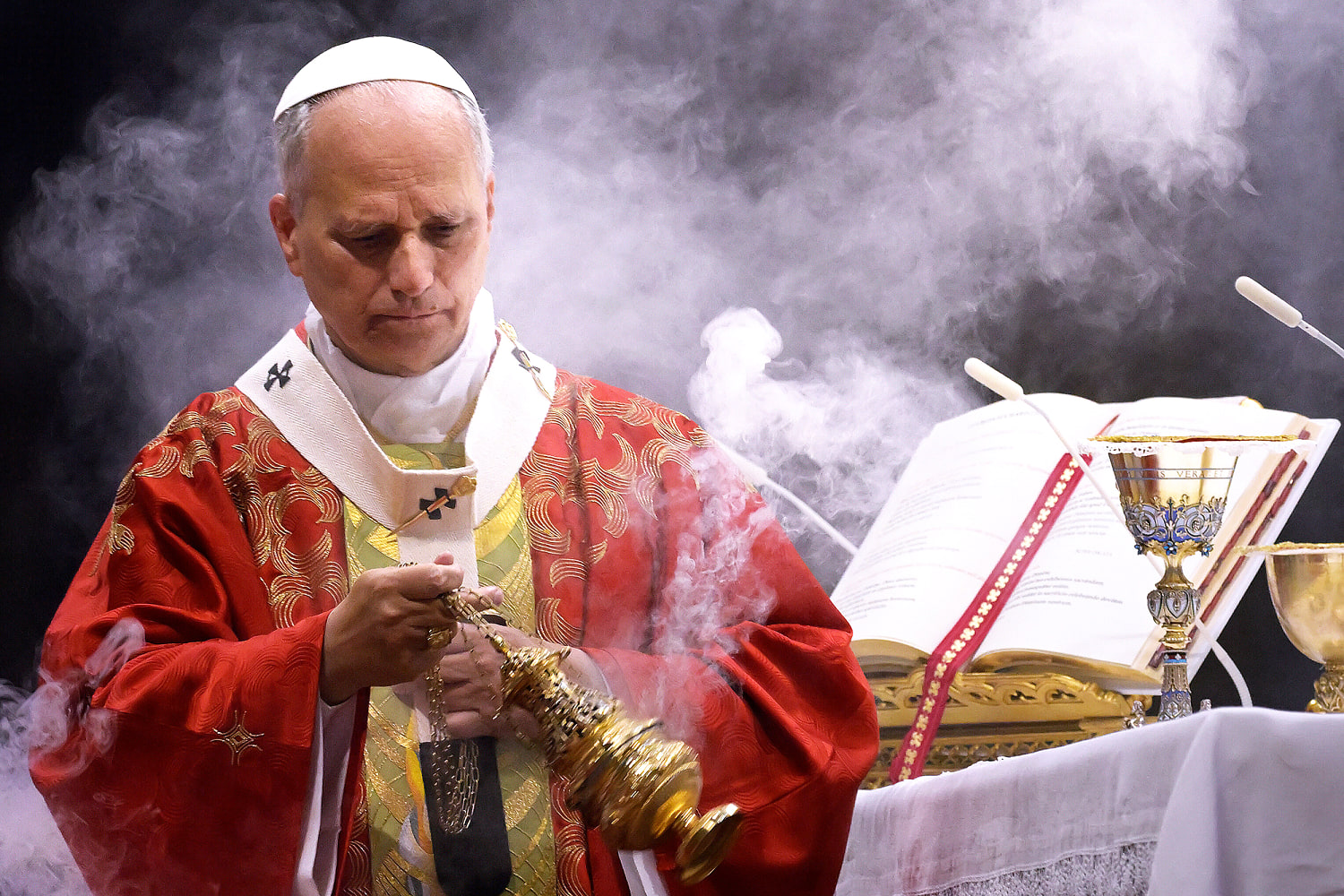
Vatican hallways are built on calculated silences. When the Holy See announced that Pope Leo would undergo scheduled surgery to remove a pulmonary nodule, the official bulletin landed with surgical precision. It offered maximum reassurance and minimum operational detail. Rome thrives on these carefully managed disclosures. Yet medical reality rarely conforms to press office timelines. A lung resection in an elderly head of state carries weight far beyond the operating theater. It is a moment where physiological vulnerability intersects directly with global governance.
Medical institutions across Italy have watched the unfolding schedule with clinical skepticism. Removing a nodule from the pulmonary parenchyma demands careful risk assessment, particularly when the patient's age and heavy travel schedule are factored into the equation. The Holy Press Office framed the intervention as routine maintenance. Surgeons operating at Rome's Gemelli Hospital know better. Every general anesthesia administered to a pontiff creates a period of administrative striae, a quiet pause where succession whispers inevitably begin in the shadow of the apostolic palace.
The Anatomy of Papal Disclosure
Transparency inside the Vatican operates on its own peculiar theological clock. For centuries, the health of the Bishop of Rome was treated as a state secret of the highest order. Medical bulletins were vague, often issued only after a crisis had passed or when concealment became entirely impossible. Pope Leo's administration has modernized elements of this communication apparatus, but the core reflex remains defensive. When a pulmonary lesion requires surgical excision, the public deserves a clear accounting of the staging, the biopsy results, and the anticipated recovery trajectory. Instead, observers receive sparse updates designed to calm financial markets and global dioceses simultaneously.
Consider the clinical indicators that precede such a procedure. A pulmonary nodule identified on routine imaging can range from a benign granuloma to an early-stage malignancy. The decision to proceed with surgical removal indicates that diagnostic imaging or needle biopsy pointed toward a necessity for definitive tissue pathology. Thoracic surgeons do not operate on chest wall tissue or lung parenchyma lightly. The postoperative healing curve for patients over seventy involves significant pulmonary rehabilitation, careful monitoring for atelectasis, and strict management of infection risks.
The public relations machinery prefers to focus on the swiftness of the recovery. The operational reality on the ground is far more demanding. A pontiff recovering from a wedge resection or lobectomy faces weeks of reduced stamina. The physical exertion of leading general audiences, managing curial departments, and meeting with heads of state requires high baseline respiratory efficiency. When that capacity is temporarily compromised, the governance of a global church of over one billion souls inevitably slows down.
Succession Mechanics and Curial Anxiety
Every medical intervention involving the sovereign of Vatican City triggers immediate geopolitical calculations. Cardinals across Europe, the Americas, and Asia monitor health updates not merely out of pastoral concern, but because papal longevity dictates the ideological direction of the universal church. A sudden vacancy or a prolonged convalescence forces the Roman Curia into an uncomfortably contemplative stance.
The machinery of the church does not stop, but it certainly shifts gears. Bureaucratic inertia sets in. Major appointments are delayed. Controversial doctrinal decisions are shelved until the health status of the pontiff is stabilized beyond dispute. This institutional hesitation reveals a structural vulnerability in absolute monarchies governed by aging leaders. There is no vice-president in the Vatican. There is no constitutional deputy waiting in the wings to assume executive authority during a medical furlough. The governance burden remains singular, absolute, and physically demanding.
The Clinical Crossroads
Managing pulmonary health in an aging global figure is an exercise in balancing activity against extreme exposure. Respiratory infections remain the primary threat to geriatric patients undergoing surgical procedures under general anesthesia. The physical environment of the Apostolic Palace, with its vast, drafty chambers and constant stream of international visitors, does not offer an ideal sterile recovery zone.
Medical teams advising the Vatican walk a narrow ridge. They must secure the health of their patient while managing the immense psychological pressure exerted by a watching world. The upcoming surgery at Gemelli Hospital is a stark reminder of biological limits. No amount of protocol, prayer, or diplomatic spin can exempt a human body from the laws of tissue healing and cellular aging.
The silence from the third floor of the Apostolic Palace will continue long after the surgical instruments are cleared away. Observers must look past the press releases and watch the calendar. The true measure of recovery will not be found in the bulletins published by the Holy See, but in the resumption of the demanding public schedule that defines the modern papacy.