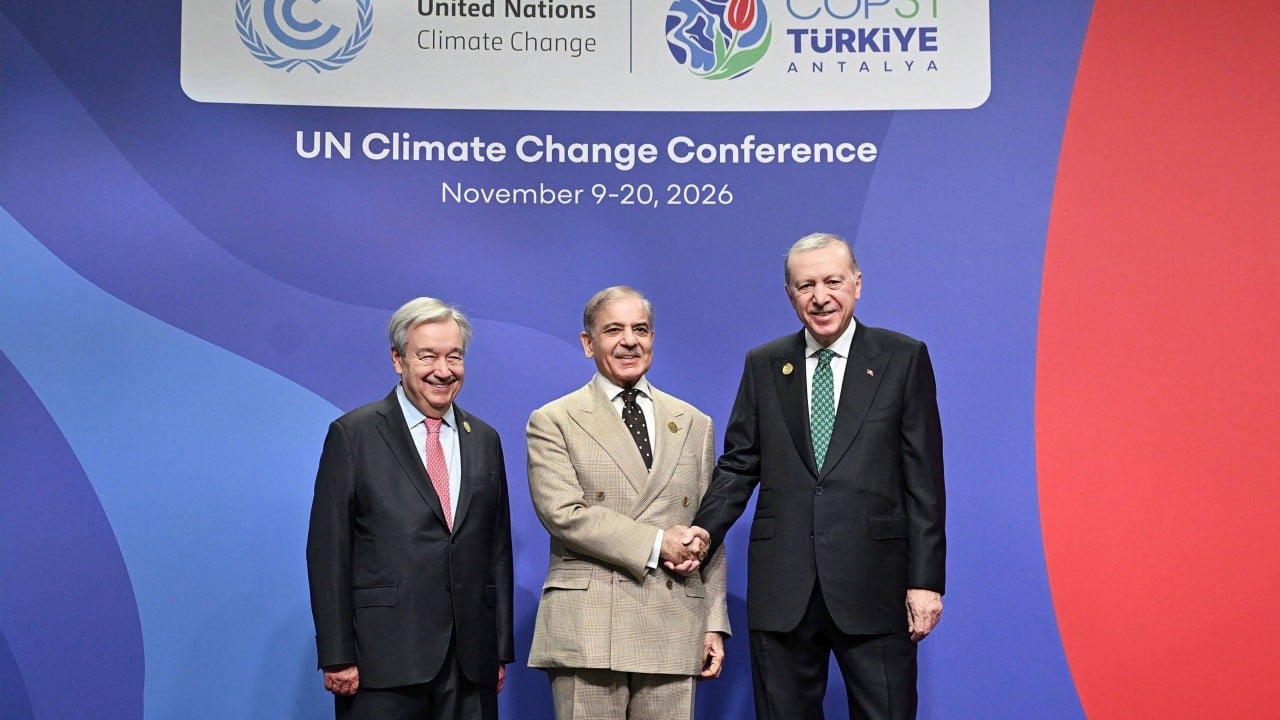
At the UN Cop31 summit, climate-vulnerable nations are demanding immediate, non-negotiable financial transfers and binding fossil fuel phaseout timelines because delayed pledges are actively erasing their coastlines and collapsing their agricultural economies. For decades, these annual United Nations climate conferences have operated on a familiar, exhausting script. Wealthy emitters offer grand rhetorical sympathy while diluting the legal text in backroom drafting sessions, leaving island states and developing economies to absorb the escalating physical and fiscal shocks of a warming planet. At Cop31, that diplomatic patience has finally fractured. Delegations from the Alliance of Small Island States (AOSIS), the Least Developed Countries (LDC) group, and the Vulnerable Twenty (V20) have shifted their strategy from moral persuasion to hardball procedural obstruction, refusing to rubber-stamp incremental compromise texts that fail to address immediate liquidity needs and emission cuts.
The core friction at Cop31 is not a disagreement over climate science. Every nation in the plenary hall has signed off on the Intergovernmental Panel on Climate Change (IPCC) assessments. The real battle is over debt, liability, and the cost of capital. When a Category 5 storm hits a small island nation or prolonged drought wipes out staple crops across Sub-Saharan Africa, those governments do not have sovereign wealth funds sitting idle to rebuild grids and ports. They have to borrow on international bond markets. Because climate risk is now priced directly into sovereign credit ratings, the most vulnerable nations pay punitive interest rates simply to recover from disasters they did not cause.
The Architecture of Climate Debt
To understand why negotiations at Cop31 have turned openly hostile, you have to look at how international climate finance actually flows. Historically, rich nations have padded their climate finance numbers by counting high-interest loans, redirected development aid, and private-sector co-financing estimates as fulfilled pledges. A nation devastated by flooding receives a bilateral loan to rebuild a bridge, which then inflates its debt-to-GDP ratio, forcing austerity cuts in healthcare and education.
Concessional grants versus debt instruments represents the single sharpest dividing line in the negotiating rooms. Climate-vulnerable nations are insisting that finance flowing through the Loss and Damage Fund—established at Cop27 and operationalized in subsequent summits—must be delivered almost entirely as grants, not loans.
Consider a hypothetical example to see how this plays out on a national balance sheet. Imagine a coastal developing economy with an annual GDP of $15 billion that suffers $2 billion in infrastructure damage from a single monsoon season. If international institutions respond with $1.5 billion in market-rate loans, that country's external debt jumps by 10 percent overnight without generating a single dollar of new productive capacity. It is merely paying to replace what already existed. By the time the next storm hits three years later, the country is locked out of credit markets entirely and facing sovereign default.
This is why V20 finance ministers have spent the Cop31 sessions bypassing traditional environmental negotiators and targeting treasury officials directly. They argue that the global financial architecture—specifically the World Bank and the International Monetary Fund—was designed in 1944 for post-war reconstruction, not permanent planetary instability. Without automatic debt-service suspension clauses triggered by climate disasters and a massive expansion of grant-based liquidity, any pledge made on the Cop31 main stage is functionally worthless.
Why the 1.5 Degree Threshold Became a Diplomatic Weapon
For years, keeping global warming to 1.5 degrees Celsius above pre-industrial levels was treated as an aspirational target. For small island states and low-lying deltas, it was never an aspiration. It was an engineering limit. Above 1.5 degrees, thermal expansion and ice-sheet melt lock in sea-level rise that renders entire sovereign nations uninhabitable, alongside the total collapse of tropical coral reef ecosystems that protect coastlines from storm surges and sustain local fisheries.
At Cop31, the language surrounding the fossil fuel transition has become the primary battleground over whether 1.5 degrees remains physically possible. Following the historic but heavily caveated agreement at Cop28 to "transition away from fossil fuels in energy systems," major oil, gas, and coal producers spent the intervening years exploiting every loophole in that phrasing. They pointed to words like "orderly," "equitable," and "unabated" to justify approving massive new extraction licenses, arguing that carbon capture and storage (CCS) technologies would eventually clean up the emissions.
Climate-vulnerable blocs are calling out that accounting trick directly. At commercial scale, carbon capture remains prohibitively expensive and technically unproven for the vast majority of power generation and industrial uses. Treating future, hypothetical carbon removal as a substitute for immediate production cuts is a gamble taken entirely with the territory of vulnerable nations.
The Abatement Loophole
When negotiators argue over whether to phase out "fossil fuels" or "unabated fossil fuels," they are fighting over trillions of dollars in stranded assets. Petrostates and major coal-reliant economies want the option to keep burning hydrocarbons indefinitely, provided they attach capture technology to smokestacks. Vulnerable nations, backed by independent energy analysts, point out two glaring flaws in that logic:
- Upstream methane leaks occur during extraction and transport long before the fuel ever reaches a power plant smokestack, meaning "abated" combustion still drives aggressive near-term warming.
- Capture rates in real-world facilities routinely fall short of the 90 to 95 percent theoretical benchmarks cited by industry lobbyists, leaving massive volumes of carbon dioxide entering the atmosphere.
At Cop31, island negotiators have demanded explicit, time-bound phaseout schedules for fossil fuel subsidies and an immediate moratorium on new licensing rounds, stripping away the linguistic escape hatches that allowed emissions to keep climbing after previous summits.
The Structural Flaw in UN Consensus Diplomacy
Anyone who has covered these summits for decades knows that the United Nations Framework Convention on Climate Change (UNFCCC) runs on consensus. Consensus does not mean unanimity, nor does it mean a majority vote. In practice, it means that no single party formally objects when the conference president brings down the gavel.
That rule gives petrostates and major industrial emitters an effective veto over every comma in the final text. If 190 countries want an explicit commitment to phase out coal and oil by a specific year, and three major oil exporters threaten to block the entire agreement, the language gets watered down to preserve the appearance of multilateral harmony.
Historically, climate-vulnerable nations swallowed those compromises at 4:00 AM on the final Saturday of the summit because they believed a weak deal was better than no deal at all. They needed the UNFCCC process to stay alive because it is the only international forum where a nation of 10,000 people has the same legal standing as a superpower.
At Cop31, that calculation has changed. Vulnerable delegations realized that signing onto watered-down texts actually harms their position by creating the illusion of progress. It allows wealthy nations to fly home and tell their voters that the crisis is being managed, while atmospheric concentrations of greenhouse gases continue to hit record highs. By threatening to withhold their consent and force a formal collapse of the talks, AOSIS and the LDC group are attempting to break the consensus trap from the inside.
Adaptation Finance and the Implementation Gap
While mitigation—cutting emissions—gets the headlines, adaptation finance is what keeps people alive right now. Adaptation means building seawalls, shifting to drought-resistant crops, upgrading urban drainage systems, and installing early-warning weather networks.
Wealthy nations previously agreed to double adaptation finance, yet actual disbursements remain a fraction of what developing nations need. According to repeated assessments by the United Nations Environment Programme (UNEP), the adaptation finance gap—the difference between what developing countries need to protect themselves and what they actually receive—runs into the hundreds of billions of dollars annually.
Worse still, accessing the money that does exist requires navigating a bureaucratic maze. A small island state with a civil service of a few dozen people might spend two years and millions of dollars in external consultant fees just to write a grant proposal for the Green Climate Fund, only to have the application rejected on a technicality regarding historical baseline data that the country never had the resources to collect in the first place.
At Cop31, vulnerable nations are demanding direct access modalities. They want pre-approved credit lines and simplified disbursement triggers that move money directly to national treasuries and local municipalities within weeks of an application, rather than routing funds through multilateral development banks that skim hefty administrative fees and impose multi-year feasibility studies.
The Counter-Arguments From Wealthy Emitters
To understand the deadlock accurately, you have to look at the political and fiscal constraints facing the wealthy nations sitting across the table. Developed economies are not withholding trillions of dollars purely out of malice; they are boxed in by domestic political realities and shifting geopolitical priorities.
First, fiscal space in major donor countries has shrunk dramatically. Aging populations, rising healthcare costs, high interest rates on their own sovereign debt, and surging defense budgets have left parliaments in North America and Europe deeply hostile to sending billions of taxpayer dollars abroad. Politicians who champion massive overseas climate transfers face immediate electoral backlash from domestic voters struggling with inflation and housing costs.
Second, wealthy nations point to shifting global emissions profiles. When the UNFCCC was drafted in 1992, the world was neatly divided into rich industrialized polluters (Annex I) and poor developing nations (Non-Annex I). That binary no longer reflects economic reality. Today, several nations still classified as "developing" under 1992 UN rules are massive industrial powerhouses, major spacefaring nations, and among the top cumulative carbon emitters on earth.
Traditional Western donors argue at Cop31 that it is politically impossible and mathematically futile to fund a global climate transition unless high-income Gulf petrostates and major emerging industrial economies contribute proportionally to the finance pool. Naturally, those emerging economies push back hard, citing per-capita historical responsibility and arguing that they still have millions of citizens living in energy poverty who need reliable electricity to industrialize.
This three-way standoff—Western donors demanding a broader contributor base, emerging giants defending their right to develop, and vulnerable nations drowning in the middle—is the true engine of Cop31's paralysis.
The Private Sector Mirage
Whenever public climate finance falls short, wealthy governments inevitably pivot to the private sector. The standard talking point in Cop31 side events is that public money should merely be used to "de-risk" private investment, unlocking trillions of dollars from pension funds, asset managers, and commercial banks.
In theory, blended finance makes sense. In practice, it fails completely in the places that need help most.
Private institutional investors have a fiduciary duty to generate risk-adjusted returns. They will gladly invest in utility-scale solar farms in stable, middle-income countries where power purchase agreements are backed by reliable state utilities. They will not invest in building a seawall around a low-lying coral atoll or restoring mangrove forests in a flood-prone river delta, because those projects generate zero commercial cash flow. There is no revenue stream to pay back an investor when you build a dike to stop saltwater from ruining farmland.
By leaning on private-sector mobilization as an excuse to limit direct public grants, wealthy nations are leaving public-good adaptation projects entirely unfunded. Climate-vulnerable nations at Cop31 are rejecting private-finance pledges as a substitute for sovereign transfers, insisting that public infrastructure requires public money.
Legal Accountability Outside the Summit Halls
Perhaps the most significant shift at Cop31 is that vulnerable nations are no longer treating the UN process as their only leverage point. Frustrated by decades of non-binding promises, small island states and vulnerable coalitions have taken their fight to international courts.
Advisory opinions sought at the International Court of Justice (ICJ) and the International Tribunal for the Law of the Sea (ITLOS) are fundamentally altering the legal terrain underneath the Cop31 negotiations. By asking the world's highest courts to clarify the legal obligations of states under international law to protect the climate system—and the legal consequences for states that cause significant harm to the environment—vulnerable nations are building a framework for formal liability.
Wealthy nations have fought tooth and nail inside the UNFCCC to ensure that the Loss and Damage Fund includes explicit disclaimers stating that payments do not constitute legal liability or compensation. They know that once legal liability is established, the financial claims will not be negotiated by diplomats in conference centers; they will be adjudicated by judges in The Hague.
As those parallel legal tracks advance, the threat of binding judicial rulings hangs directly over the Cop31 plenary. Vulnerable nations are reminding major emitters that if they refuse to agree to adequate, grant-based finance inside the UN summit, they will face relentless litigation over state responsibility, sovereign territory preservation, and maritime boundary rights in international tribunals for the next generation.
What Concrete Delivery Looks Like Now
The era of aspirational climate diplomacy is over. Every fractional degree of warming now translates immediately into measurable GDP contraction, forced internal migration, and sovereign credit downgrades across the Global South.
For Cop31 to produce anything beyond another stack of unread press releases, the final text must lock in three non-negotiable mechanisms:
- Grant-dominant capitalization of the Loss and Damage Fund with automatic replenishment cycles rather than voluntary, ad-hoc charity drives.
- Binding fossil fuel phaseout timelines that eliminate public subsidies and halt new extraction approvals without hiding behind unproven carbon capture caveats.
- Automatic debt-pause clauses integrated across all multilateral development banks, freezing principal and interest payments the moment an independently verified climate disaster strikes a vulnerable borrower.
Anything less is a deliberate decision to let entire nations slip beneath the waves while diplomats argue over punctuation.