Water dictates every single breath on the Tonle Sap. Southeast Asia's largest freshwater lake swells and shrinks with the monsoon, turning dry plains into vast inland seas and forcing entire communities to pack up and float. For the children growing up in these aquatic villages, education is not a brick-and-mortar routine. It is a logistical tightrope walk across shifting tides, rusted tin roofs, and an invisible economic trap that systemic neglect has left to rot.
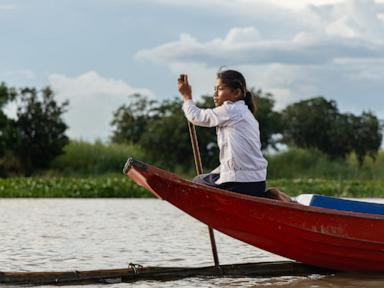
When casual observers drift through these floating settlements on tourist boats, they snap picturesque photographs of wooden classrooms bobbing against the emerald current. They see smiling kids in crisp white and blue uniforms paddling handmade wooden tubs to their desks. The imagery is romanticized. It sells postcards. But beneath the surface veneer of resilience lies a grinding crisis of infrastructure, climate vulnerability, and chronic funding starvation that threatens to sink an entire generation's future.
The Geography of Educational Isolation
You cannot understand the floating schools of the Tonle Sap without grasping the sheer violence of the lake's hydrological cycle. During the wet season, the Mekong River reverses flow, surging backward into the Tonle Sap and expanding its surface area by up to five times. Settlements shift miles inland or retreat toward deeper channels. Schools must move with them, dragged by motorboat or pushed by hand to stay within the administrative jurisdiction of local districts or simply to remain accessible to scattered fishing families.
This constant relocation creates staggering administrative and physical hurdles.
- Classrooms are makeshift barges lashed together with weathered bamboo, old oil drums, and corrugated iron.
- Attendance drops precipitously during peak monsoon storms when high winds make navigating open water too dangerous for young children in small canoes.
- Sanitation is virtually non-existent, with floating latrines emptying directly into the same lake water where children wash, swim, and commute to school.
Teachers assigned to these remote outposts often face months of isolation. They live in cramped corners of the schoolhouse, subsisting on rice and whatever small fish they can pull from the murky water. The Cambodian government provides baseline teacher salaries, but hazard pay or remote-area stipends are routinely delayed or inadequate to cover the true cost of living on the water. Burnout is rampant. Teachers quit, leaving classrooms understaffed or entirely dependent on untrained volunteers from the community.
The Economic Trap of Lake Life
Education on the Tonle Sap competes directly with survival. Most families in these floating villages subsist on fishing, a resource that has plummeted over the last two decades due to upstream hydroelectric dams, overfishing, and climate shifts. When a family catches half the fish they did five years ago, children are pulled from their desks and put to work.
Boys drop out to mend nets, pilot motorboats, or haul traps. Girls stay behind to manage younger siblings and process the daily catch.
Primary education is technically universal, but the hidden costs of attending a floating school add up fast. Families must pay for boat fuel, notebooks, and basic clothing. When those pennies do not exist, schooling stops. The drop-off between primary school and secondary school is catastrophic. While nearly every village has a primary classroom floating somewhere nearby, secondary schools require traveling much longer distances to centralized communes on the mainland or larger floating hubs.
Most children simply cannot make the journey. They finish grade six—if they get that far—and step straight into the multi-generational cycle of debt and aquatic poverty.
The NGO Band-Aid and Institutional Fatigue
Because state funding struggles to penetrate these shifting watery margins, a patchwork of non-governmental organizations has stepped in. Foreign donors fund solar panels, water filtration systems, and fresh coats of paint for the wooden schoolhouses.
NGO intervention keeps the lights on, literally and figuratively. Yet it creates a dangerous dependency. When a donor pulls funding, solar batteries die, water filters clog permanently, and textbook supplies freeze. Local authorities lack the municipal tax base to maintain floating infrastructure. A concrete school can stand for a century with minimal maintenance. A floating wooden schoolhouse rots from the bottom up within a decade, constantly battered by humidity, wakes from passing cargo boats, and fungal decay.
NGOs also struggle to align their curricula with official Ministry of Education standards while addressing the vocational realities of lake life. Fishing is dying, yet the schools offer no vocational training in aquaculture management, ecotourism, or modern technical trades that could help youth transition away from the collapsing lake economy.
Climate Change and the Shrinking Horizon
The immediate threat is no longer just funding. It is the climate itself.
Over recent years, severe droughts driven by El Nino cycles and upstream Mekong dam retention have shrunk the Tonle Sap to historic lows. During the dry season, vast sections of the lake turn into stagnant mudflats. Floating schools that are supposed to float get stranded in thick sludge miles away from deep water.
When schools run aground, the commute becomes an impossibility. Children cannot paddle through thick mud. Boats break their propellers. Teachers cannot reach the classrooms, and the water sources surrounding the settlements turn toxic with concentrated agricultural runoff and human waste.
Conversely, when flash floods hit, the rising water tears moorings loose, sending entire school blocks crashing into mangrove forests or drifting hazardously into open water. Climate adaptation plans from the central government in Phnom Penh frequently treat the Tonle Sap as a static body of water rather than a volatile, shifting ecosystem requiring specialized, amphibious infrastructure.
Re-Engineering the Classroom
Fixing the educational crisis on the Tonle Sap requires abandoning the romantic myth of the charming floating schoolhouse. These structures are not quaint cultural artifacts. They are precarious, underfunded hazards that symbolize systemic abandonment.
Meaningful reform demands three non-negotiable shifts.
First, the Ministry of Education must construct modular, fiberglass or high-density plastic composite school platforms that resist rot and can withstand extreme weather fluctuations without collapsing. Wooden barrels and bamboo rafts belong in the past.
Second, teacher compensation packages must reflect the extreme hardship of remote aquatic postings. Attracting and retaining top-tier educators requires guaranteed hazard pay, regular rotation schedules, and robust mental health support to combat extreme isolation.
Third, the curriculum must pivot toward survival in a post-fishing economy. If the lake can no longer feed these communities, the schools must teach children how to build alternative livelihoods that do not require destroying the very ecosystem they live on.
Until these structural overhauls take root, the photographs will keep lying to the world. They will show bright faces in wooden boats while the foundation beneath their feet quietly takes on water.