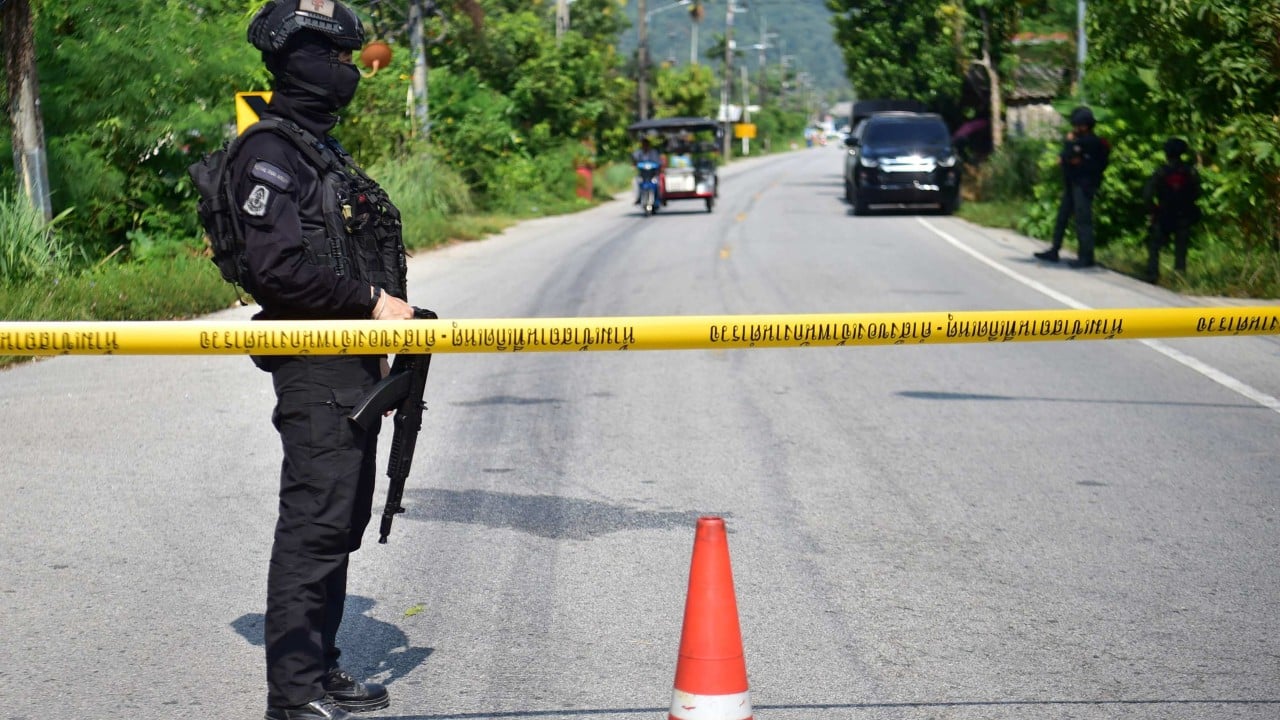
For over two decades, the humid rubber plantations and roadside markets of Thailand's southernmost provinces have lived under a quiet, grinding terror. In Pattani, Yala, and Narathiwat, checkpoints are sandbagged, barbed wire curls beneath watchtowers, and school teachers commute under armed military escort. This is the heartland of the Patani Malay Muslim insurgency, a low-intensity conflict that has claimed thousands of lives since it violently reignited in 2004. While Bangkok routinely frames the unrest as manageable local criminality or a security nuisance, the militant leadership tells a completely different story. They have vowed to fight for independence until the end of time, casting their rebellion as an existential crusade against central state domination.
To understand why this conflict refuses to die, one must look past official press releases and examine the structural deadlock gripping the region. The primary separatist faction, the Barisan Revolusi Nasional, commonly known as the BRN, operates with a cellular, highly disciplined structure that resists easy infiltration. Unlike transient political parties in Bangkok that rise and fall with every electoral cycle or military coup, the BRN plays a multi-generational game. Their fighters and ideologues are indoctrinated through religious networks and cross-border kinships that stretch across the border into northern Malaysia. They do not measure progress in months or parliamentary terms; they measure it in epochs. Don't forget to check out our recent coverage on this related article.
The Anatomy of a Decades-Long Stalemate
Military commanders in Bangkok often speak of counterinsurgency in terms of metrics, checkpoints, and neutralization statistics. Yet the ground reality reflects a persistent equilibrium of attrition. The Thai state cannot completely eliminate the insurgent networks embedded within local villages, where family ties and fear create a protective barrier of silence. Conversely, the militants possess zero capacity to overthrow the Royal Thai Army or seize major urban centers like Hat Yai. This creates a bloody stalemate where daily violence functions as a form of political communication.
Insurgents use drive-by shootings, roadside bombings, and hit-and-run ambushes not to capture territory, but to bleed the state's resources and maintain an atmosphere of permanent insecurity. Every security checkpoint attacked and every government informant executed sends a clear message to the local Malay Muslim population. The message warns that Bangkok cannot guarantee total protection, thereby delegitimizing state authority at the grassroots level. Meanwhile, the military responds with emergency decrees, security sweeps, and detention powers that frequently alienate the civilian population they claim to protect. If you want more about the background here, USA Today provides an informative breakdown.
This cycle of action and reaction creates an internal reservoir of grievances. Young men who witness their relatives detained under suspicion of insurgent links often cross the threshold from passive sympathizers to active combatants. The state's reliance on kinetic force treats the symptoms of alienation while exacerbating the underlying disease. Security analysts who have spent decades tracking the region note that every harsh crackdown acts as an inadvertent recruitment tool for the underground cells.
Ideological Shifts and the Rise of the BRN Strategy
The character of the separatist movement has evolved significantly since the early twentieth century. Early movements pursued a blend of Malay nationalism and regional identity. Over recent decades, the ideological core shifted toward a more resilient religious framework. The BRN absorbed elements influenced by Salafi teachings, transforming the insurgency into a struggle tied deeply to religious identity and community survival.
This ideological shift makes compromise exceptionally difficult. When a political dispute is framed strictly as secular land control, diplomats can negotiate compromises involving regional autonomy, budgetary control, or resource sharing. When the same dispute becomes entangled with notions of religious preservation and historic injustice, any concession by insurgent leaders risks being denounced as betrayal by hardline factions. The leadership must continually prove its militant credentials to prevent splinter groups or radical factions from defecting to even more extreme transnational networks.
Moreover, the BRN has demonstrated a sophisticated understanding of international optics. While maintaining an underground armed wing, its political wing occasionally issues public manifestos outlining detailed administrative proposals for self-governance. These documents outline demands for legislative, administrative, and judicial power, including the application of specific legal frameworks for Muslims within the region. By presenting bureaucratic blueprints alongside continued guerrilla warfare, the movement attempts to project the image of a government in waiting rather than a mere band of outlaws.
The Weight of Civilian Suffering in the Deep South
Behind the grand geopolitical chess matches and peace negotiation tables lie the everyday lives of ordinary citizens caught in the crossfire. Buddhist minorities in the Deep South live with the constant threat of targeted violence, often working their orchards and shops under military vigilance. At the same time, the Malay Muslim majority endures the psychological toll of living under heavy surveillance, frequent identity checks, and the suspicion directed toward anyone who speaks Yawi in public or wears traditional attire.
Civil society organizations operating locally attempt to document human rights abuses committed by both state security forces and insurgent cells. Documenting these abuses is hazardous work. Activists face intimidation from rogue elements within the security apparatus who view human rights monitoring as a cover for separatism. Simultaneously, they face pressure from militants who demand absolute silence regarding atrocities committed in the name of the cause.
Economic development in the Deep South lags far behind other regions of Thailand. Tourism bypasses the provinces entirely due to foreign travel advisories warning of active conflict zones. Infrastructure projects stalled by corruption and security risks leave local youth with few legal employment options outside of low-wage agricultural labor or migrating across the border to find work in Malaysia. This economic marginalization feeds directly into the recruitment pipeline for underground networks, ensuring a steady supply of frustrated young men willing to take up arms.
Kuala Lumpur and the Limits of Mediated Diplomacy
Peace talks between the Thai government and the BRN have sputtered on and off for over a decade, with Malaysia acting as the primary facilitator. While Kuala Lumpur provides a neutral venue for dialogue in Langkawi or Kuala Lumpur, the mediation process faces inherent limitations. Malaysian authorities must balance their role as honest brokers with domestic security concerns, ensuring that their own territory does not become a permanent safe haven or logistical base for insurgent commanders.
Talks frequently stall due to shifting political winds in Bangkok. Every time a new administration takes power, negotiation teams change, previous agreements are reinterpreted or sidelined, and momentum resets to zero. Insurgent negotiators frequently voice deep skepticism regarding the Thai state's long-term commitment to genuine structural reform. They ask whether any civilian prime minister possesses the political capital and moral courage to override the powerful military establishment and grant meaningful autonomy to the border provinces.
Chief negotiators appointed by Bangkok often articulate a pragmatic frustration, noting that decades of bloodshed have proven the futility of total victory for either side. Yet pragmatism at the negotiating table clashes violently with tactical realities on the ground. Whenever peace talks show signs of progress, hardline elements within the insurgency often launch coordinated waves of violence to derail the process, signaling that no agreement will hold without their direct consent.
What True Self-Government Entails on Paper
Examining the actual framework proposed by separatist leaders reveals the immense gulf separating Bangkok and the southern borderlands. The BRN envisions a governance structure aligned with the cultural and ethnic identity of the Patani people, featuring fiscal autonomy, regional legislative authority, and control over educational curricula. Under this vision, schools would teach in Yawi as the primary working language, and educational content would reflect local history rather than the centralized nationalist narrative dictated from the capital.
Furthermore, proposals include the establishment of local judicial mechanisms to handle civil and family matters according to specific legal traditions. For the Thai military establishment, which views national unity and territorial integrity as absolute, non-negotiable principles, such demands sound dangerously close to secession by installment. The fear in Bangkok is that granting regional autonomy to the three southern provinces would create a dangerous precedent, potentially destabilizing the unitary state model and encouraging fragmentation elsewhere.
This fundamental contradiction leaves negotiators trapped in an endless loop. Bangkok offers administrative decentralization and economic development packages designed to improve local living standards, assuming that material well-being will dilute separatist sentiment. The insurgents reject these economic bribes, arguing that no amount of paved roads or agricultural subsidies can compensate for the denial of collective political identity and self-determination.
The Concrete Reality Facing Bangkok Leadership
As successive Thai administrations grapple with the persistent unrest, the strategic calculus remains punishingly narrow. Simply maintaining the status quo requires massive budgetary outlays for troop deployments, intelligence operations, and infrastructure hardening across the Deep South. The human cost accumulates quietly in military hospitals and village graveyards, far from the bustling commercial districts of Bangkok where the conflict feels like a distant abstraction.
To break this cycle, political leaders in the capital would need to embrace a level of institutional flexibility that runs counter to decades of bureaucratic tradition. It requires recognizing that security operations alone cannot extinguish an insurgency rooted in deep-seated grievances about identity, justice, and historical memory. Yet any leader who ventures too far down the path of compromise risks immediate backlash from nationalist hardliners and conservative military factions who view any concession as treason.
Until Bangkok finds the political courage to test the boundaries of constitutional power-sharing and address the core grievances of the Patani Malay population, the conflict will continue its grinding rhythm. Checkpoints will remain fortified, schools will stay under armed watch, and young fighters will continue to take up arms in the rubber groves, convinced that time is on their side and that the struggle for independence will outlive every government that tries to crush it.