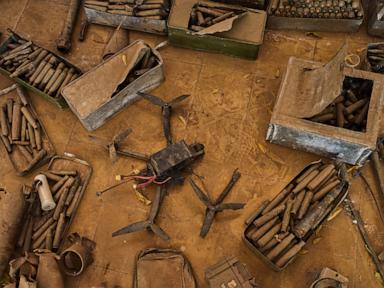
Sudanese paramilitary forces killed at least 15 people and wounded dozens more in a series of coordinated overnight drone strikes in the central city of el-Obeid. The attacks, executed by the Rapid Support Forces (RSF), targeted civilian infrastructure, a fuel station, and a funeral gathering at a local cemetery, according to medical officials and independent monitoring groups on the ground.
While international headlines routinely gloss over these incidents as localized skirmishes, the reality is far more dangerous. This latest massacre exposes a profound shift in Sudan's multi-year civil war. It is no longer just a war of infantry and heavy artillery. Sudan has transformed into a high-tech testing ground for cheap, imported unmanned aerial vehicles (UAVs), creating a lethal asymmetric conflict where civilians bear the brunt of the experimentation. Don't miss our recent post on this related article.
The Mechanized Slaughter in el-Obeid
The assault began late Wednesday night, targeting neighborhoods surrounding the 5th Infantry Division headquarters of the Sudanese Armed Forces (SAF). However, the precision of the weaponry did not translate to military targeting. Instead, the drones struck a food supply truck, killing its driver, and swept across civilian gathering points.
Medical workers at el-Obeid Hospital, overwhelmed by the sudden influx of casualties, confirmed that the death toll is fluid and expected to rise. The Emergency Lawyers group reported that drones continued to circle the city well into Thursday, freezing rescue efforts and trapping families inside their homes. If you want more about the background of this, BBC News offers an informative summary.
Local life has ground to a complete halt. Markets are shuttered, and schools have suspended all operations. The targeting of a funeral procession at a cemetery, which killed four mourners instantly, demonstrates a deliberate strategy to dismantle the social fabric and psychological resilience of communities holding out against paramilitary occupation.
The Global Supply Chain of African Sky Terror
The RSF does not manufacture these weapons. The escalation of drone warfare in Sudan is fueled entirely by external actors flouting international arms embargoes. Industrial-grade commercial quadcopters and fixed-wing loitering munitions are pouring into the country through porous borders, transformed with simple modifications into deadly bombers.
Independent forensic tracking from organizations like Yale’s Humanitarian Research Lab reveals a clear trail of foreign hardware. The Sudanese military relies heavily on conventional state-backed military sales, deploying larger Iranian-made Mohajer-6 and Ababil-3 platforms, alongside Turkish Bayraktar models. Conversely, the RSF utilizes a decentralized procurement network, capitalizing on consumer electronics smuggled through neighboring Chad and regional backers in the Middle East.
These consumer-grade drones are fitted with 3D-printed release mechanisms capable of dropping mortar shells or modified rocket-propelled grenades. They are cheap, easy to operate, and incredibly difficult to detect on radar before they strike. This accessibility has democratized airpower, allowing a paramilitary force with zero formal aviation training to terrorize major urban centers from miles away.
A Calculated Siege on Humanitarian Lifelines
The tactical focus of these drone operations extends far beyond terrorizing neighborhoods. It is a systematic campaign to choke off the country's remaining supply lines.
Earlier this week, UN officials sounded the alarm after consecutive drone strikes destroyed critical bridge infrastructure in West Darfur and South Kordofan. The Ardamata bridge and key arterial roads between Kadugli and Dilling were intentionally crippled.
The timing is catastrophic. The arrival of the seasonal rains will soon turn dirt bypasses into impassable mud pits, leaving no viable alternative routes for humanitarian convoys. By knocking out these concrete bridges now, drone operators are effectively ensuring that entire regions will be completely cut off from food, medicine, and emergency aid during a declared famine.
The Asymmetric Equation
The shift to drone-centered combat reflects the deep exhaustion of both warring factions after more than three years of relentless ground combat. Human capital is running low. Recruiting, training, and deploying infantry units requires time and resources that neither the SAF nor the RSF can spare easily.
A drone operator requires a fraction of that investment. Safe inside a concealed command node miles from the front line, a single combatant can inflict maximum infrastructural damage with zero personal physical risk. For the RSF, this tech-heavy approach offsets their lack of a traditional air force. For the SAF, it offers a desperate means to hold onto central and eastern strongholds.
The international community remains paralyzed, issuing generic statements of concern while commercial tech components flow freely into conflict zones. Until global regulatory bodies address the weaponization of commercial supply chains, the skies over Sudan will remain a playground for remote-controlled executioners. The tragedy in el-Obeid is not an isolated incident; it is the blueprint for modern, unmonitored warfare.