The fragile peace in the Middle East is unraveling over a strip of water just twenty-one miles wide at its narrowest choke point. Iran has issued an ultimatum to global shipping syndicates: utilize Tehran’s designated northern transit corridor or face catastrophic military retaliation. This move effectively torpedoes an alternative southern maritime highway established by Oman and the International Maritime Organization (IMO). The immediate consequence was a sharp, kinetic escalation over the weekend, with US Central Command hitting ten Iranian military targets and Tehran retaliating against American bases in Kuwait and Bahrain.
This is not a mere dispute over navigational lanes; it is a calculated bid by Iran to institutionalize permanent geopolitical and economic veto power over twenty percent of the world’s petroleum and liquefied natural gas. By demanding that commercial vessels hug the Iranian coastline, the Islamic Revolutionary Guard Corps (IRGC) is attempting to lock in an un-ratified maritime dominance that it seized during the brief, destructive war launched by the US and Israel in February. For international commodity markets, the stakes are nothing short of an absolute stranglehold.
The Ghost Corridor and the Battle for Sovereignty
For decades, international shipping utilized a central transit lane through the Strait of Hormuz, navigating under customary international law that guarantees the right of transit passage through international straits, even when crossing territorial seas. That old order is dead. Tehran mined that central corridor during the spring hostilities. The old channels remain heavily fouled by unexploded ordnance, leaving global trade dependent on two newly drawn lines on a map.
The first line is the Iranian-mandated route, managed by the newly minted Persian Gulf Strait Authority. This path pulls tankers deep into Iranian territorial waters, subjecting crews and cargoes to arbitrary IRGC boardings, inspections, and the Looming threat of future transit tolls once a current sixty-day diplomatic window closes. The second line is the Omani coastal corridor. Engineered by Muscat and the IMO, this southern alternative was designed to bypass Iranian military oversight and provide a safe evacuation route for the thousands of seafarers trapped inside the Persian Gulf during the peak of the fighting.
Tehran’s fury over the Omani corridor stems from a simple mathematical reality: an alternative route destroys Iranian leverage in the ongoing peace negotiations currently happening behind closed doors in Switzerland. If global shipping can bypass the Iranian coast without friction, the multi-billion-dollar economic lever Iran gained by shutting down the strait vanishes.
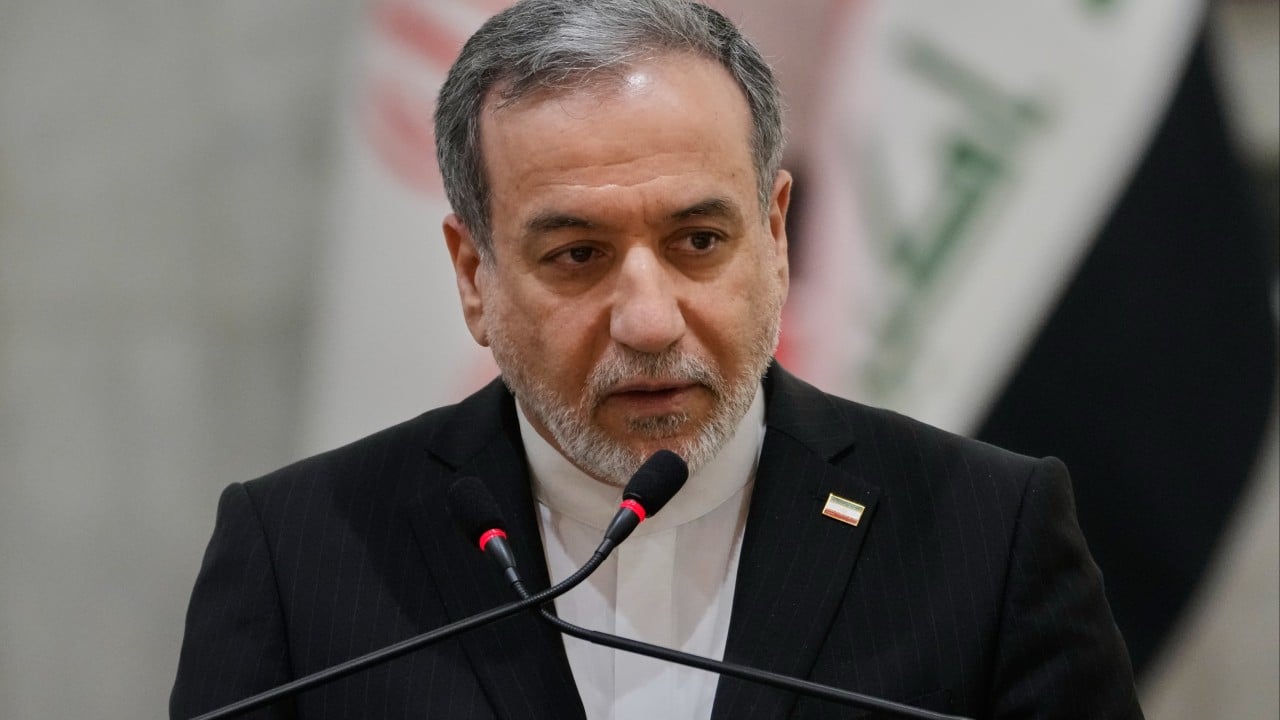
Iranian Foreign Minister Abbas Araghchi made the regime’s position explicit, stating that any attempt to adopt separate maritime arrangements would delay the definitive reopening of the waterway. The IRGC followed that diplomatic warning with an operational reality check, striking a commercial cargo vessel using the southern route and forcing the UN to pause its civilian fleet evacuation operations entirely.
The Legal Shell Game and Tollway Diplomacy
A fundamental disconnect lies at the heart of this maritime standoff. International observers often cite the United Nations Convention on the Law of the Sea (UNCLOS) to argue that Iran cannot legally block passage or extort fees from commercial vessels. The hard truth is that while Iran signed UNCLOS, it never ratified the treaty.
Tehran operates under a strict interpretation of customary international law, viewing the strait as a combination of overlapping Iranian and Omani sovereign waters rather than an open international thoroughfare. Under this framework, the Iranian state argues it has the absolute right to police its territorial sea, particularly against vessels belonging to or aiding nations with which it has engaged in active military hostilities.
The temporary memorandum of understanding brokered by Pakistan in April established a fragile, sixty-day framework for toll-free transit. That clock is ticking down rapidly. The creation of the Persian Gulf Strait Authority is a clear signal that Tehran plans to turn the waterway into a permanent, revenue-generating toll road once the temporary window expires. Commercial shipowners are being forced into a brutal calculation: submit to Iranian tracking transponder mandates and potential future transit fees, or risk running an Omani route that offers zero protection from IRGC drone and missile strikes.
The strategy deployed by the White House has complicated matters further. The administration has warned that it will reimpose a total naval blockade on Iranian ports if Tehran attempts to formalize control or levy transit taxes. Yet, US maritime power alone has been unable to guarantee absolute security for the civilian fleet. Tankers are currently engaging in "dark routing"—turning off their mandatory automatic identification systems to avoid detection—which significantly increases the risk of catastrophic maritime collisions in the narrow, heavily trafficked channels.
The Economic Realities of a Fractured Choke Point
Global energy markets are responding to this technical gridlock with extreme volatility. While oil prices briefly dipped toward seventy-three dollars a barrel on initial reports of the ceasefire, the weekend’s heavy kinetic exchanges and the halting of the UN evacuation have reintroduced a severe risk premium.
The physical volume of trade tell the real story. Marine tracking data indicates that while transits rose briefly to seventy-eight vessels a day, that figure remains drastically below the pre-war norm of more than one hundred thirty daily passages. The drop is not merely a reflection of shipowner anxiety; it is a structural bottleneck caused by the closure of the central shipping lanes and the painstaking slowness of demining operations.
The insurance industry represents the true invisible barrier to normalization. Lloyd’s of London syndicate underwriters have quietly spiked war-risk premiums to prohibitive levels for any vessel intending to use the Omani corridor without explicit clearance from the Iranian maritime authority. By launching deniable, targeted strikes on ships choosing the southern route, Iran has weaponized commercial risk. The regime does not need to physically block every tanker with its navy; it only needs to make the insurance premiums for alternative routes economically non-viable for international shipping firms.
This reality undermines the diplomatic mission of US Secretary of State Marco Rubio, who recently visited the Gulf capitals to assure regional allies that Washington would enforce the Omani route by force if necessary. Naval escorts can deter conventional surface attacks, but they are poorly equipped to defend massive, slow-moving supertankers against sea mines or low-altitude loitering munitions launched from hidden positions along the rugged Iranian coast.
The Strategic Endgame
The ultimate trajectory of this crisis points toward a permanent rewriting of maritime access rules in the Middle East. Iran has recognized that its conventional military cannot match the combined power of the US and its regional partners in a prolonged conflict. However, in the gray-zone architecture of international shipping, Tehran holds the superior hand. By leveraging its geography, its unexploded minefields, and the legal ambiguities of its territorial sea, the regime is steadily transforming an international waterway into a domestic security zone.
The international community is left with few palatable options. Accepting Iran’s terms means legitimizing a dangerous precedent where a single coastal state can unilaterally rewrite transit rules for a critical global choke point. Rejecting those terms entirely, and attempting to force traffic through the Omani corridor under naval escort, guarantees a steady cycle of kinetic escalations that will keep energy prices unstable and ensure the Strait of Hormuz remains a flashpoint for a renewed global conflict.
The shipping industry cannot survive on temporary sixty-day extensions or ambiguous memorandums of understanding. Until the core question of who controls and regulates the transit lanes is resolved in a comprehensive treaty, commercial fleets will continue to navigate a geopolitical minefield where a single wrong turn can trigger a regional war.