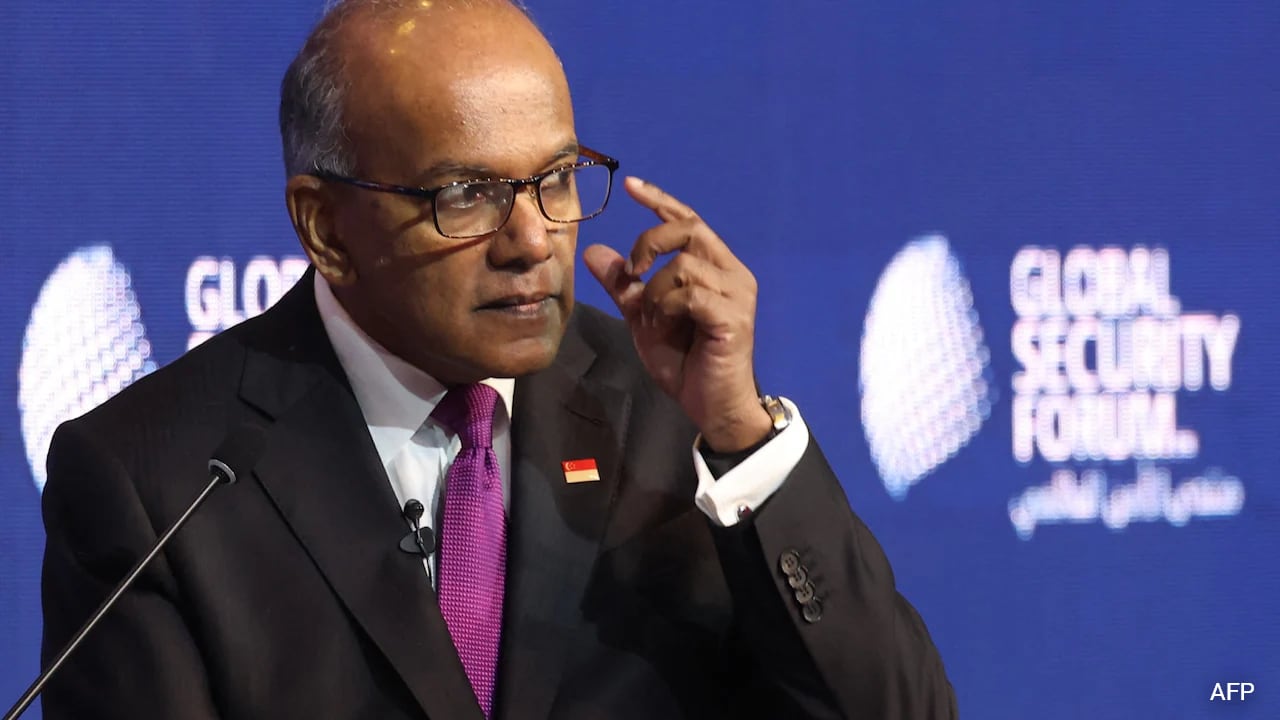
Singapore law enforcement agencies are actively investigating a coordinated surge of virulent, anti-Indian xenophobic commentary circulating across local social media platforms. Triggered by compounding regional crises—including a devastating flash flood in Nepal that left several Singaporeans missing and corporate reports detailing Singapore Airlines' capital exposure to Air India—the digital backlash exposed deep, latent fault lines in the island nation's tightly managed multicultural society. Senior Minister K Shanmugam publicly condemned the rhetoric as shameful and nasty, marking a sharp escalation in the state's zero-tolerance policy toward identity-based vitriol. Authorities have ordered digital platforms to restrict access to offending posts, signaling that hiding behind keyboard anonymity no longer offers immunity from criminal scrutiny.
The speed with which tragedy metastasized into racial animus surprised even seasoned observers of Singapore's online ecosystem. When a massive ice-rock avalanche along the Nepal-Tibet border claimed hundreds of lives and trapped nine Singaporean nationals, public grief should have unified the citizenry. Instead, comment sections on local news aggregation pages became breeding grounds for dehumanizing rhetoric. Trolls questioned whether the missing individuals belonged to the national fabric, deploying explicit ethnic slurs and nativist tropes that dismissed fellow citizens based entirely on their lineage.
Simultaneously, concurrent financial news provided another vector for prejudice. Reports surfaced indicating that Air India was seeking roughly 1.5 billion dollars in fresh equity from its shareholders, a group that includes state-backed carrier Singapore Airlines. Rather than limiting the discourse to traditional corporate governance or risk assessment, online commentators pivoted immediately to crude racial generalizations. Bigoted tropes concerning snake charming, street cuisine, and occult practices flooded comment feeds.
The vitriol even targeted institutional leadership. Temasek chief executive Dilhan Pillay Sandrasegara and top executives faced coordinated online harassment, with bad-faith actors claiming that corporate decisions were driven by ethnic favoritism rather than commercial reality. Senior government officials recognized this not as spontaneous venting, but as an aggressive normalization of bigotry designed to fray the social contract.
The Mechanics of Normalization
Why do advanced, highly educated societies succumb so quickly to online ethnic polarization? The answer lies in the migration of geopolitical anxieties into domestic digital spaces. Singapore maintains a delicate demographic equilibrium, carefully engineered through housing quotas, strict anti-hate legislation, and a foundational national narrative emphasizing racial harmony. Yet, this stability remains continuously tested by global economic integration and regional migratory flows.
When economic pressures mount—such as the complex cross-border financial entanglements involving aviation assets—latent anxieties regarding foreign labor and corporate capital allocation find a convenient scapegoat. Xenophobia rarely emerges in a vacuum; it attaches itself to legitimate public debates, hijacking policy disagreements and turning them into cultural battlegrounds.
Local leadership understood the existential stakes of allowing this behavior to persist. Governments that ignore low-level online harassment often find that fringe rhetoric eventually migrates into mainstream political discourse. By calling out the perpetrators by name and demanding accountability from social media operators, the state sought to arrest a dangerous cultural slide before it degraded public safety.
Regulatory Force Versus Digital Anonymity
The confrontation between Singaporean authorities and social platforms highlights the structural limits of content moderation. The Ministry of Digital Development and Information stepped in to compel platforms to scrub inflammatory material, demonstrating that voluntary corporate self-regulation is insufficient when national cohesion is threatened.
Yet, deletion is merely a band-aid. The deeper challenge involves unmasking anonymous agitators who operate across borders or utilize virtual private networks to obscure their origins. Intelligence and law enforcement agencies face a daunting technical puzzle when tracking digital mobs that are deliberately fanned by external actors seeking to destabilize multicultural states.
Singapore's aggressive stance serves as an instructive, if sobering, model for other diverse nations grappling with algorithmic radicalization. Relying on passive hope that internet users will self-correct is no longer a viable strategy. As long as digital platforms profit from engagement fueled by outrage, governments will be forced to intervene directly, weaponizing statutory powers to protect the integrity of their public squares.