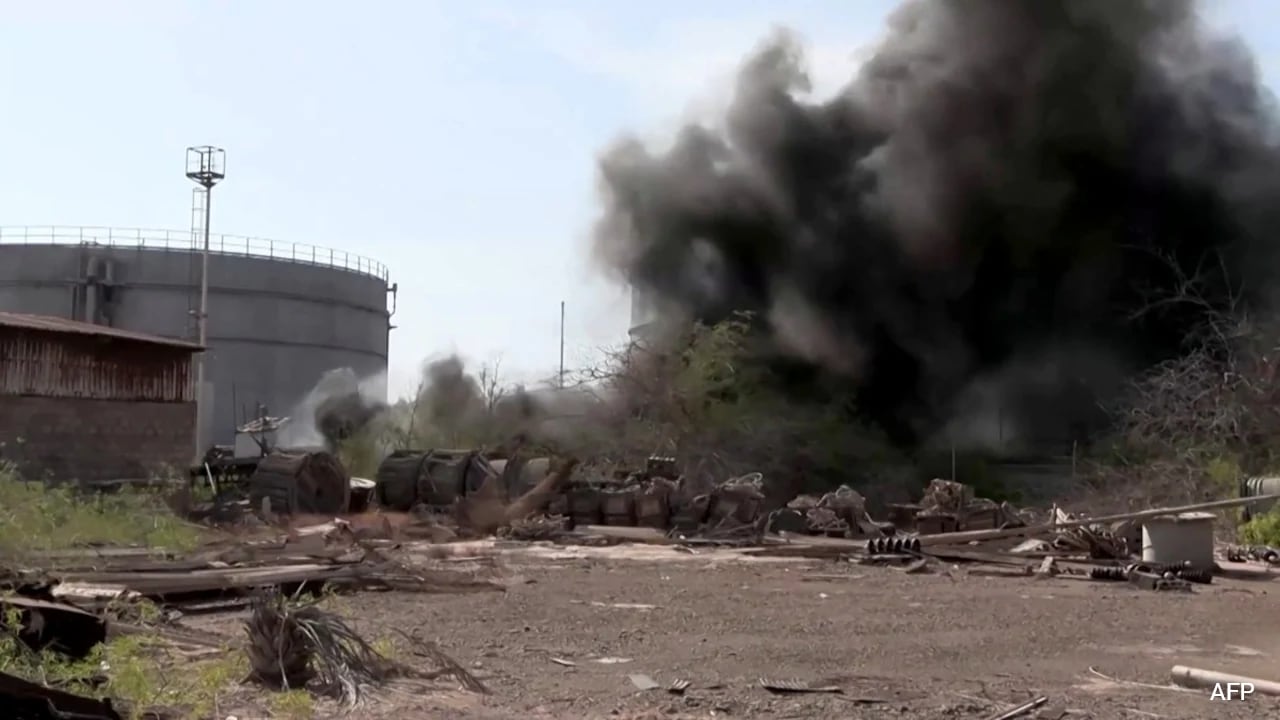
When the Saudi-led coalition announces that its air defense batteries have intercepted three ballistic missiles aimed at Riyadh, the immediate public takeaway is a routine military communiqué. The missiles were detected, tracked, and destroyed before hitting their targets, preventing mass casualties in the Saudi capital. Yet behind those brief official dispatches lies a grueling, multi-billion-dollar war of attrition where low-cost ballistic hardware forces one of the world’s most heavily armed militaries to burn through finite, ultra-expensive interceptor stockpiles.
Standard wire reports treat these interceptions as isolated tactical events. They rarely examine the supply chains enabling Houthi forces in Yemen to launch long-range projectiles over six hundred miles into Saudi territory, nor do they calculate the staggering financial asymmetry of shooting down modified Scud-era designs with advanced American-made Patriot batteries.
The Anatomy of a Long-Range Strike on Riyadh
Launching a ballistic missile from northern Yemen to Riyadh requires crossing roughly 800 to 1,000 kilometers of desert and mountainous terrain. Early in the Yemen conflict, Houthi forces relied primarily on Soviet-designed Scud-B and Scud-C missiles inherited from the Yemeni military's pre-war arsenals. Those weapons lacked the range to consistently threaten the Saudi capital.
That operational limitation vanished with the introduction of the Burkan series, particularly the Burkan-2H and Burkan-3. Defense analysts and United Nations panels investigating missile debris recovered around Riyadh have documented how these weapons achieve their extended reach. Engineers strip away heavy steel airframes, replace them with lighter aluminum alloys, reduce the payload weight of the warhead, and lengthen the fuel tanks.
The result is a missile that sacrifices terminal accuracy for sheer distance. A Burkan missile cannot reliably hit a specific building in Riyadh, and it does not need to. When aimed at a sprawling metropolitan area or a major international airport, the weapon functions as a strategic terror device rather than a precision-guided munition.
How the Interception Sequence Unfolds
From the moment a mobile transporter-erector-launcher fires a missile from a concealed wadi in Saada province, the Saudi Royal Air Defense Forces have roughly seven to ten minutes to react.
- Early Warning and Detection: Space-based infrared sensors and long-range ground radars detect the intense thermal plume of the booster stage seconds after launch.
- Trajectory Calculation: Fire-control radars, such as the AN/MPQ-53 or AN/MPQ-65 used in Patriot batteries, lock onto the incoming object as it arcs through the upper atmosphere, calculating its ballistic trajectory and predicted impact zone.
- Terminal Engagement: Because Houthi long-range missiles often separate their warheads from the booster body during descent—a design feature that creates multiple radar targets and complicates tracking—defending batteries typically fire multiple interceptors at a single incoming threat.
To ensure a high probability of destruction, standard air defense doctrine dictates launching two Patriot interceptors for every incoming ballistic target. Against a salvo of three missiles headed toward Riyadh, defenders will routinely expend six or more interceptors in less than two minutes.
The Brutal Math of Asymmetric Warfare
The fundamental crisis facing the Saudi-led coalition is not a lack of radar capability or crew readiness. It is basic economics.
A single Patriot PAC-2 GEM-T or PAC-3 interceptor costs between $3 million and $4 million, depending on the specific variant and foreign military sales contract. When a battery fires two PAC-3 missiles to stop a single incoming projectile, the price tag for that single interception instantly reaches $6 million to $8 million. Intercepting a three-missile salvo costs upwards of $20 million in expended ordnance alone, excluding radar maintenance, fuel, and crew deployment costs.
Contrast that expenditure with the manufacturing and smuggling cost of a Houthi ballistic missile. While exact production figures inside Yemen remain opaque, defense economists estimate that assembling a liquid-fueled Burkan-type missile from smuggled components and locally fabricated airframes costs a fraction of a single Patriot interceptor—often estimated in the low hundreds of thousands of dollars.
Asymmetric cost ratios heavily favor the attacker. Every time Houthi rocket forces launch three missiles toward Riyadh, they compel Saudi Arabia and its Western defense suppliers to deplete high-end munitions that take months to manufacture and years to replenish through diplomatic procurement channels.
Stockpile Depletion and Supply Chain Bottlenecks
Money alone cannot instantly replace a fired interceptor. The global production capacity for advanced surface-to-air missiles is constrained by specialized electronics, solid rocket motor propellants, and strict export controls. During periods of heightened missile and drone activity over the Arabian Peninsula, Saudi consumption rates have repeatedly outpaced global manufacturing timelines, forcing urgent diplomatic requests to Washington and allied nations to backfill depleted magazines.
Furthermore, a barrage of three ballistic missiles rarely occurs in a vacuum. Houthi planners frequently pair ballistic launches with low-flying, long-range one-way attack drones, such as the Samad-3. This multi-layered saturation tactic forces Saudi air defenders to manage vastly different threat profiles simultaneously. High-altitude ballistic missiles require Patriot or THAAD systems, while low-altitude, slow-moving drones hug the terrain to evade conventional radar horizons, requiring short-range air defenses or airborne fighters to intercept.
Evaluating the Effectiveness of Coalition Air Defenses
Official statements from the Saudi-led coalition consistently report near-total success rates, asserting that incoming missiles are destroyed in mid-air before reaching populated areas. Independent verification of these claims presents a complex, often ambiguous picture.
When a Patriot interceptor strikes an incoming ballistic missile at high altitude, the warhead does not simply vanish. Kinetic impact shatters both the interceptor and the target into thousands of pieces of high-velocity metal debris. Even when the high-explosive warhead is neutralized, heavy structural components—such as the missile's engine block, fuel tanks, and intact warhead casing—continue following a ballistic path toward the ground.
In several high-profile incidents over Riyadh, falling debris from successful interceptions has damaged residential roofs, shattered windows, and caused ground casualties. On the ground, residents hear loud explosions and see flaming wreckage falling from the sky, making it nearly impossible for casual observers to distinguish between an unintercepted warhead strike and the fallout of a mid-air collision.
The Intelligence War Over Debris
Following every major interception event, forensic teams scour the desert outside Riyadh and the city's outer districts to recover missile fragments. These mangled sheets of aluminum and steel serve as vital intelligence artifacts.
United Nations investigators and Western intelligence agencies have repeatedly examined recovered components—including circuit boards, gyroscopes, and specialized valves—to trace their origins. In multiple reports, investigators identified manufacturing markings, serial numbers, and design similarities linking key guidance and propulsion components to Iranian defense industries, despite official denials from Tehran and claims by Houthi authorities that the weapons are entirely indigenous.
Why Smuggling Routes Remain Resilient
If the components for these missiles originate outside Yemen, preventing them from reaching Houthi workshops should theoretically stop the launches at their source. In practice, interdicting smuggling networks across the Arabian Peninsula has proven extraordinarily difficult.
Yemen possesses a rugged coastline stretching over 1,900 kilometers along the Red Sea and the Gulf of Aden, alongside vast, porous desert borders with Oman and Saudi Arabia. Despite naval patrols by international coalition task forces, small wooden dhows regularly ferry disassembled missile components, guidance chips, and precursor chemicals from ports in the Gulf of Oman to coastal drop-off points in eastern Yemen.
Once ashore, smugglers break shipments down into small, inconspicuous loads hidden inside commercial trucks carrying agricultural goods, fuel, or humanitarian supplies. Navigating ancient tribal smuggling routes through Al Mahrah and Marib provinces, these convoys routinely bypass major highway checkpoints, delivering critical parts directly to subterranean assembly facilities carved into the mountains around Sanaa and Saada.
The Limits of Air Superiority
For years, the Saudi-led coalition maintained total air superiority over Yemen, conducting thousands of airstrikes aimed at destroying ballistic missile launchers, storage depots, and workshops. Yet the launches continued.
Ballistic missile forces do not require permanent launch pads or sprawling military bases. A mobile launcher can hide inside a civilian warehouse, a highway underpass, or a natural cave network, completely shielded from overhead satellite and drone surveillance. Crews roll the vehicle out under the cover of darkness, erect the missile, fuel it, fire within minutes, and immediately relocate before coalition strike aircraft can be vectored to the launch coordinates.
Airpower can degrade fixed infrastructure and kill skilled technicians, but against a dispersed, mobile rocket force operating in mountainous terrain, aerial bombardment cannot guarantee complete suppression.
Strategic Consequences Beyond the Battlefield
Every missile intercepted over Riyadh carries political and economic weight far beyond the immediate military engagement. Saudi Arabia's long-term economic transformation plans rely heavily on attracting foreign direct investment, international tourism, and multinational corporate headquarters to Riyadh.
Sustaining that investor confidence requires projecting an image of absolute domestic security. When air raid sirens sound in the capital and videos of Patriot batteries firing into the night sky circulate across social media within seconds, the psychological impact undermines that carefully curated stability. Even a 100 percent interception rate reminds international markets that major commercial hubs remain within range of regional hostilities.
At the same time, these attacks create leverage at the negotiating table. By demonstrating the persistent ability to threaten high-value infrastructure—including international airports, oil processing facilities, and desalination plants—Houthi negotiators gain significant bargaining power during ceasefire talks, using the threat of renewed barrages to extract political and economic concessions.
The Shifting Future of Regional Missile Defense
The repeated clashes in the skies above Riyadh have forced military planners worldwide to rethink traditional air defense architectures. Relying exclusively on multi-million-dollar kinetic interceptors to defeat cheap, mass-produced projectiles is mathematically unsustainable over a multi-year conflict.
Defense ministries are aggressively accelerating research into alternative interception technologies designed to flip the cost-exchange ratio back in favor of the defender. High-energy laser systems and high-power microwave weapons offer the promise of engaging incoming drones and rockets for the cost of a few gallons of diesel fuel per shot, eliminating magazine depth limits entirely.
Until directed-energy weapons can reliably engage high-speed ballistic warheads re-entering the atmosphere at several times the speed of sound, however, cities like Riyadh must continue relying on traditional kinetic shields. Every interception buys critical time and saves lives on the ground, yet each streak of light rising to meet an incoming threat underscores a sobering reality of modern warfare—defending a city costs exponentially more than attacking it, and the side with the cheaper ammunition dictates the pace of the attrition.