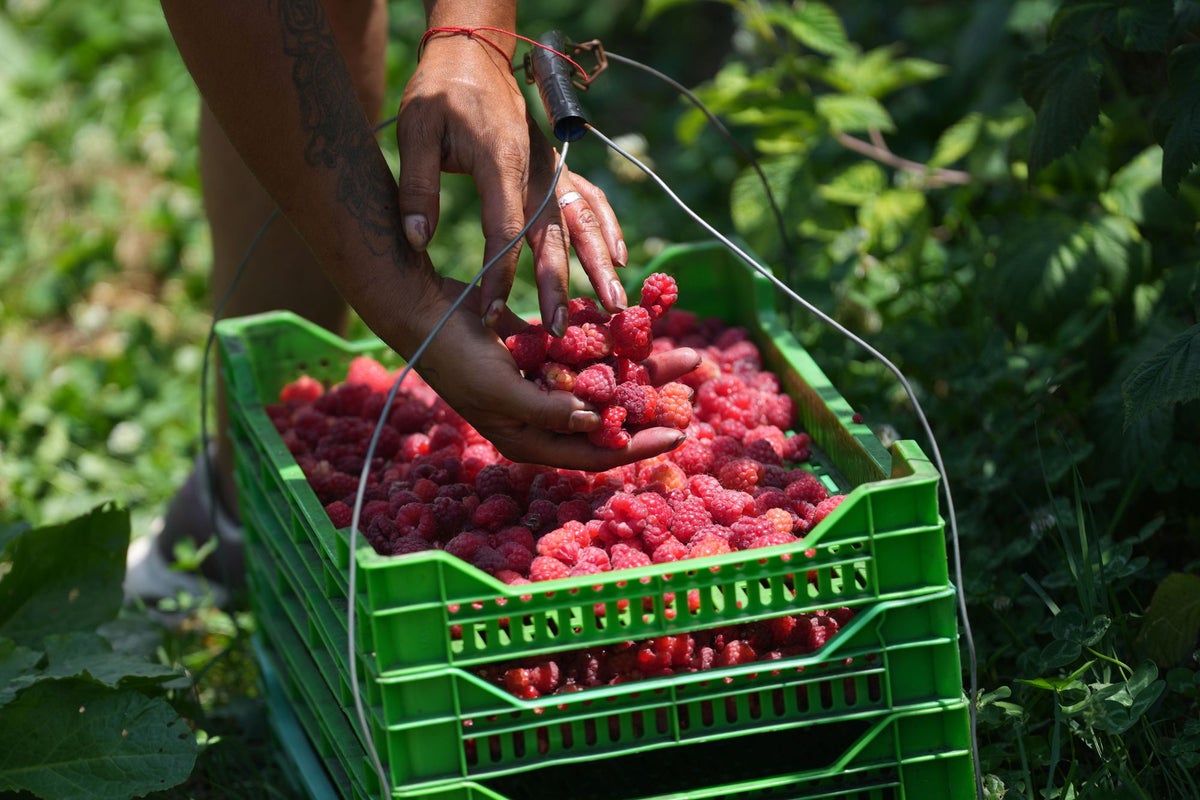
A quiet collapse is unfolding in the world's premier berry-producing regions. While global supply chains have spent years obsessing over microchips and grain corridors, the structural failure of the delicate raspberry market has gone almost entirely unnoticed by the mainstream press. Farmers in traditional "raspberry capitals"—from the fertile valleys of the Pacific Northwest to the intensive growing hubs of Serbia and Mexico—are reporting sudden, catastrophic drops in crop yields. This is not a standard cyclical dip. It is a compounding industrial crisis driven by systemic economic pressures, aggressive soil depletion, and a hyper-specialized agricultural model that has finally pushed nature past its breaking point.
The immediate fallout is visible on supermarket shelves, but the root causes sit much deeper in the ledger books of corporate distributors and the biology of the plants themselves. For decades, the global agricultural apparatus treated the raspberry as a high-margin cash cow. Now, the bill is coming due.
The Illusion of the High Yield Era
To understand why the raspberry harvest is cratering, one has to look at the transition from traditional field farming to high-density substrate cultivation. Decades ago, raspberries were a highly seasonal luxury. They are notoriously fragile, prone to molding within days of harvest, and require meticulous hand-picking.
To satisfy the year-round demands of major supermarket chains, the industry pivoted toward high-density farming. Growers increasingly abandoned natural soil in favor of plastic pots filled with coconut coir or peat moss, fed by automated drip-irrigation systems. On paper, efficiency skyrocketed. In reality, this shift created a brittle ecosystem.
By forcing plants to produce maximum yields under highly artificial conditions, the industry masked underlying biological exhaustion. Growers pushed their crops to the absolute limit. This aggressive cultivation method has left plants uniquely vulnerable to minor environmental shifts and localized disease outbreaks that a more resilient, soil-based system could have absorbed. When a monoculture is tuned for 100% efficiency, it possesses zero tolerance for error.
The Economic Pincer Grasp
The agronomic failure is happening in tandem with a brutal economic squeeze. Small and mid-sized berry operations are trapped between skyrocketing input costs and the rigid pricing power of a few consolidated grocery distributors.
The math of running a raspberry farm simply does not add up anymore. Consider the baseline expenses that have surged over the past thirty-six months.
- Labor: Hand-harvesting remains the single largest expense for berry growers, accounting for up to 50% of total production costs. Rising minimum wages and tightening immigration policies have created acute labor shortages, forcing some farmers to leave ripe fruit to rot in the fields.
- Fertilizers and Agronomicals: Specialized nutrient mixes required for substrate setups have tracked the broader volatility in global chemical markets, rising significantly in price.
- Cold-Chain Logistics: Raspberries require immediate, continuous refrigeration from the moment they are plucked to the moment they reach the consumer. The diesel fuel and electricity required to maintain this cold chain have squeezed profit margins to razor-thin percentages.
While costs climbed, the retail price of raspberries remained relatively flat. Major supermarket syndicates wield immense leverage over growers. If a domestic farm demands a higher price to cover inflation, distributors simply shift their sourcing to regions with lower environmental standards and cheaper labor pools. Domestic growers are essentially being told to absorb the losses or exit the industry entirely. Many are choosing to exit.
Soil Burnout and Pathogen Exploitation
For the operations that still rely on traditional field rows, the ground itself is turning hostile. Raspberries are highly susceptible to root rot, specifically a fungal-like pathogen called Phytophthora rubi. Once this pathogen establishes itself in the soil, it can persist for years, systematically destroying a plant’s vascular system.
In healthier agricultural eras, farmers managed this threat through long-term crop rotation, leaving fields to rest for several seasons. Modern commercial realities do not allow for rest. Continuous replanting has led to severe soil burnout.
As the biological diversity of the soil degrades, the natural defenses of the berry canes vanish. Farmers have countered this by increasing their reliance on chemical fumigants and systemic fungicides. But biology adapts faster than chemical regulations allow. Pathogens are developing resistance to standard treatments, and the regulatory phase-out of harsher, older fumigants has left growers with fewer tools to fight back. The resulting die-offs are sudden, turning a green, promising field into a sea of withered brown stalks in a matter of weeks.
The Genetic Bottleneck
The hidden vulnerability in the entire berry industry is the lack of genetic diversity. The commercial market demands very specific traits. A modern raspberry must be large, uniformly red, firm enough to survive a thousand-mile truck ride, and sweet enough to satisfy consumer palates.
This strict profile has forced the industry to rely on a remarkably small pool of proprietary cultivars. Millions of berry canes grown across disparate geographic zones share nearly identical genetic code.
When a crop lacks genetic variation, it acts as an open highway for pests and disease. A mutation in a single virus or a slight shift in regional climate patterns can cripple an entire territory's production simultaneously. Plant breeders are working frantically to introduce wild, more resilient genes back into commercial stocks, but breeding a stable new variety takes up to a decade. The crisis is moving at a much faster tempo than the laboratories.
The Empty Promise of Automation
Faced with a devastating labor shortage and dwindling yields, corporate agricultural firms have pitched mechanical harvesting as the ultimate salvation. Robotic pickers equipped with computer vision and delicate silicone grippers are frequently showcased at trade expos.
The reality on the ground is a stark disappointment. A human picker evaluates a raspberry instantly by touch and sight, pulling the delicate fruit cleanly away from its central core without tearing the flesh.
Robots still lack this nuance. Current autonomous harvesters are either too slow to be commercially viable or too aggressive, damaging the fruit and shortening its already brief shelf life. Furthermore, these machines require perfectly flat, highly engineered greenhouse setups, a capital expenditure that is completely out of reach for the independent farmers currently bearing the brunt of the yield drop. Automation is a luxury for the top tier of corporate agribusiness, not a functional solution for the wider agricultural landscape.
A Systemic Realignment
The sudden drop in raspberry yields is a warning sign of a broader agricultural malaise. The strategy of treating complex living systems as predictable factory assembly lines has reached its logical conclusion.
The industry cannot fix this problem by simply applying more synthetic fertilizer or waiting for a technological miracle that is still years away from commercial viability. Survival requires a fundamental shift in how supply chains operate. Grocery retailers will have to accept that food cannot remain artificially cheap while every underlying cost of production doubles. Consumers will need to adapt to regional, seasonal availability rather than demanding flawless, cheap fruit every week of the calendar year.
Farmers are already shifting their acres to less volatile, more durable crops like hazelnuts or forage grains. Every field transitioned away from berries represents a permanent loss of specialized agricultural infrastructure. The era of abundant, low-cost specialty crops is drawing to a close, driven down by the weight of its own unsustainable economics.