Competition between Chinese and Indian pharmaceutical firms is fundamentally restructuring African drug markets by driving down prices on essential generics while simultaneously forcing a race toward local manufacturing. For decades, India held an unchallenged monopoly as the pharmacy of the developing world, supplying the bulk of affordable antiretrovirals, antimalarials, and antibiotics across the continent. That dominance is fracturing. Chinese drugmakers, backed by state-linked financing and massive upstream chemical production capacity, are aggressively moving beyond raw ingredients into finished pharmaceutical products, challenging Indian incumbents on price, speed, and infrastructure investment.
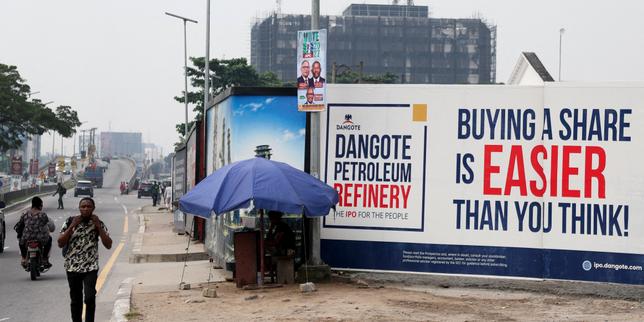
Walk through any wholesale pharmaceutical hub in Lagos, Nairobi, or Johannesburg, and the shift is visible on the warehouse shelves. Boxes stamped with the names of mid-sized Chinese manufacturers now sit directly beside established Indian brands like Cipla, Sun Pharma, and Hetero. You might also find this connected story insightful: L’introduction en Bourse de la raffinerie Dangote décortiquée par la mécanique des marges.
This is not merely a price war. It is a structural collision between two different industrial models, playing out across a continent that imports between 70% and 90% of its finished medicines. When two Asian manufacturing giants fight for market share in a region heavily reliant on external supply, the ripple effects determine everything from tender outcomes at national health ministries to the profit margins of neighborhood chemists.
The Structural Vulnerability of the Indian Supply Chain
To understand why Indian firms are suddenly playing defense, you have to look beneath the finished pill. India built its pharmaceutical empire on formulation—taking active pharmaceutical ingredients (APIs) and turning them into tablets, capsules, and injectables at massive scale. They became the undisputed masters of reverse-engineering complex drugs and passing rigorous international regulatory audits. As reported in latest articles by Harvard Business Review, the implications are notable.
Yet that empire rests on a brittle foundation. India relies on China for roughly 70% of its APIs and key starting materials. For certain critical antibiotics and fermentation-based products, that dependency climbs above 90%.
During the supply chain disruptions of the early 2020s, that vulnerability became painfully obvious. When Chinese chemical plants slowed production or hiked prices on raw intermediates, Indian formulators watched their margins evaporate overnight. They had no choice but to pass those costs onto buyers, including procurement agencies in Sub-Saharan Africa.
Chinese firms noticed the opening. Rather than simply selling the raw chemical powders to factories in Hyderabad and Mumbai, vertically integrated Chinese companies began asking an obvious question. Why sell the ingredients to an Indian middleman when you can press the pills yourself and ship them directly to Dar es Salaam?
How China Flipped the Script on Finished Formulations
For years, Chinese pharmaceutical companies struggled to gain traction in African markets due to a persistent perception problem. Among doctors, pharmacists, and procurement officials across English-speaking Africa, Indian generics enjoyed hard-won trust, reinforced by decades of clinical familiarity and widespread World Health Organization (WHO) prequalification. Chinese medicines, rightly or wrongly, were often viewed with skepticism regarding quality control and regulatory oversight.
That stigma is eroding fast, driven by three distinct operational shifts.
First, Chinese manufacturers have poured capital into WHO prequalification and stringent regulatory approvals. The number of Chinese-manufactured finished pharmaceutical products prequalified by the WHO has risen steadily, giving them the exact same golden ticket required to bid on massive multilateral tenders funded by the Global Fund, PEPFAR, and UNICEF.
Second, China operates with an unmatched cost-of-capital advantage. State-backed development banks and provincial export credit agencies provide low-interest loans and subsidies to domestic firms expanding into overseas markets. An Indian mid-cap firm borrowing at commercial rates cannot easily match the payment terms a state-supported Chinese competitor can offer to a cash-strapped African health ministry.
Third, Beijing bundles healthcare with infrastructure. Through broader diplomatic and commercial frameworks, medical supply deals frequently accompany hospital construction projects, diagnostic equipment donations, and bilateral trade agreements. When a Chinese state-owned enterprise builds a regional medical center, the procurement pipeline for the drugs used inside that facility naturally tilts toward Chinese suppliers.
The Battle for Public Tenders vs Private Pharmacies
The African pharmaceutical market is not a monolith. It splits sharply into two distinct battlegrounds, and Chinese and Indian firms are fighting entirely different wars in each.
| Market Segment | Primary Buyers | Key Competitive Driver | Current Advantage |
|---|---|---|---|
| Public & Donor Tenders | National Ministries of Health, Global Fund, UNICEF | Unit price, WHO prequalification, volume capacity | Rapidly tightening; China gaining ground via vertical integration |
| Private Retail & Wholesale | Distributors, hospital groups, independent pharmacies | Brand equity, medical representative networks, credit terms | India holds strong lead due to entrenched doctor loyalty |
In the public tender space, sentiment means nothing. Procurement algorithms care about regulatory compliance, delivery timelines, and unit price down to the fourth decimal place. Because Chinese giants like Fosun Pharma, Sinopharm, and Huahai control their own upstream chemical synthesis, they can shave pennies off the cost of antiretrovirals, tuberculosis treatments, and antimalarials. In high-volume tender bidding, a two-cent advantage per blister pack wins the entire multi-million-dollar contract.
The private retail market tells a completely different story. Across cities like Accra, Kampala, and Lusaka, out-of-pocket spending accounts for a massive share of healthcare expenditure. Here, doctors prescribe by brand name, and pharmacists recommend products they know will not trigger patient complaints.
Indian companies spent thirty years building vast armies of medical representatives who visit clinics daily, sponsor local medical associations, and cultivate personal relationships with prescribers. A doctor in Nairobi who has prescribed a specific Indian brand of amoxicillin for fifteen years will not switch to an unfamiliar Chinese label just because a wholesaler offers a slightly better margin. To crack this private sector, Chinese firms are increasingly bypassing greenfield brand-building and instead acquiring established local distributors or buying stakes in regional pharmaceutical companies.
The Push for Local Manufacturing Changes the Rules
While foreign giants battle for import share, African governments have grown tired of watching billions of dollars leave the continent every year for basic medicines. The supply shocks of recent years exposed the existential danger of importing almost every dose of insulin, vaccine, and basic painkiller.
In response, major economies are rewriting their procurement rules to penalize pure importers and reward local production.
- Nigeria has implemented strict import prohibition lists and tariff protections designed to shield domestic manufacturers producing basic formulations like paracetamol, antimalarials, and intravenous fluids.
- Kenya offers preferential pricing margins in public tenders for locally manufactured drugs, allowing domestic factories to win contracts even if their bids are up to 15% higher than foreign imports.
- South Africa actively uses state procurement leverage to demand local content and technology transfer agreements from multinational suppliers.
- Rwanda and Ghana have aggressively courted foreign direct investment to build regional pharmaceutical hubs, offering tax holidays, free land in special economic zones, and streamlined regulatory pathways.
This policy shift has forced both Indian and Chinese firms to rethink their export-only strategies. Shipping finished boxes from Guangzhou or Ahmedabad is becoming a dead-end business model for basic essential medicines. To survive, Asian firms must build factories on African soil.
Consider a hypothetical scenario illustrating how this plays out on the ground. Imagine a mid-sized Indian manufacturer that has exported antihypertensive drugs to East Africa for twenty years. Suddenly, the host government imposes a 25% tariff on imported finished tablets while waiving duties on raw APIs and machinery. The Indian firm's margins collapse. Meanwhile, a Chinese competitor partners with a local state investment fund to build a tableting and packaging plant outside Nairobi. Within eighteen months, the Chinese joint venture qualifies as a local manufacturer, captures the protected government tender, and locks the Indian exporter out of the market entirely.
This is not theoretical. Across Ethiopia, Uganda, Kenya, and Nigeria, industrial parks are filling up with Asian-backed pharmaceutical facilities. Chinese firms like Sansheng Pharmaceutical in Ethiopia and Humanwell Healthcare in Mali have already established significant local footprints, producing everything from basic infusions to essential tablets. Indian players like Cipla, through its landmark facility in Uganda (CiplaQCIL), proved early on that local production of WHO-prequalified antiretrovirals could work, and competitors like Strides and Emcure have followed suit with regional manufacturing investments.
The Hidden Risks Behind the Price War
On paper, fierce competition between the world's two largest generic drug producers looks like an unambiguous win for African patients. Lower prices mean national health budgets stretch further, allowing governments to treat more people for HIV, malaria, and chronic conditions like hypertension and diabetes.
Dig deeper into the supply chain economics, and serious risks emerge.
The Race to the Bottom on Margins
When state-subsidized Chinese firms and volume-hungry Indian companies slash prices to win tenders, margins compress to razor-thin levels. In pharmaceutical manufacturing, extreme margin pressure creates dangerous incentives. Companies operating at near-zero profit have less capital to invest in redundant supply chains, facility upgrades, and rigorous batch testing. History shows that when generic drug prices fall below a sustainable floor, manufacturers quietly exit the market, leading to sudden, severe shortages of critical, low-cost medicines like sterile injectables and pediatric antibiotics.
Regulatory Bottlenecks and Quality Disparities
Africa's regulatory landscape remains fragmented across more than fifty national medicines regulatory authorities, many of which are severely underfunded and understaffed. While the operationalization of the African Medicines Agency (AMA) promises to harmonize standards and pool regulatory expertise across the continent, full continent-wide enforcement remains years away.
In the meantime, a sharp influx of new products from dozens of competing Chinese and Indian manufacturers overwhelms national inspection regimes. Substandard and falsified medicines already account for an estimated 10% or more of medical products in low- and middle-income countries, according to WHO data. Without robust post-market surveillance and bioequivalence testing capacity at ports of entry, aggressive price competition increases the risk that lower-tier manufacturers—from either country—cut corners on inactive excipients or packaging stability, degrading drug efficacy in hot, humid tropical climates.
The Illusion of Local Production
Many of the new factories popping up across Sub-Saharan Africa are essentially "fill-and-finish" or secondary packaging operations. They import bulk tablets or active ingredients from China and India, press or blister-pack them locally, and slap a "Made in Africa" label on the box.
While this creates local jobs and captures some value-add, it does not solve the core dependency problem. True pharmaceutical sovereignty requires the capacity to synthesize APIs locally, which demands a massive supporting ecosystem of chemical engineering, reliable high-voltage electricity, pure water treatment, and hazardous waste management. Currently, only a tiny fraction of API production takes place on the African continent, concentrated almost exclusively in South Africa and Egypt. If geopolitical friction or another global health emergency shuts down maritime shipping lanes from Asia, those new local packaging plants will run out of raw materials within weeks.
What Comes Next for African Healthcare Procurement
The collision of Chinese industrial scale and Indian formulation expertise is permanently altering the power dynamics of global health supply chains. The era when a handful of Indian generic giants could treat Sub-Saharan Africa as a predictable, high-margin export market is over.
Indian firms are responding by moving up the value chain. Recognizing they cannot beat vertically integrated Chinese rivals on basic commodities like paracetamol or simple antibiotics, leading Indian companies are pivoting toward complex generics, biosimilars, and specialized chronic disease therapies—areas where their deep clinical development experience and strong brand equity among African specialists still command a premium. Simultaneously, New Delhi has launched massive Production Linked Incentive (PLI) schemes at home to rebuild its domestic API manufacturing base and break its reliance on Chinese chemical intermediates.
Chinese firms, meanwhile, are playing a patient, capital-intensive long game. They are using their dominance in upstream chemistry to squeeze competitors on price, leveraging state-backed financing to build local factories, and steadily clearing international regulatory hurdles to shed outdated quality stigmas.
For African health ministries and private hospital networks, this rivalry offers unprecedented leverage—provided they use it wisely. Blindly awarding tenders to the lowest bidder will simply trade one foreign dependency for another while hollowing out local manufacturing ambitions. The real winners will be the regulators and procurement agencies that force both Beijing and New Delhi to compete not just on the price of a pill, but on genuine technology transfer, clinical trial investments, and the construction of end-to-end manufacturing capacity on African soil.