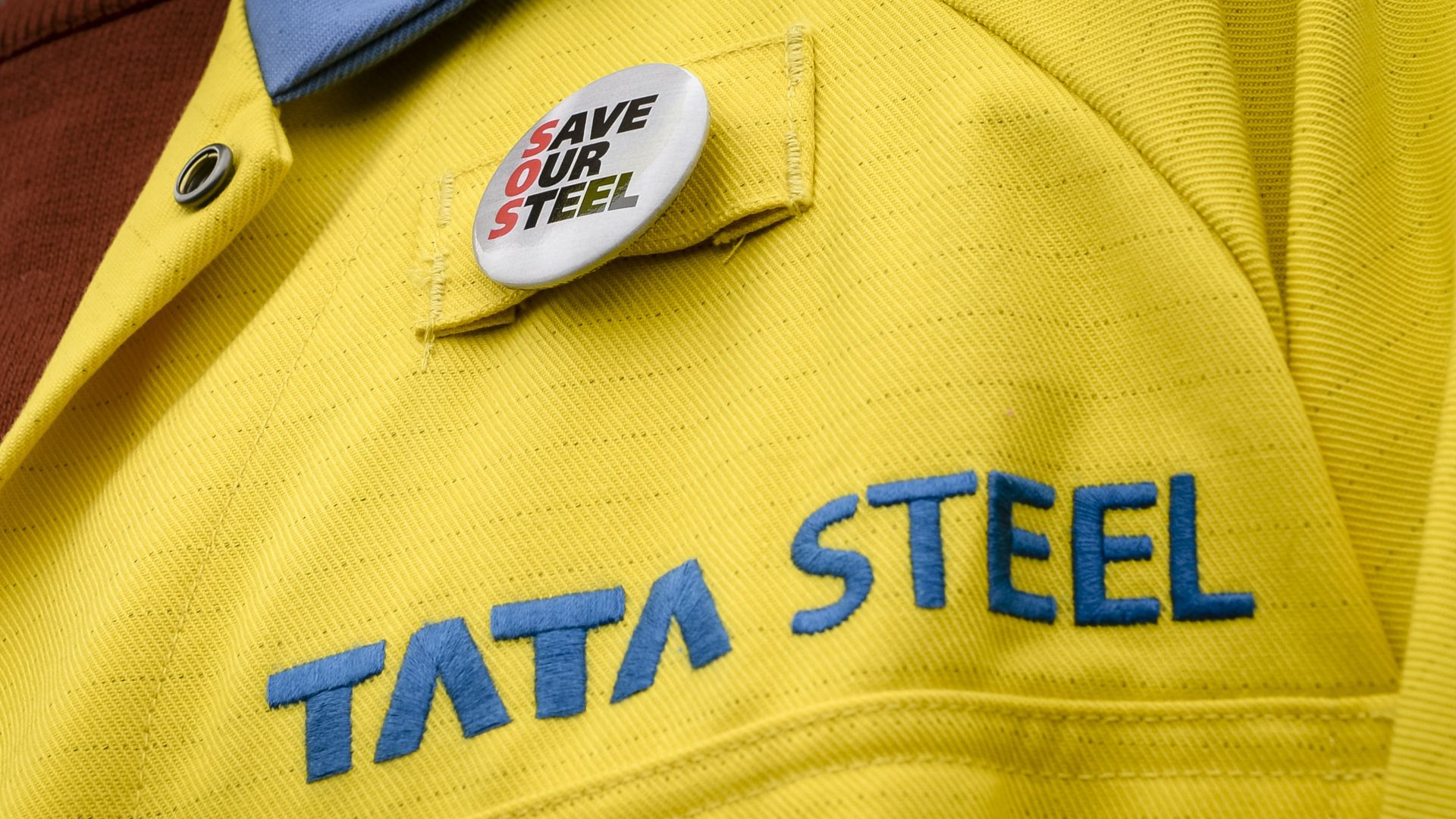
The British government has quietly retained accountancy titan EY on a seven-figure contract to pick apart a multi-million-pound taxpayer funding request from Tata Steel.
At the center of this financial tug-of-war is the monumental transition at the Port Talbot steelworks in South Wales. The core premise is stark: an industrial plant meant to be modernised through a green-transition package is facing timetable slippages, infrastructure bottlenecks, and severe cost inflation. Tata Steel is asking the treasury for additional public capital beyond the initial £500 million government grant approved under the previous framework. Meanwhile, you can find similar events here: The Weight of a Coin in a Shaking Room.
Ministers did not reach for external forensic accountants because the project was running smoothly. They brought in EY under a commercial analysis mandate running through August 2027 precisely because Whitehall lacks the internal bandwidth to vet heavy industrial engineering economics while simultaneously managing public exposure.
The Anatomy of a Slipping Timeline
Industrial transformations of this scale are notoriously vulnerable to schedule drift. Port Talbot's shift away from carbon-heavy blast furnaces toward an electric arc furnace—designed to melt scrap steel using electricity—was structured around a tight £1.25 billion budget. Half a billion came from the public purse, with the remainder pledged by the corporate parent. To see the bigger picture, check out the detailed article by Investopedia.
Yet, complications mounted. Chief among them is a severe delay in securing the necessary high-voltage grid connection required to power the new furnace. When power infrastructure lags behind construction schedules, capital assets sit idle, interest charges compound, and revenue generation from the new kit is pushed backward into an uncertain horizon.
Tata has signaled that these grid delays, paired with broader operational friction and market pressures from cheap international steel imports, alter the economic baseline. For Whitehall, the dilemma is acute. Refusing additional funding risks further operational instability or job losses at a site that forms the backbone of Welsh industrial employment. Opening the vaults further risks setting a precedent where initial state-aid agreements become open-ended subsidies subject to renegotiation whenever project milestones slip.
The Due Diligence Machine
Awarding a one million pound advisory mandate to EY is an exercise in bureaucratic self-preservation as much as financial prudence. Civil servants cannot simply take a multinational corporation's ledger at face value. When an industrial giant approaches the state with an outstretched hand, politicians require an independent shield to validate whether the claimed cost overruns are genuine structural necessities or manageable variances that the parent company should absorb.
EY's mandate involves rigorous commercial analysis and financial due diligence. Auditors will comb through contractor quotes, energy supply timelines, and capital expenditure forecasts to determine if the electric arc furnace timeline extension genuinely inflates operational costs to the degree suggested. Every delay has a quantifiable cash-flow penalty, from prolonged dual-site logistics to the continued maintenance of legacy infrastructure that was meant to be decommissioned.
This financial vetting takes place against a backdrop of deep political sensitivity. Prime Minister Andy Burnham and Welsh Secretary Stephen Kinnock have both treated the Port Talbot site as a bellwether for regional industrial strategy. Protecting high-skilled manufacturing jobs is a matter of stated national policy, but the public treasury is operating under severe fiscal constraints.
The Broader Industrial Fallout
Beyond the immediate ledger entries of the Port Talbot site, this standoff highlights structural flaws in how green industrial transitions are negotiated in Western economies. When governments negotiate multi-million-pound decarbonisation deals with private conglomerates, the leverage often shifts post-contract. Once a blast furnace is shut down—as Port Talbot's final blast furnace was in 2024—the local site loses its interim production capacity. The community becomes entirely dependent on the successful completion of the replacement asset.
This dependency changes the negotiating dynamics entirely. A corporation can argue that without supplemental state intervention, the timeline stretches further, or the economic viability of domestic primary steelmaking collapses altogether. The government is left choosing between writing another check or presiding over the terminal decline of domestic steel independence.
As EY's team pore over spreadsheets and supply chain schedules through the coming months, the final report will dictate more than just a single corporate payout. It will establish the baseline rulebook for how public-private partnerships handle green transition overruns in heavy industry, setting a precedent that will resonate across every manufacturing sector trying to decarbonize on a knife-edge budget.


