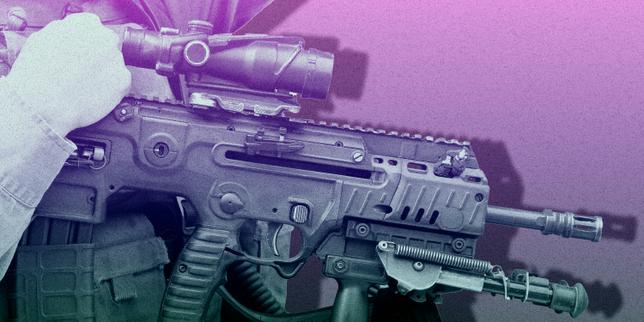
When an armed faction loses ground in a densely populated sector of the Haitian capital, safety does not return. The violence simply migrates. This brutal displacement of urban warfare defines the current reality across Port-au-Prince, where law enforcement interventions and vigilante movements do not dismantle criminal syndicates so much as squeeze a water balloon, forcing the pressure to bulge outward into entirely new neighborhoods.
For years, international bulletins and local dispatches have reported on fleeting tactical victories. A barricade is cleared. A notorious intersection is recaptured. Yet residents living a few miles away brace themselves, knowing that an incoming wave of displaced combatants will soon knock on their doors. Understanding this grim geography requires examining how criminal cartels operate not as static mafia families, but as fluid occupying armies dependent on territorial control for extortion, kidnapping economies, and drug trafficking routes. If you liked this article, you should check out: this related article.
The Mechanics of Urban Displacement
Port-au-Prince is an architectural maze of makeshift housing, steep ravines, and narrow arteries that make traditional security containment virtually impossible. When a coalition of police officers or local defense groups pushes into a stronghold like Carrefour-Feuilles or Solino, the defensive posture of the defending faction rarely involves a last stand. Instead, commanders order strategic retreats.
They pack their automatic rifles, coerce young recruits to carry looted supplies, and cross invisible municipal boundaries into unprepared sectors. A quiet suburb on Tuesday becomes an active combat zone by Thursday. The residents of the receiving neighborhood inherit a crisis they had no hand in creating. For another angle on this story, refer to the recent update from USA Today.
Consider a hypothetical family living in a previously tranquil hillside zone on the periphery of the capital. They watch news reports of a massive security operation downtown, breathing a sigh of relief that authorities are finally restoring order. They do not realize that the defeated gunmen have designated their exact street as the primary relocation corridor. Within forty-eight hours, empty lots become encampments, local businesses face sudden extortion demands, and the front lines of the capital's civil conflict rewrite themselves around an unsuspecting civilian population.
Why Containment Fails Without State Infrastructure
The core failure of the current security strategy lies in the absence of a permanent state footprint. Driving criminal elements out of a neighborhood requires holding the territory. Without functioning civil administration, street lighting, functional courts, and a permanent police presence, an evacuated zone remains a vacuum.
Nature abhors a vacuum. Urban warfare abhors an unprotected asset even more.
When security forces withdraw to plan their next offensive, the original syndicate—or a rival faction seeking to capitalize on the chaos—sweeps back in. Alternatively, if the pressure holds, the displaced network permanently embeds itself in its new host community, doubling down on local extortion to recoup the financial losses suffered during their retreat. This creates a zero-sum game of human misery. Every square foot gained in one district translates directly into a square foot lost elsewhere, driving mass internal displacement. Hundreds of thousands of residents have fled their homes, bouncing from one makeshift camp to another, only to find that the violence follows them like a shadow.
The Economic Engine Fueling the Migration of Chaos
Gangs do not fight solely for ideological supremacy or territorial pride. They fight for cash flow. Port-au-Prince functions as a fragmented archipelago of economic nodes. Ports, fuel depots, wholesale markets, and main thoroughfares generate daily cash through protection rackets and transit taxes.
When a dominant faction is pushed out of a commercial hub, its revenue stream dries up instantly. To survive, the leadership must capture a new economic node. If they lose control of a market district near the port, they turn their sights toward residential commercial areas inland, transforming corner shops and public transport depots into new targets for shakedowns.
This financial desperation accelerates the cycle. The displaced fighters cannot afford to lie low. They must establish dominance quickly in their new surroundings to pay their foot soldiers and purchase ammunition from international traffickers. The local population bears the brunt of this economic necessity, squeezed between the demands of the occupying gunmen and the rising cost of basic survival essentials like clean water and imported food.
Breaking the Cycle of Relocated Terror
Addressing this phenomenon demands a complete overhaul of how urban crises are managed. Temporary surges and tactical sweeps offer momentary political optics while worsening the long-term strategic outlook. True stabilization requires a sustained, ink-blot strategy where cleared zones are immediately fortified with social services, permanent law enforcement garrisons, and community trust-building initiatives that prevent criminal networks from simply sliding down the road.
Until planners recognize that moving a problem from one neighborhood to another is not a solution, the map of Port-au-Prince will remain locked in this devastating cycle. The borders of safety will keep shrinking, cornered by a crisis that refuses to dissipate, choosing instead to find a new home in the next quiet street.