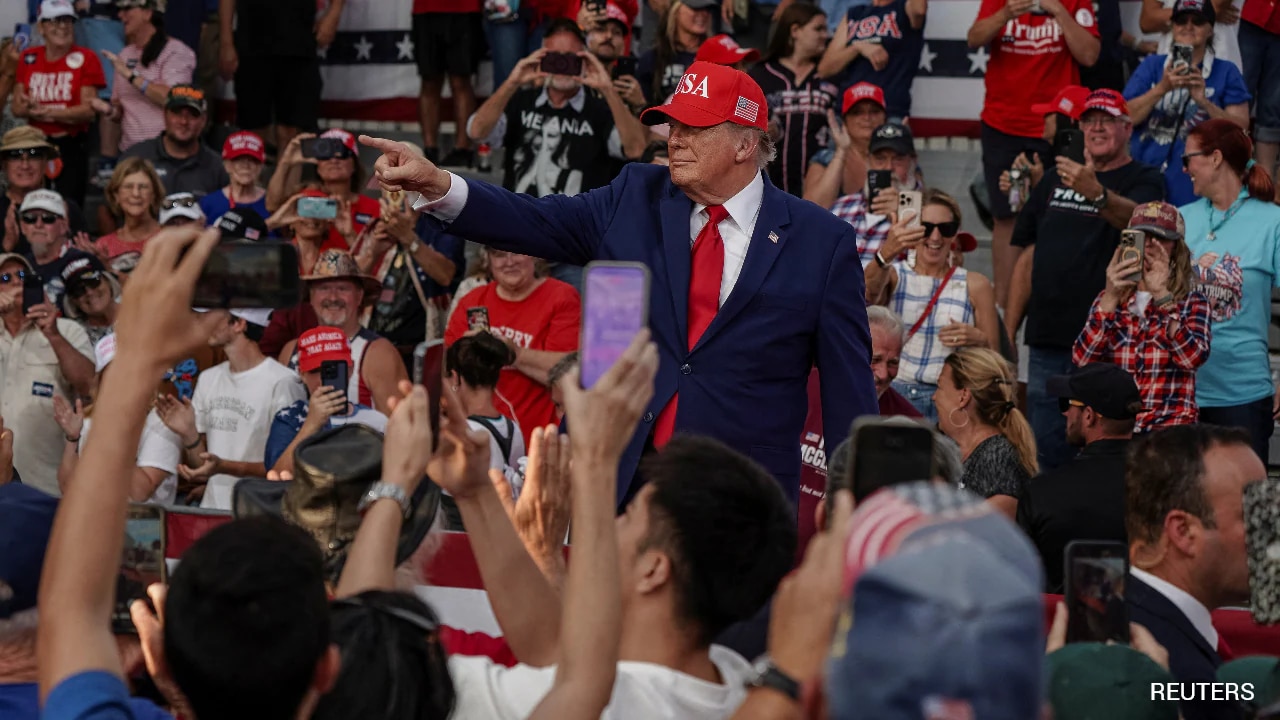
President Donald Trump sparked backlash and debate during an October 16, 2026 campaign rally in Dalton, Georgia, when he joked that guessing the name "Mohammad" gives a roughly 65 percent chance of getting a Middle Eastern man's name right while mocking Iran's presidency and claiming nobody in the country wants the job. Delivered amid midterm campaigning and months after U.S. and Israeli military strikes targeting Iran's nuclear program, the remark turned a common Muslim given name into political shorthand for adversarial foreign policy.
Strip away the applause lines and outraged headlines, and you are looking at a calculated rhetorical move. Campaign rallies rarely run on accidental phrasing. Speakers test lines, read room temperature, and tie domestic culture friction to geopolitical conflict. In Dalton, the room barely reacted. Yet the clip spread fast because it fused two potent triggers at once: cultural stereotyping and wartime hostility toward Tehran.
How a Common Name Becomes a Campaign Punchline
Names carry weight long before politics enters the room. Across the Muslim world, variants of Mohammad rank among the most widespread given names, rooted in reverence for the Prophet Mohammad, the founder of Islam. Turning that cultural ubiquity into a rule of thumb—"just say Mohammad"—flattens vast regional, linguistic, and national differences into a single caricature.
Iran adds another layer of irony that casual coverage often misses. Iran is majority Shia, while the name Mohammad—and its many spellings—is used across Muslim communities globally, alongside Persian and Shia naming traditions. When a speaker treats every person from the Middle East as interchangeable under one label, precision goes out the window. Precision is usually the first casualty at a rally microphone.
Politically, though, precision is rarely the point. A punchline works by compressing complex identities into something instant and familiar to an audience. Even when a crowd responds quietly, as reporters noted in Georgia, a clip still does work online. Clip culture rewards friction. Outrage drives shares just as reliably as cheer does.
Consider a hypothetical example of how a viral clip travels in modern media. A rally attendee films thirty seconds on a phone. Advocacy groups post sharp rebukes. Supporters frame the line as harmless banter or tough talk about an adversary. Within hours, commentators are arguing over intent rather than policy.
| Rhetorical Angle | Surface Appeal to Supporters | Criticism and Blind Spots | Strategic Role in a Speech |
|---|---|---|---|
| "65% chance" name quip | Framed as blunt, unfiltered humor | Flattens diverse Middle Eastern identities into a stereotype | Grabs attention and fuels online clip circulation |
| "Nobody wants to be president" in Iran | Projects U.S. dominance over a weakened rival | Oversimplifies Iran's power structure and governance | Ridicules Tehran's leadership during heightened tension |
| Nuclear vow alongside jokes | Signals firmness and resolve to voters | Mixes grave military stakes with stand-up routines | Keeps hardline foreign policy anchored in a light moment |
Mocking Iran's Presidency After Military Escalation
Trump paired the name joke with a jab at Iran's top elected office, claiming Iran is the only country where nobody wants to be president and acting out asking people named Mohammad if they ever wanted the post. Masoud Pezeshkian has served as Iran's president since 2024, operating inside a system where supreme authority sits elsewhere and economic and security pressures have been severe. Mockery simplifies all of that into a one-liner about dysfunction.
Context makes the timing sharper. The remarks came seven months after the United States and Israel launched a war against Iran aimed in part at crippling its nuclear program, with Trump reiterating his vow that Tehran will never obtain a nuclear weapon. Laughing at an adversary's leadership right next to a nuclear pledge is a distinct tone choice. It projects detachment and superiority.
There is a counter-argument worth taking seriously, even from critics. Supporters of tough rhetoric argue that leaders use sarcasm and exaggeration to belittle hostile regimes and signal strength to domestic voters. From that viewpoint, humor is a weapon meant to rattle opponents and rally allies rather than a diplomatic memo.
That argument runs into a real drawback when war and nuclear proliferation are on the table. Ridicule can harden postures on the other side and give adversarial media easy propaganda fodder. At home, blurring the line between a hostile government and Muslim identity broadly alienates citizens and allies who have nothing to do with Tehran's policies.
Why Domestic Politics and Foreign Rivals Keep Colliding
Midterm rallies are built for domestic persuasion, yet foreign crises keep crowding the stage. In October 2026, candidates in Georgia were competing for voter attention, and foreign policy lines were woven into the pitch. Linking overseas conflict to everyday cultural shorthand lets a speaker pivot quickly from global security back to domestic identity politics.
Critics see a pattern here. Muslim advocacy groups have pushed back against rhetoric they say stigmatizes Muslims, pointing to reports this year that linked rising Islamophobia in the United States in part to second-term immigration crackdowns and responses to pro-Palestinian protests. Whether a given joke is meant maliciously or carelessly, it lands in an environment already charged with suspicion and grievance.
Still, audiences do not react in lockstep. Some voters hear a joke and take it literally as an insult. Others shrug it off as typical rally exaggeration. A third group tunes out the banter altogether and focuses on prices, jobs, or regional stability. Assuming every listener hears the same message is a trap analysts fall into far too often.
What Readers and Analysts Should Watch Next
Surface outrage fades fast. What matters more is how rhetoric tracks with policy and coalition math. Watch whether jokes about Iran stay confined to campaign stages or show up in formal negotiations, sanctions messaging, and allied coordination.
Pay attention to crowd reactions too. A muted room in Dalton suggests voters may be more focused on immediate pocketbook or security concerns than on off-the-cuff cultural riffs. Watch how swing voters respond when tough talk meets prolonged geopolitical strain.
Above all, separate the performance from the stakes. A rally line can be crude, clever, or forgettable in a single breath, while nuclear risks, regional conflict, and domestic division remain stubbornly real. Keep your eyes on what changes on the ground once the applause stops.