The modern American military operates on a single, unwritten guarantee. Commanders are chosen based on competence, and politicians stay out of the promotion line. That guarantee is dead.
In its place is a systematic, quiet purge of the nation’s top military brass, directed from the highest office in the Pentagon. Defense Secretary Pete Hegseth has spent his tenure systematically dismantling the traditional leadership structure of the armed forces, replacing seasoned combat veterans with figures deemed more aligned with the administration's political vision. This campaign has reached a boiling point, triggering an unprecedented mutiny from the very lawmakers who handed Hegseth his job.
The friction is no longer a partisan dispute confined to late-night news broadcasts. It is a structural crisis. Key congressional Republicans, long the most reliable defenders of defense spending and military autonomy, are openly expressing buyer’s remorse. The latest casualty of this internal war is General Christopher “C.D.” Donahue, the widely respected special operations commander and the last American soldier to leave the tarmac in Afghanistan. Donahue’s forced retirement has broken the dam of silence on Capitol Hill.
The Quiet Guillotine Inside the Pentagon
Defense Secretary Pete Hegseth entered office promising to dismantle what he termed a bloated, bureaucratic, and socially engineered military leadership. What looked like a rhetorical campaign during his confirmation hearings quickly materialized into an aggressive administrative overhaul.
The strategy avoids grand public declarations. Instead, it relies on the quiet extraction of key personnel. Hegseth has systematically removed officers from promotion lists that had already been vetted, scrutinized, and approved by their military peers. This bypasses decades of established merit-based evaluation.
In April, the administration forced the early retirement of Army Chief of Staff General Randy George along with two other senior generals. No explanations were offered to the public or to the congressional committees tasked with oversight. The vacancies remain unfilled by permanent nominees, leaving the highest echelons of land warfare management in a state of indefinite administrative limbo.
The justification from within the Pentagon remains consistent. Officials claim the senior ranks have grown too large, and resources must shift from headquarters to frontline fighting units. Yet, the pattern of removals suggests a different metric for retention. Officers who have publicly defended diversity initiatives or demonstrated independent command decisions during past administrations have found their careers abruptly truncated.
A Battle Over Competence and Loyalty
The removal of General Donahue has shifted the internal debate from ideological sparring to a direct confrontation over operational readiness. Donahue is not an administrative paper-pusher. He is an elite combat leader with deep roots in Delta Force and decades of operational experience in volatile combat zones.
His impending departure stems from a prolonged behind-the-scenes effort by the Army and lawmakers to extend his active service career. Hegseth personally blockaded those efforts. The friction between the defense secretary and the general staff has been building for years, rooted in fundamentally opposing views of what makes a fighting force effective. Donahue has previously rejected assertions that the military had grown weak due to demographic changes or modernized retention policies, famously stating that his commands remained focused strictly on warfighting and readiness without political distraction.
That stance appears to have clashed directly with Hegseth’s mandate to reorder the institution’s cultural priorities. Rather than focusing purely on strategic modernization or countering peer adversaries, the Pentagon leadership has redirected significant energy toward ideological alignment.
The consequences extend far beyond individual careers. When the civilian leadership fires top commanders without providing an explicit cause, it injects a chilling effect into the entire officer corps. Aspiring leaders quickly learn that operational excellence is secondary to political compliance. This shift threatens the foundational doctrine of an apolitical military, an asset that has historically insulated American defense policy from the chaotic swings of domestic partisan politics.
The Breaking Point for Congressional Republicans
The political protection Hegseth enjoyed during his initial appointment is evaporating. The loudest criticisms are now coming from the lawmakers who command the defense budget and understand the mechanics of national security.
Senator Thom Tillis, a veteran North Carolina Republican on the Senate Armed Services Committee, recently broke ranks in spectacular fashion. Tillis publicly voiced deep regret for casting the deciding vote to confirm Hegseth, labeling the secretary’s execution of his duties as amateurish and driven by deep-seated insecurity. Tillis pointed directly to the purge of elite combat commanders as evidence of a leadership style that favors isolation over capability, suggesting that Hegseth is fundamentally uncomfortable surrounded by officers with superior operational credentials.
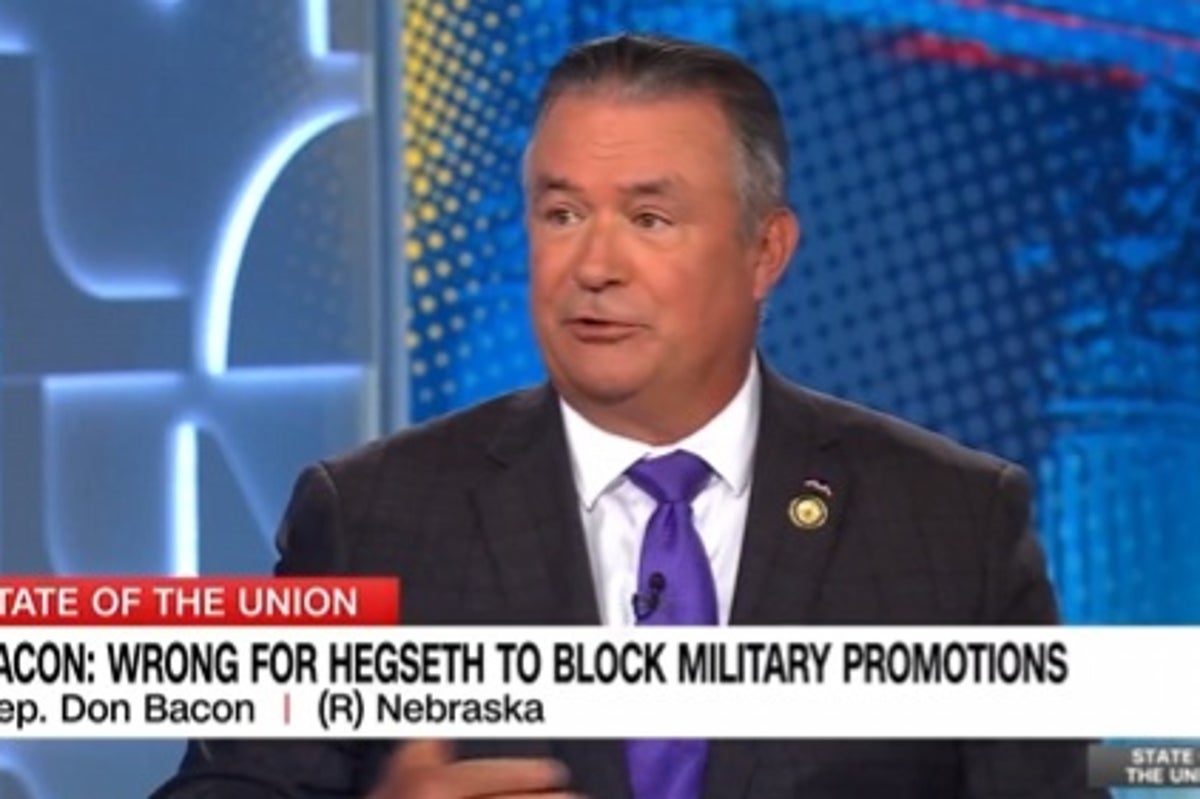
Other prominent conservative voices have joined the chorus. Representative Austin Scott of Georgia labeled the decision to push out seasoned combat leaders a massive unforced error that actively damages troop value. Representative Don Bacon of Nebraska noted that the sudden, unexplained dismissal of roughly 20 generals and admirals has crippled senior officer morale across every branch.
Congress relies on predictability and transparency to fund the global operations of the United States military. When the Pentagon operates as an opaque political laboratory, that predictability vanishes. Lawmakers are left trying to draft annual defense bills while the leadership structure of the army shifts beneath their feet.
The Erosion of Command Stability
The current administrative turmoil comes at an incredibly hazardous moment for global stability. The United States is managing complex geopolitical standoffs across multiple theaters, requiring steady, experienced hand-offs at the senior command level.
Instead of stability, the Pentagon is projecting internal friction. Hegseth’s focus has frequently drifted from global force posture toward high-profile cultural skirmishes. From attempting to change the official name back to the Department of War to gathering hundreds of flag officers for what critics described as an expensive ideological rally on the eve of a potential government shutdown, the civilian leadership appears increasingly detached from the practical realities of defense management.
The systemic removal of institutional memory creates a vacuum. Modern warfare requires an intricate understanding of logistics, international alliances, and advanced technological integration. These are skills developed over thirty-year careers, not acquired through media appearances or political campaigns. By cutting ties with the military’s most capable tactical minds, the current leadership is gambling with the nation's readiness.
The current trajectory cannot be sustained indefinitely without causing permanent structural damage to the armed forces. Congress retains the power of the purse and the authority of oversight, and the growing bipartisan frustration signals that the legislative branch is preparing to assert its constitutional role. The real danger is that by the time the course is corrected, the institutional trust that took two and a half centuries to build will already have been severely compromised.
For a deeper look at the legislative pushback against these sweeping changes at the Pentagon, you can watch this report detailing how Senator Jack Reed raised the alarm on military politicization, providing crucial context on the growing friction between Congress and the Defense Secretary.