The signs of an institutional pivot are hidden in plain sight. For decades, the architecture of American power in the Middle East rested on a simple, expensive assumption: permanent garrisons, heavy air wings parked within missile range of potential adversaries, and thousands of boots stationed from the Gulf to the Levant would keep the peace. That architecture is fracturing.
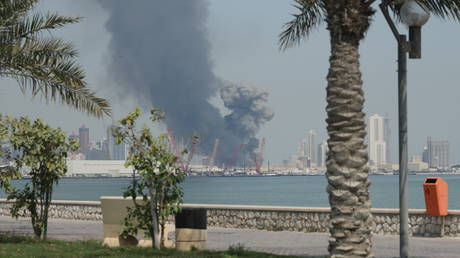
Behind closed doors in Washington, defense planners are quietly reckoning with the hard math of modern warfare. Recent regional conflicts have exposed a sobering reality. Hundreds of structures across dozens of military installations have sustained serious damage from precision strikes and drone incursions. The old model of fixed, concentrated basing is no longer a deterrent; it is a liability.
The Cost of Concrete Vulnerability
For years, critics dismissed force posture debates as bureaucratic exercises in budget allocation. They were wrong. When a regional war erupts, the bill for stationary exposure comes due immediately. Traditional hubs in the Gulf were built for an era of counterinsurgency, not high-end missile exchanges.
Consider the logistical footprint. Maintaining tens of thousands of personnel in fixed theater locations requires an unbroken supply chain and massive investment in physical hardening. Yet, as recent facility damage assessments demonstrate, even advanced air defense umbrellas struggle to achieve total immunity against saturation drone and missile attacks. Every dollar spent repairing concrete bunkers is a dollar not spent on long-range maritime maneuver or the defense industrial base back home.
The Pentagon's internal debate is not merely about pulling troops back. It is about a fundamental shift from static presence to distributed readiness.
The Shift to Over-the-Horizon Power
Military planners are increasingly forced to ask a foundational question. What does national security actually require when regional partners possess their own sophisticated air defense networks and bilateral agreements?
The answer is pointing toward an access-only posture. Instead of maintaining permanent "hot" bases that invite targeting, the Department of Defense is exploring a constellation of dispersed, austere locations. These sites can be activated rapidly during a crisis but left unmanned or minimal during peacetime.
This model relies on over-the-horizon capabilities. Carrier strike groups operating further offshore, long-range bombers flying from outside the immediate theater, and pre-positioned equipment managed largely by host nations replace the traditional standing army footprint. It is a strategic retreat from fixed real estate, designed to preserve combat power by removing stationary targets from the chessboard.
The Regional Vacuum and the Great Power Tradeoff
Critics of this strategic recalibration point to an obvious danger. When Washington steps back, others step in. Regional competitors and rival states are eager to fill any security vacuum left by departing American brigades.
Furthermore, shifting forces away from the Middle East is intimately tied to the broader pivot toward great power competition in the Indo-Pacific. The Pentagon cannot simultaneously finance a massive, vulnerable posture in the Gulf while preparing for high-end maritime conflict elsewhere without straining force readiness to its breaking point. Resources are finite. Every battalion stationed near a volatile border is a capability withheld from the primary strategic theater.
Yet, military inertia is a powerful force. Long-standing institutional habits die hard, and regional partners routinely lobby Washington to maintain tripwire forces that guarantee an automatic American response to local threats. Overcoming this institutional drag requires political courage that transcends electoral cycles.
The debate over future posture is ultimately an admission of changing realities. The era of unchallengeable American basing in the Middle East has closed. What replaces it will dictate whether the military can adapt before the next crisis exposes the cracks in an outdated foundation.


