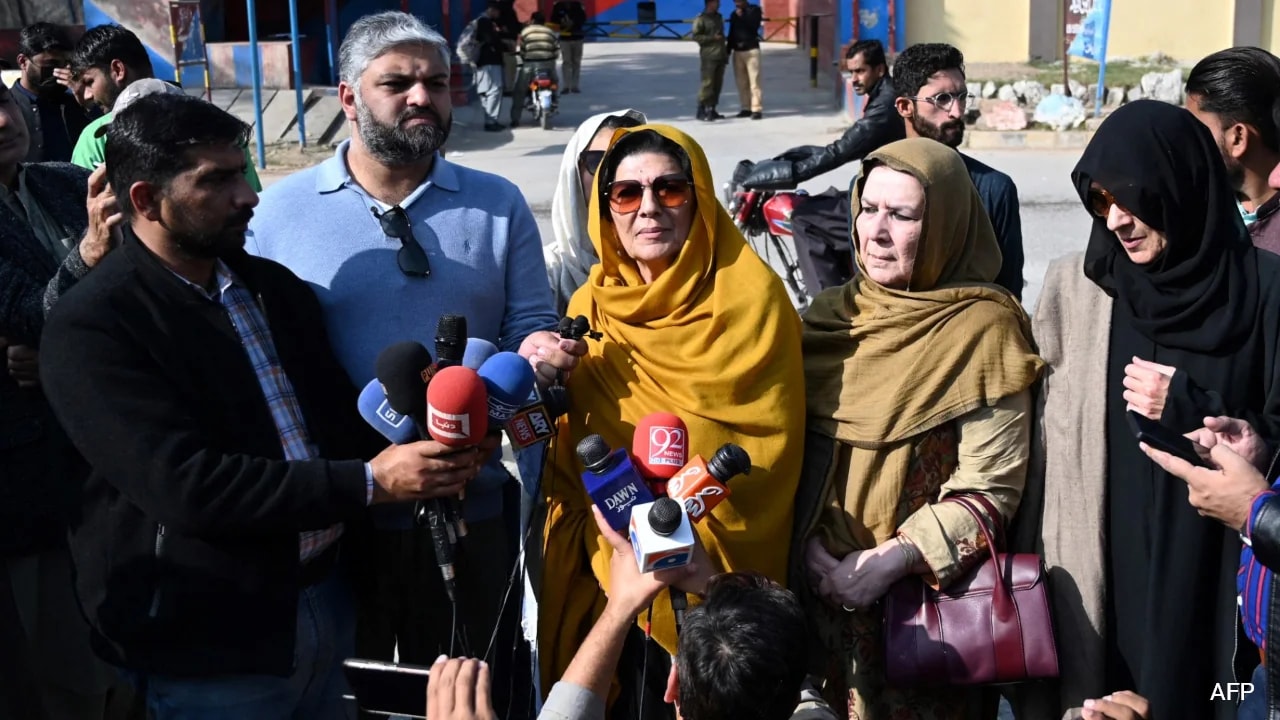
Pakistani police arrested all three of former Prime Minister Imran Khan’s sisters—Aleema Khanum, Uzma Khanum, and Noreen Niazi—in Lahore in September 2026 under preventive detention orders ahead of a major Pakistan Tehreek-e-Insaf (PTI) march on Islamabad. While authorities framed the detentions as necessary measures to prevent unlawful highway blockades and civil unrest, PTI leaders and international human rights observers characterized the sweep as an unprecedented effort to sever the imprisoned former leader's final communication channel with his supporters.
The Anatomy of the September Sweep
According to reporting from Dawn and The Guardian, the arrests unfolded across Lahore over a 24-hour period leading into Monday, September 21, 2026—less than a week before PTI's scheduled September 27 march on the capital. Police first detained Aleema Khanum on Sunday while she was traveling to a private club, picking up her driver at the same time. Shortly afterward, law enforcement officers took Uzma Khanum and Noreen Niazi into custody. PTI spokesperson Sheikh Waqas Akram stated on social media that the women were placed in an armored vehicle and transported to an undisclosed location, alleging that some of their children were also detained.
This marked the first instance in which all three sisters were incarcerated simultaneously. With Imran Khan held in Rawalpindi’s Adiala Jail since 2023 on charges ranging from corruption to terrorism, and his wife Bushra Bibi also imprisoned, the three sisters had become the primary family presence outside prison walls.
The sweep extended far beyond Khan’s immediate relatives. PTI Chairman Gohar Ali Khan claimed that roughly 1,500 party workers, alongside five members of the National Assembly and a former senator, were arrested across Punjab and Islamabad in the days preceding the planned rally. Simultaneously, federal and provincial authorities deployed tens of thousands of police personnel and positioned heavy shipping containers across major arteries, toll plazas, and interchanges to seal off Islamabad.
Why Non-Officeholders Became Primary Targets
To understand why the state moved against three women who hold no formal positions within PTI's organizational hierarchy, analysts point to the unique structural vacuum inside the party. Three years of sustained legal pressure, disqualifications, and arrests had hollowed out PTI’s second-tier leadership, leaving most senior figures either incarcerated or sidelined from active politics.
In that vacuum, Aleema, Uzma, and Noreen functioned as vital political conduits. Because they were permitted periodic jail visitation rights, the sisters routinely emerged from Adiala Jail to brief reporters on Khan’s directives, legal strategy, and prison conditions. Following earlier visits, the sisters publicly relayed Khan’s allegations that he was receiving inadequate medical treatment and feared the state was slowly killing him in custody—claims that galvanized street-level anger among PTI’s base.
For the government, neutralizing the sisters accomplished two immediate operational goals:
- Disrupting Command and Control: Without trusted family messengers relaying unedited instructions from Adiala Jail, mid-level PTI organizers struggled to coordinate mobilization logistics across districts.
- Dampening Symbolic Momentum: In Pakistani political culture, the detention of female family members carries heavy emotional resonance. Prominent Pakistani journalist Hamid Mir noted on X that the arrest of four women from Khan’s immediate family—his wife and three sisters—mirrored recurring patterns of coercive state pressure in Pakistan's political history.
Legal Mechanisms and the State's Justification
Rather than relying solely on new criminal indictments, Punjab authorities placed Aleema, Uzma, and Noreen under 30-day preventive detention utilizing Section 3 of the Maintenance of Public Order (MPO) ordinance. Originally enacted in 1960, the MPO empowers provincial governments to detain individuals without trial if officials assert their actions pose a threat to public safety or order.
Government officials and judicial rulings provided the legal scaffolding for the crackdown. Prior to the September 27 deadline, the Islamabad High Court ruled on a petition regarding the march, declaring that no political party or leadership group possesses a lawful right to occupy public roads, highways, interchanges, or government buildings in the capital.
Interior Minister Mohsin Naqvi stated unequivocally that no group would be permitted to enter Islamabad on September 27 and vowed that the administration would halt any march by every available means. Supporters of the government’s stance argue that repeated protest marches and road blockades severely disrupt daily commerce, paralyze urban transit, and undermine fragile economic recovery efforts. At the time of the arrests, Pakistan was already navigating acute street discontent driven by inflation and fuel shortages linked to broader turmoil in the Middle East and the Gulf.
Human Rights Scrutiny and International Blowback
Critics and legal observers argue that invoking preventive detention statutes against non-violent relatives crosses the boundary from maintaining civic order into collective punishment.
Amnesty International condemned the arrests, calling on Pakistani authorities to immediately release Khan's relatives and detained PTI workers. Babu Ram Pant, Amnesty International’s Deputy Regional Director for South Asia, stated that the individuals were targeted purely for their familial ties, political affiliation, and intent to protest. The organization emphasized that a demonstration cannot legally be deemed violent before it occurs, urging Islamabad to uphold its obligations under international human rights law to facilitate peaceful assembly.
Domestically, reactions exposed deep polarization over institutional legitimacy:
- Opposition Framing: Khan’s former chief of staff, Shahbaz Gill, described the arrests as brutal violations of the rule of law and criticized Western democracies for remaining largely silent. Human rights activist Maryam Nawaz Khan warned that arresting women would deepen public resentment rather than deter political mobilization.
- Establishment Denial: Imran Khan and his allies have repeatedly accused Pakistan’s military leadership, including Army Chief Field Marshal Asim Munir, of orchestrating his ouster and continued imprisonment. Military officials have consistently denied intervening in domestic politics, maintaining that legal proceedings and public order enforcement fall strictly under civilian and judicial jurisdiction.
Fifty-Three Days Later and Quiet Releases
The prolonged incarceration of Khan’s sisters eventually intersected with broader political maneuvering in November 2026. After spending 53 days in Lahore’s Kot Lakhpat Jail—following extensions to their initial 30-day MPO orders—Uzma Khanum and Noreen Niazi were released on Thursday, November 12, 2026, after the Punjab government quietly withdrew their detention orders. Aleema Khanum, however, remained behind bars.
The timing of those releases immediately fueled intense speculation in Islamabad and Lahore. Just one day before Uzma and Noreen walked out of Kot Lakhpat Jail, authorities transported Imran Khan from Adiala Jail to the Pakistan Institute of Medical Sciences in Islamabad for specialized medical care. Physicians treated his blood pressure and administered an injection for an ailment affecting his right eye before returning him to prison early Thursday morning.
Political commentators questioned whether the simultaneous medical transfer and the partial release of Khan's sisters signaled backchannel negotiations between PTI’s founder and the military establishment. Interior Minister Mohsin Naqvi dismissed rumors of any behind-the-scenes arrangement, asserting that Khan and his family were simply receiving standard relief granted through judicial and administrative channels. PTI’s official statement welcomed the return of the two sisters while insisting the move did not erase the suffering inflicted on the family, demanding an end to what it termed ongoing persecution.
For decades, Pakistani governments have relied on colonial-era public order laws and shipping-container blockades to weather street agitation, treating family members as pressure points when party structures prove resilient. Whether the partial release in Lahore marks a genuine de-escalation or merely a tactical pause before the next confrontation in Islamabad remains unresolved.


