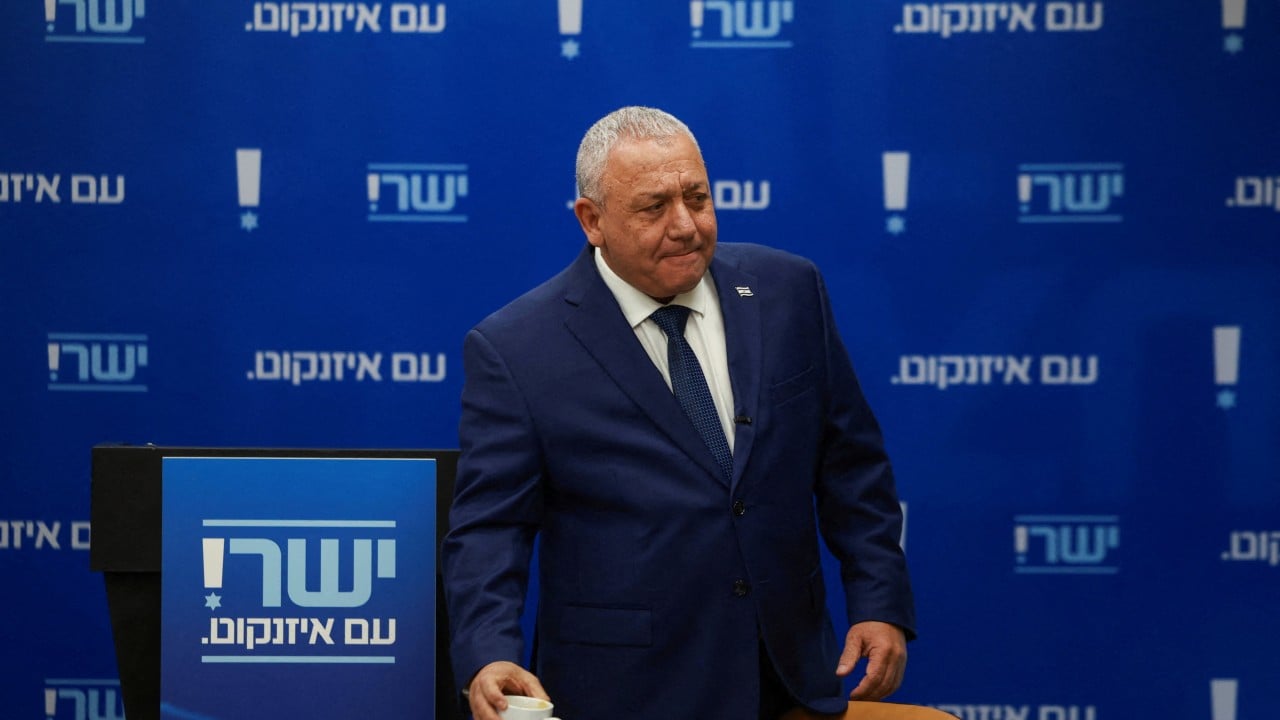
Yair Golan, leader of Israel’s left-wing Democrats party and a prominent figure in the opposition’s Change Bloc, has called for an immediate end to backchannel and exploratory coalition negotiations with Benjamin Netanyahu’s Likud party, urging opposition factions instead to unite and form an alternative government. His public ultimatum exposes a deep strategic divide within the Israeli opposition over whether engaging Likud is a pragmatic necessity to break political deadlock or a fatal trap that legitimizes the sitting prime minister.
The core of Golan’s argument is straightforward. Talks with Likud, in his view, are "sham talks" designed not to produce a functioning unity government, but to buy Netanyahu time, fracture the opposition alliance, and neutralize calls for early elections or a clean transfer of power. For months, rumors and periodic reports of quiet feelers between Likud intermediaries and centrist opposition figures have circulated through Jerusalem’s political corridors. Golan’s intervention drags those backroom maneuvers into the open, forcing rival opposition leaders to clarify where their red lines actually lie.
The Anatomy of a Political Deadlock
To understand why Golan is issuing this warning now, you have to look at the mechanics of Israel’s parliamentary system. Under the Knesset’s proportional representation model, no single party has ever won an outright majority of 61 seats. Every governing coalition is a marriage of convenience stitched together through intense horse-trading over ministries, budgets, and ideological concessions.
When the current coalition faces internal strain—whether over judicial legislation, military conscription exemptions for ultra-Orthodox yeshiva students, or the management of ongoing security crises—Netanyahu’s political survival depends on leverage. Even the rumor that a centrist faction might join the government serves a dual purpose for Likud. First, it warns Likud’s far-right and ultra-Orthodox partners that they are replaceable, keeping them from bringing down the government. Second, it sows distrust among opposition leaders who already struggle to agree on long-term policy.
Golan, a former IDF Deputy Chief of Staff who merged the Labor and Meretz parties into The Democrats, operates from a position of ideological clarity. Having built his political brand on uncompromising opposition to Netanyahu’s governance, Golan has little to gain from ambiguity. His demand to halt all dialogue with Likud is both a principled stand and a calculated political move to position himself as the most consistent voice within the anti-Netanyahu camp.
Why Centrist Leaders Keep the Door Open
If Golan’s logic is so clear, why haven't other opposition leaders slammed the door on Likud? The answer lies in the divergent voter bases and strategic calculations of the parties that make up the broader opposition.
The Change Bloc is not a monolithic party. It is a loose coalition of convenience that spans the political spectrum, united primarily by its opposition to Netanyahu rather than a shared blueprint for the country’s future.
- The Centrist Pragmatists: Leaders like Benny Gantz of the National Unity party and Yair Lapid of Yesh Atid appeal to moderate, mainstream voters who often prioritize national stability and institutional continuity over ideological purity. During periods of acute national emergency, Gantz has previously demonstrated a willingness to enter emergency unity governments with Netanyahu, arguing that national security supersedes personal boycotts.
- The Right-Wing Critics: Figures such as Avigdor Liberman of Yisrael Beiteinu and Gideon Sa’ar (whose political trajectory has frequently shifted between opposition and coalition) represent secular, nationalist voters. Their opposition to Netanyahu is often rooted in personal rivalry, governance style, and disputes over ultra-Orthodox influence, rather than fundamental disagreements with Likud’s traditional security doctrine.
- The Left-Wing Base: Golan’s Democrats represent progressive, secular voters who view Netanyahu’s policies—and his alliances with far-right factions—as an existential threat to Israeli democracy. For this constituency, any cooperation with Likud is viewed as an unforgivable betrayal.
For centrist leaders, maintaining open channels with Likud—or at least refusing to rule out talks with a "post-Netanyahu" Likud—is seen as essential to peeling away moderate Likud lawmakers. The theory among centrists is that if they can convince enough Likud MKs that the party has a viable future without Netanyahu at the helm, they could trigger an internal rebellion within Likud itself, leading to a constructive vote of no confidence that replaces the prime minister without going to costly and divisive elections.
The Historical Precedent of "Sham Talks"
Golan’s skepticism is heavily informed by recent Israeli political history, which offers sobering lessons for opposition leaders who negotiate with Netanyahu.
In 2020, amid the COVID-19 pandemic and after three inconclusive elections, Benny Gantz broke his central campaign promise and entered a rotation government with Netanyahu, arguing that the country needed stability. Under the coalition agreement, Gantz was supposed to take over as prime minister in November 2021. Instead, Netanyahu utilized a loophole in the budget approval process to dissolve the Knesset in December 2020, forcing a fourth election before Gantz ever stepped into the prime minister’s office. Gantz’s Blue and White alliance collapsed in the aftermath, losing the vast majority of its seats.
A similar dynamic played out in 2023 during the presidentially mediated talks at Beit HaNassi over the government’s judicial overhaul. Opposition leaders participated in weeks of negotiations aimed at reaching a broad consensus. Critics within the protest movement and the left-wing parties argued at the time that Likud was merely using the talks to let public anger dissipate before pushing legislation through unilaterally. When the talks eventually collapsed without an agreement, many in the opposition felt they had been outmaneuvered.
Golan is pointing directly to this track record. In his framing, engaging with Likud under its current leadership does not moderate the government; it merely provides political cover while neutralizing the opposition’s most effective weapon: unified, relentless pressure.
The Math Problem Facing a Change Bloc Government
While Golan’s call to "form a government" rallies his base, it runs headfirst into the unforgiving arithmetic of the Knesset. A political ultimatum is only as strong as the parliamentary majority behind it, and right now, the numbers for an alternative government without Likud—or without crossing major ideological red lines—are extraordinarily tight.
To reach the magic number of 61 seats in the 120-seat Knesset without Likud, the Change Bloc would need near-total alignment among a remarkably diverse set of actors:
- The Core Opposition: The Democrats, Yesh Atid, National Unity, and Yisrael Beiteinu would all have to sit together, submerging deep disagreements over economic policy, state-and-religion issues, and the future of the West Bank.
- Defectors from the Current Coalition: Unless the opposition wins an outright majority in a new election, forming a government in the current Knesset requires convincing sitting coalition members—either moderate Likud MKs or ultra-Orthodox parties like Shas and United Torah Judaism—to defect.
- The Arab Parties: Any opposition coalition math inevitably raises the question of the predominantly Arab parties, such as Ra'am (which joined the short-lived Bennett-Lapid government in 2021) and Hadash-Ta'al. While Golan has openly advocated for Jewish-Arab political partnership, right-wing opposition figures like Liberman have repeatedly ruled out relying on Arab parties to form a government, creating an immediate deadlock within the bloc itself.
This arithmetic reality is the weakest link in Golan’s argument. Critics argue that demanding an immediate halt to talks with Likud while refusing to acknowledge the mathematical hurdles of an alternative coalition amounts to political posturing rather than a viable governing strategy.
What Happens When Red Lines Collide
The tension between Golan’s uncompromising stance and the cautious maneuvering of his fellow opposition leaders highlights a fundamental dilemma in parliamentary democracies. Opposition coalitions are held together by shared grievances, but governing requires a shared purpose.
When Golan publicly chastises his peers for entertaining talks with Likud, he is attempting to impose discipline on a fractured camp. By framing any engagement with Likud as a "sham," he raises the political cost for centrist leaders who might be tempted to cut a deal. In Israeli politics, where voter shifts between center-left and center-right parties can swing an election by several seats, no opposition leader wants to be labeled as the one who threw Netanyahu a lifeline.
Yet, by drawing hard lines early, Golan also limits the opposition’s tactical flexibility. If a genuine fracture were to emerge inside Likud—for instance, if a group of Likud lawmakers decided to break away over defense policy or economic management—an absolute ban on dialogue could prevent the opposition from capitalizing on the moment. Politics at the parliamentary level rarely moves in clean, ideological straight lines; it advances through quiet understandings, backchannel assurances, and carefully timed defections.
The Stakes for the Next Election Cycle
Ultimately, Golan’s declaration is as much about shaping the narrative for the next election campaign as it is about immediate Knesset maneuvers. Whether Israel goes to the polls early or on schedule, the opposition will face a skeptical electorate that has grown weary of endless political gridlock and broken campaign promises.
Voters who lean toward the Change Bloc want to know two things: first, that their votes will not be used to prop up another Netanyahu-led coalition, and second, that the opposition actually has a coherent plan to govern once in power. Golan is betting that clarity is the strongest currency available. By demanding an end to negotiations with Likud, he is forcing the entire opposition to choose between two distinct strategies—either prepare for an all-out political confrontation aimed at replacing the governing bloc entirely, or continue the delicate, high-risk game of trying to dismantle it from within. Until the opposition resolves that internal contradiction, Likud will remain in the driver's seat, using the opposition's own divisions to stay in power.