The Interception That Changed the Rules of Engagement
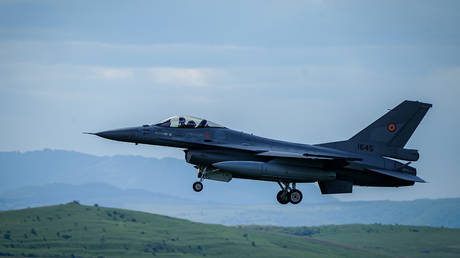
A Romanian military aircraft intercepted and neutralized a suspected unmanned aerial vehicle breaching national airspace, forcing a grim realization across Western defense circles. The incident was not merely an isolated border violation. It exposed a structural vulnerability that military planners have whispered about for years. Modern air defense grids were built to stop supersonic jets and ballistic missiles, not cheap, low-flying drones buzzing across sovereign territory under the cover of civilian radar clutter.
When a multi-million-dollar fighter jet expends a precision-guided munition on a low-cost loitering munition, the economic asymmetry becomes staggering. This is the new math of modern warfare. Adversaries can deploy inexpensive systems designed to exhaust stockpiles and strain command structures, while defenders are forced to respond with high-end assets that cannot be continuously expended without depleting national reserves.
The Radar Blind Spot
Low-altitude airspace over Eastern Europe is cluttered. Commercial air traffic, agricultural aircraft, and geographical barriers create a noisy environment that traditional long-range radar systems struggle to filter. Unmanned aerial vehicles exploit these radar horizons by flying low, hugging terrain contours, and utilizing composite materials that yield minimal radar cross-sections.
Why Traditional Tracking Fails
- Clutter interference: Ground return signals often mask slow-moving, small targets.
- Altitude thresholds: Air defense radars are optimized for high-altitude threats, creating overhead blind spots.
- Cost disparity: Using strategic radar networks to track cheap hobbyist-derived chassis drains operational focus.
The operational reality on the ground is stark. By the time a border intrusion is verified by human operators, the vehicle may already be deep inside sovereign territory. Interception windows shrink from hours to mere minutes, leaving tactical commanders with agonizing choices and insufficient data streams.
The Economic Attrition Trap
Defense economics dictate strategy. If an adversary spends a few thousand dollars building a mass-produced drone, and a NATO member state responds with an interceptor missile costing hundreds of thousands or even millions of dollars, the defender is losing the fiscal war even while winning the tactical engagement.
Military analysts call this the exchange ratio dilemma. Over time, sustained incursions force nations into an impossible corner. Either they spend unsustainable sums on defensive consumables, or they accept creeping normalization of airspace violations that erode deterrence.
Deterrence fails when the cost of violation drops below the threshold of meaningful response.
Countering this requires a fundamental pivot in procurement and tactical deployment. Electronic warfare and directed-energy weapons offer a cheaper path to neutralization, yet these systems remain scarce on the frontline. Until production scales, air forces must rely on conventional airborne platforms that were never optimized for this type of asymmetric attrition.
Re-Engineering the Frontier
Securing Eastern flanks against low-cost aerial incursions demands a decentralized architecture. Centralized command hubs cannot process the sheer volume of localized data required to track hundreds of small signatures simultaneously. Instead, defense networks must integrate acoustic sensors, passive radio-frequency detectors, and mobile kinetic units closer to the point of entry.
The interception in Romania demonstrated that tactical readiness remains high, but it also underscored an urgent requirement for adaptation. Hardware upgrades alone will not suffice. Doctrine must evolve to treat airspace security as a continuous, low-level continuum rather than a binary state of peace versus conflict. The border is no longer a static line on a map; it is an active, electronic battlefield where every missed signal invites further escalation.