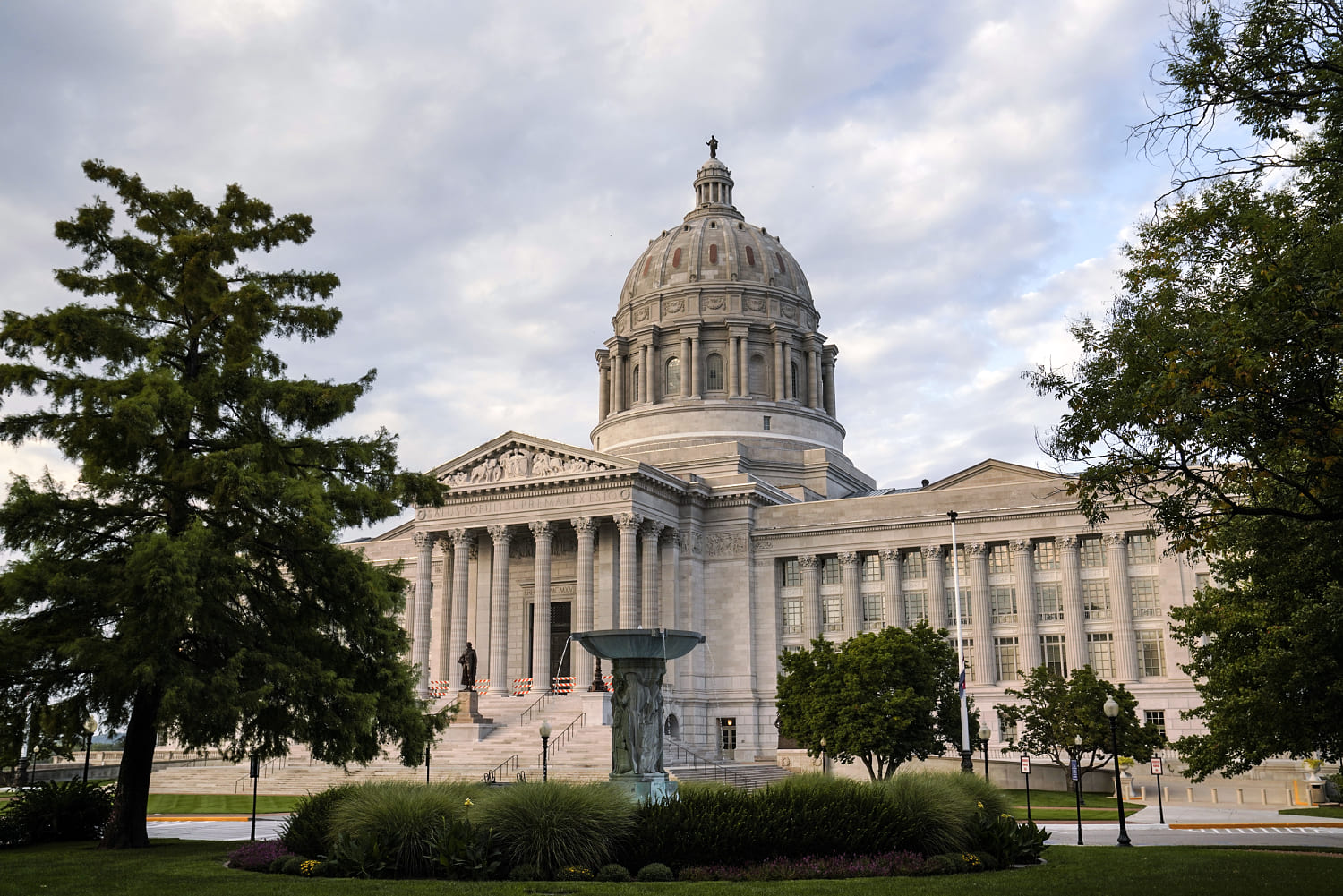
Redistricting fights usually happen behind closed doors or in dry legal briefs. But Missouri turned its map battle into a chaotic multi-month spectator sport that bounced back and forth between state courts, federal judges, and the U.S. Supreme Court.
If you tried tracking every twist, turn, and emergency stay, you probably got whiplash. Let's break down what actually happened with the state's congressional boundaries, why a Trump-backed map upended local politics, and how the highest court in the land finally slammed the brakes on it. Learn more on a related topic: this related article.
How the Mid-Decade Map Fight Began
Back in September 2025, Missouri lawmakers rushed through a special legislative session called by Governor Mike Kehoe. The goal wasn't subtle. Republicans wanted to squeeze out an extra conservative seat ahead of the midterms, heavily redesigning a Kansas City-based district historically held by long-serving Democratic Representative Emanuel Cleaver.
Mid-decade redraws are always messy. They disrupt voter stability and force campaigns to rewrite their strategies overnight. In this case, an estimated 59 percent of potential voters found themselves suddenly tossed into new districts. More reporting by Associated Press highlights similar views on the subject.
Lawmakers pushed the map through, but a fierce public pushback materialized quickly. Opponents gathered signatures for a referendum petition to challenge the new boundaries under the Missouri Constitution. That triggered a massive legal showdown over whether a newly drawn map could take effect immediately or if it had to wait for voter approval.
The Ping-Pong Match Between State and Federal Courts
Things went off the rails when Secretary of State Denny Hoskins rejected the referendum petition on the legal deadline in August 2026, arguing that state law didn't permit referendums on congressional maps. That decision set off a dizzying chain reaction of contradictory court orders.
On September 3, 2026, the Missouri Supreme Court handed down a unanimous ruling. The justices declared that the referendum petition was completely valid and that the 2025 map "is not the law and has never been the law" in the state. They ordered Missouri to revert to the older 2022 map for the upcoming elections.
Republicans didn't back down. Candidates and voters supporting the redrawn lines sprinted to federal court. U.S. District Judge Stephen Clark issued an injunction favoring the 2025 map, setting up an extraordinary clash where state and federal benches were basically giving election officials opposite instructions.
The legal tennis match escalated rapidly:
- September 8: Justice Brett Kavanaugh denied an initial emergency request from Missouri officials to stay the state supreme court ruling, only for District Judge Clark to issue a conflicting restraining order hours later.
- September 10: The U.S. Supreme Court stepped in to block Clark's order, momentarily stabilizing the use of the 2022 map.
- September 21: The U.S. Court of Appeals for the Eighth Circuit threw another curveball by ruling in favor of the Trump-backed map and ordering a permanent injunction.
Why the U.S. Supreme Court Finally Stepped In
For a hot minute, the Eighth Circuit's decision threatened to throw Missouri's general election preparations into total chaos. Election authorities were staring down conflicting directives while ballots were already part of the active voting ecosystem.
The legal ping-pong ended on September 25, 2026. The U.S. Supreme Court issued a decisive per curiam ruling blocking the Eighth Circuit and lower federal court decisions. With no noted dissents, the justices made it clear that state constitutional provisions regarding referendums cannot be casually bulldozed by emergency federal litigation at the eleventh hour.
Missouri officially conducted its elections using the stable 2022 boundaries, bypassing the severe administrative headaches that a last-minute map swap would have inflicted on local clerks and voters alike.
The saga serves as a textbook example of overreach. Trying to rewrite the rules right before a major election cycle creates an administrative nightmare and triggers fierce judicial pushback. For now, Missouri's map remains locked in place, and voters have a clear path forward without last-minute boundary surprises.



