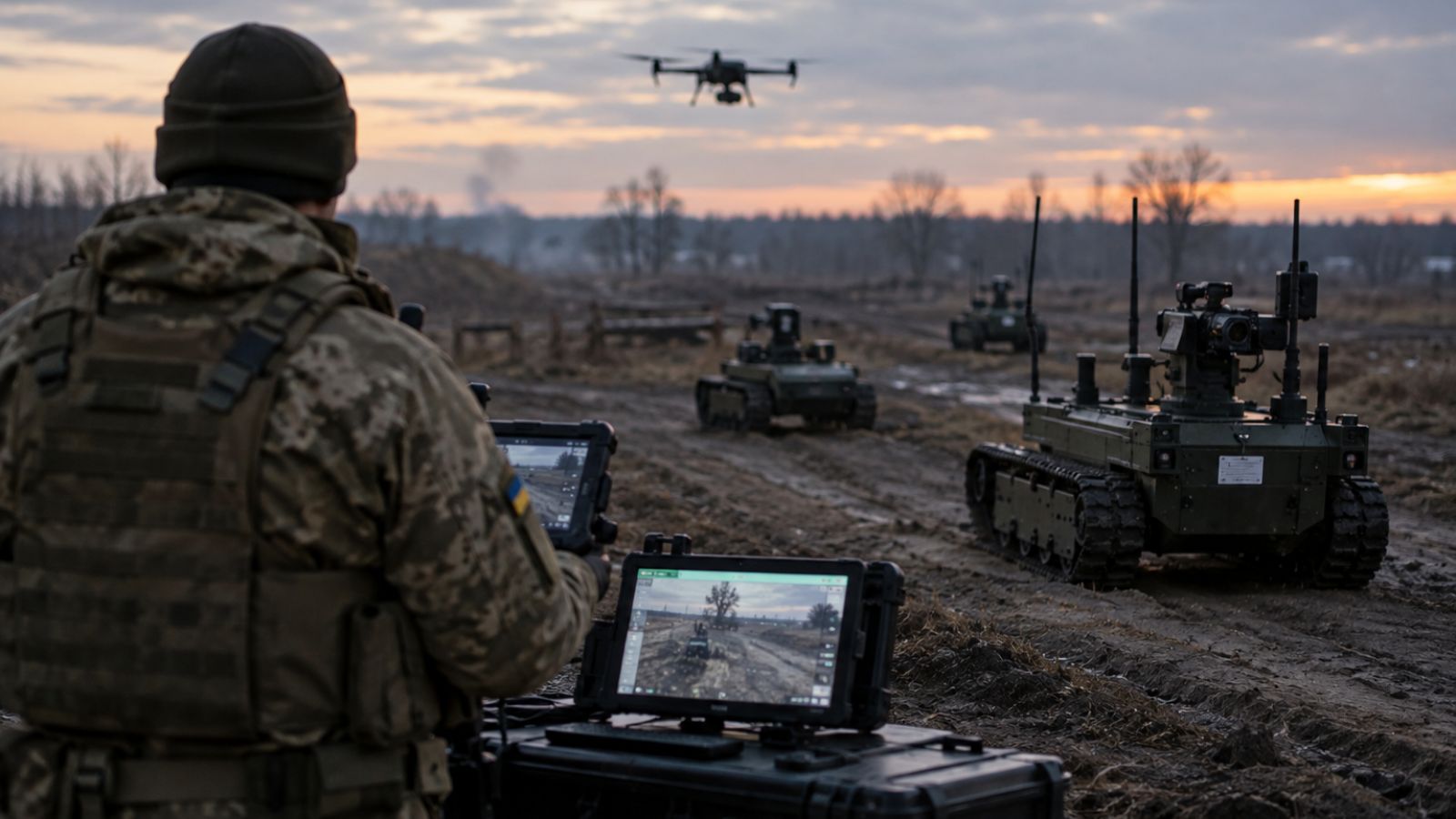
The humidity in the Wahiawa ranges of Oahu does not merely coat the skin; it clings to circuit boards, infiltrates tactical radios, and oxidizes copper connectors with malicious efficiency. When the U.S. Army recently dispatched soldiers into these dense, steaming valleys to test a new battlefield data network, they were not looking for scenic views. They were running from a ghost. That ghost is the haunting reality that American tactical networks, built for flat deserts and predictable satellite links, shatter the moment they enter dense foliage, urban canyons, or electromagnetic interference zones.
For decades, the Pentagon has chased the promise of a unified tactical internet. The vision sounds pristine in PowerPoint briefings: every infantryman, armored vehicle, and drone sharing a real-time, high-bandwidth picture of the battlespace. Yet the physical reality of the Indo-Pacific theater exposes the fragility of these systems. Dense canopy cover blocks line-of-sight communications. Salt air corrodes antennas. The sheer volume of data generated by modern sensors threatens to choke low-capacity tactical radios before intelligence ever reaches a commander.
To understand why the Army is sweating through its uniforms in Hawaii, one must look past the press releases and examine the structural decay of legacy command-and-control architectures.
The Physics of Failure Under the Canopy
Radio frequency propagation is a harsh mistress. In open desert environments, high-frequency signals travel for miles without obstruction. Soldiers can rely on airborne relay platforms hovering safely above the battlespace. But the Hawaiian jungle introduces a destructive variable known as canopy attenuation.
Vegetation absorbs and scatters radio waves. A signal that punches cleanly across a dry plain hits a wall of moisture-laden leaves and vines in the tropics, degrading rapidly within hundreds of meters. Traditional tactical radios, designed for counterinsurgency campaigns in arid regions, drop packets mercilessly under these conditions. Bandwidth collapses from megabits to a crawl. Voice transmissions turn into garbled static, and video feeds freeze entirely.
During recent trials, engineering teams attempted to stitch together ad-hoc mesh networks using ground-based nodes hoisted into trees and mounted on tactical vehicles. Every branch blocked a line. Every rain squall introduced localized attenuation that required constant frequency hopping.
The military calls this the communications denied environment. Troops on the ground call it flying blind with expensive gear.
Decentralized Resilience Versus Centralized Command
The technical hurdle is not merely physical; it is architectural. Traditional military command structures favor centralized nodes. Headquarters staff process incoming intelligence, synthesize a picture, and issue orders down the chain.
In a distributed jungle fight against a peer adversary equipped with electronic warfare capabilities, centralized nodes become priority targets. Jamming equipment mounted on drones or ground trucks can sever the connection between front-line units and rear command posts instantly.
Consequently, the network tested in Hawaii relies heavily on decentralized, peer-to-peer data distribution. If one node goes offline due to enemy jamming or physical destruction, neighboring nodes automatically reroute traffic. Think of it as local resilience over global connectivity. Units do not need to talk to a satellite orbiting hundreds of miles above; they only need to talk to the squad fifty yards away through the brush.
Yet decentralization introduces its own operational friction. When every squad maintains a local copy of the tactical picture, data synchronization becomes a nightmare. Reconciling conflicting reports from multiple platoons operating under spotty connectivity creates latency and confusion. Algorithms must decide which piece of intelligence is accurate when two units report contradictory enemy positions.
The Software Burden on the Infantryman
Technology developers often forget that the ultimate user of these tactical networks is an infantry sergeant carrying fifty pounds of body armor while navigating muddy terrain under physical exhaustion.
When a data network requires constant manual troubleshooting, configuration adjustments, and password resets, it stops being a tool and starts becoming a liability. During the jungle evaluations, engineers observed that junior enlisted personnel spent an unacceptable percentage of their operational bandwidth managing terminals rather than securing their perimeter.
Software interfaces designed by contractors in air-conditioned offices rarely survive contact with reality. Mud smears touchscreens. Sweat shorts out battery terminals. If a battle management system requires more than three taps to report enemy contact, soldiers revert to verbal shouts over tactical voice channels, abandoning the digital architecture entirely.
The Army's push toward automation and artificial intelligence at the tactical edge relies on the assumption that machines will filter the noise. But filtering noise requires computational power at the squad level, which generates heat. In a tropical climate where heat dissipation is already a severe constraint, ruggedized servers enclosed in waterproof tactical packs run the risk of thermal throttling.
The Logistics Chain Behind the Signal
We often romanticize digital transformation as an ethereal shift into the cloud. In the military, the cloud weighs several tons and requires diesel fuel to stay powered.
Every mobile server node, every satellite communications terminal, and every battery charging station demands logistical support. In an island-hopping campaign across the Pacific, airlift capacity is precious and scarce. Transporting heavy communication gear into contested jungles ties up helicopters and trucks that could otherwise be used for ammunition or medical evacuation.
The ongoing trials in Hawaii forced logisticians to confront the weight footprint of modern networking equipment. Soldiers cannot outrun an agile adversary if their rucksacks are weighed down by backup routers and proprietary power cables. True modernization requires shrinking the hardware footprint without sacrificing cryptographic security.
The Hard Road Ahead
The trials in the Hawaiian rainforest did not yield a miraculous cure-all for the military's communication woes. Instead, they delivered a sobering reality check.
Fixing tactical data networks requires more than buying newer software or higher-frequency radios. It demands an honest reckoning with the physical laws of the natural world and the cognitive limits of human operators under fire. Until the defense industrial complex builds hardware that works intuitively in the mud, rain, and canopy without requiring a degree in computer science to reboot, the digital battlefield of the future will remain stubbornly offline.