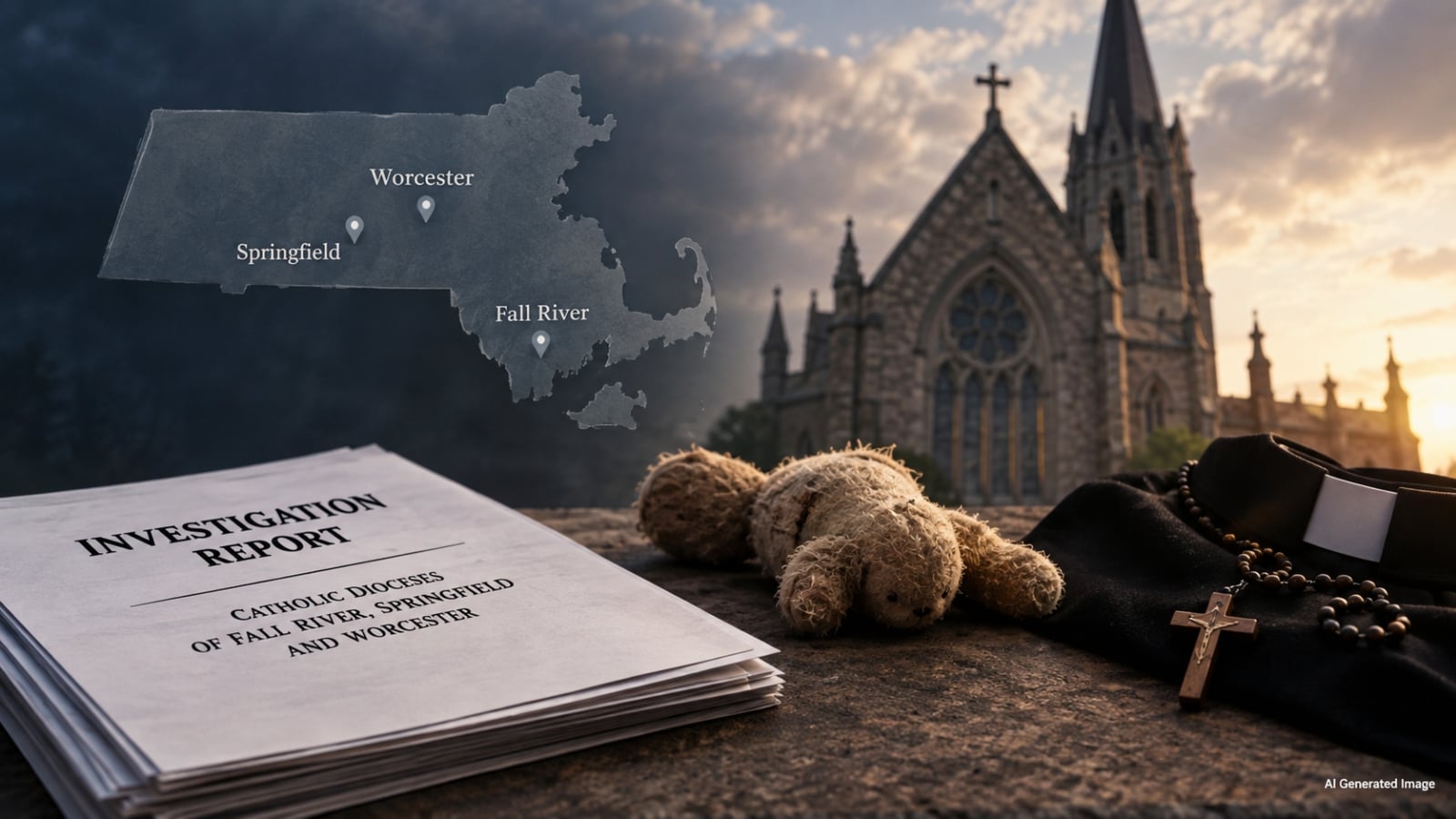
An explosive report released by the Massachusetts Attorney General's office revealed that more than 270 Catholic clerics abused nearly 1,000 children across the Fall River, Springfield, and Worcester dioceses over multiple decades. While the landmark 2002 Boston Globe Spotlight investigation fundamentally altered how the world understood ecclesiastical corruption in urban archdioceses, this recent probe proves that the shadow of institutional protection extended far beyond the capital. It crept quietly into regional parishes, industrial mill towns, and rural counties, operating under the same umbrella of administrative secrecy.
The mechanics of institutional preservation rely on a quiet, calculated calculus. When survivors attempted to speak decades ago, they faced an episcopal bureaucracy designed to protect the corporate entity of the church rather than the vulnerable. Files were locked away in diocesan archives. Accused priests were shuffled from parish to parish under the guise of medical leaves or spiritual retreats, a revolving-door policy that exported predators to unsuspecting communities. The Attorney General’s investigation confirms that church leadership possessed contemporaneous knowledge of these atrocities yet chose containment over disclosure. In similar news, we also covered: Why Sentencing Smugglers Does Nothing To Stop Channel Deaths.
Accountability remains severely constrained by legal technicalities. Out of hundreds of documented predators, only a tiny fraction faced criminal referrals. The structural barriers of expired statutes of limitations and historical loopholes in state penal codes mean that most perpetrators will never face a criminal court. For victims now navigating middle age or later life, the official acknowledgment serves as a delayed validation rather than a path to criminal justice.
Transparency remains deeply fractured across these regional divisions. While advocacy groups and state investigators continue to pressure church leadership, compliance is uneven. The Worcester Diocese, for instance, faces ongoing scrutiny for refusing to match the transparency standards of other jurisdictions regarding public disclosure lists of credibly accused individuals. Bureaucratic resistance to absolute openness demonstrates that cultural transformation inside hierarchical institutions moves at a glacial pace, even in the wake of catastrophic exposure. TIME has analyzed this fascinating issue in great detail.
The fallout extends far beyond legal definitions or administrative policy changes. It forces an uncomfortable reckoning with how systemic power shields predators in plain sight, relying on the profound trust families placed in religious institutions. Real reform demands more than revised handbooks or victim assistance offices; it requires an unsparing dismantling of the opacity that allowed these patterns to persist for generations.