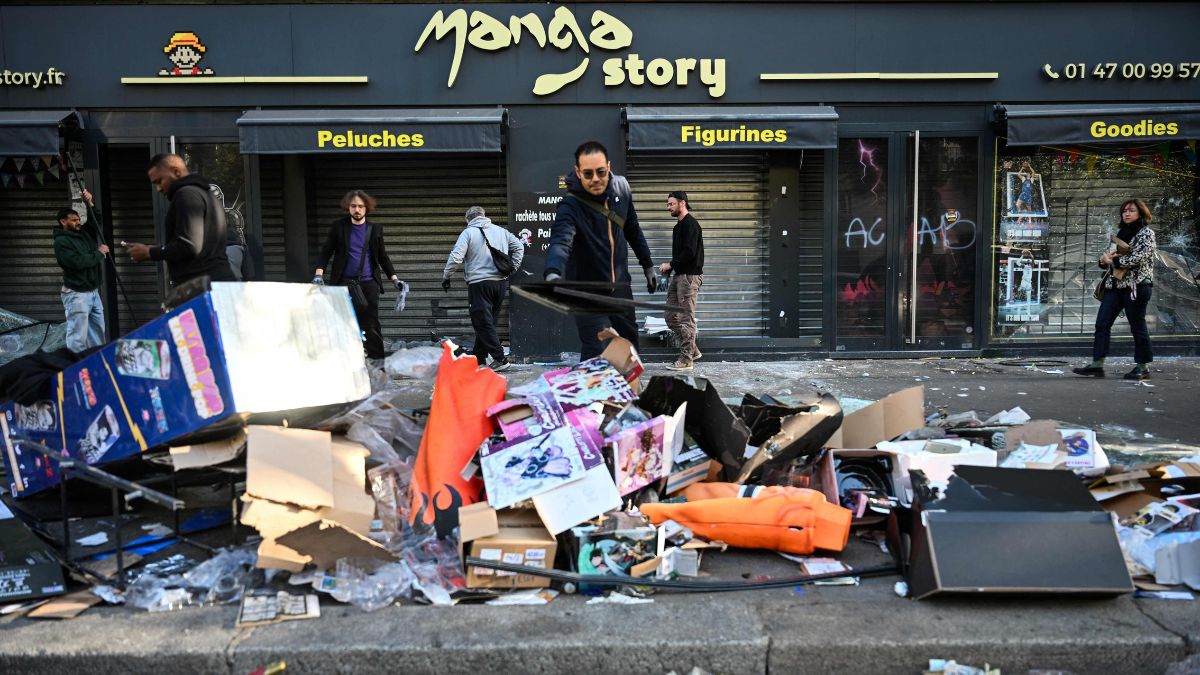
When widespread civil unrest swept across France in mid-October 2026, thousands of storefronts were ransacked, and within hours, merchandise lifted from those businesses began surfacing on resale apps like Vinted and eBay. French authorities moved swiftly to summon digital marketplaces and social platforms, demanding immediate takedowns, seller suspensions, and cooperation with criminal investigators. Yet the real story goes far beyond a routine takedown order. It exposes how modern peer-to-peer commerce turns street-level chaos into an instant, low-friction liquidation engine, and why policing that digital fence is far harder than politicians admit.
I have spent decades covering both street crime and the mechanics of retail fraud, and the pattern repeats with grim predictability. Smash-and-grab theft used to hit a natural bottleneck: a thief needed a physical fence, a neighborhood contact, or a trunk full of boxes willing to take a cut on the spot. Today, a smartphone does the heavy lifting. Within a single evening, an item pulled off a battered shelf can sit behind a digital listing, priced just low enough to clear quickly while still looking plausible to an opportunistic buyer.
How Street Chaos Becomes Digital Inventory
The October 2026 unrest over rising living costs, fuel prices, and public service strains drew massive crowds across Paris and other French cities, quickly fracturing into episodes of severe property damage and looting affecting well over a thousand—and by broader tallies, more than three thousand—businesses. Once shutters were forced and windows shattered, theft stopped being an isolated opportunism and turned into a high-volume supply shock.
Apparel, cosmetics, electronics, and everyday household goods carry an obvious advantage for rapid resale. They are portable. They are familiar. Most importantly, they blend effortlessly into millions of legitimate second-hand listings posted every week on European marketplaces.
A used jacket photographed on a bedroom floor does not come with a flashing sign reading stolen from a boutique. Sellers who want to move inventory fast tend to keep descriptions sparse, skip proof-of-purchase details, or price brand-new items aggressively below retail without offering a believable backstory. Sometimes they push buyers to move the conversation off-platform or use pick-up arrangements that leave thinner digital footprints.
Why Ministers Summoned Platforms to Bercy
Government officials in Paris recognized that street patrols alone cannot shut down the financial incentive behind looting once goods hit the web. Ministers at Bercy and across the digital and interior portfolios convened major marketplaces—including Vinted, eBay, Leboncoin, and Amazon—alongside social platforms such as TikTok and Meta.
The political logic is straightforward. If looters know they can convert stolen stock into cash on a familiar app by Monday morning, the economic payoff of disorder rises. At the same time, officials argued that viral protest clips and livestreams on social feeds fuel tension on the ground, turning online platforms into both an accelerant of unrest and an after-market for its spoils.
Under French penal law, knowingly holding, concealing, or transferring property obtained through crime carries severe penalties—up to five years in prison and a €375,000 fine. Prosecutors want marketplaces to treat suspicious surge listings not merely as a terms-of-service annoyance, but as evidence trails that can connect accounts, payment flows, and delivery addresses to specific crimes.
The Enforcement Trap Nobody Wants to Admit
Platform executives rarely dispute the public safety goal in front of cameras. Vinted announced a zero-tolerance stance and rolled out extra checks to pull suspected listings and suspend offending accounts, while marketplace operators agreed to share reports and cooperate with law enforcement.
Still, anyone who has watched trust-and-safety teams operate during a crisis knows the bind they face. Speed and precision pull in opposite directions.
- Generic goods lack serial numbers. A pair of sneakers or a bottle of skincare from a looted shop looks identical to the same item bought legitimately last month unless a retailer has specific batch data or unique identifiers.
- Over-aggressive sweeps hit innocent users. If automated filters flag every sudden spike in discounted clothing or electronics across an entire region, ordinary residents clearing out closets get caught in the crossfire.
- Under-aggressive sweeps leave loot online. If teams wait for ironclad proof before acting, high-demand items can sell, ship, or change hands before a moderator ever sees the listing.
- Off-platform pivots evade controls. Savvy bad actors routinely use apps as a billboard and shift payment or handoff to messaging tools or cash meetups.
Even when a platform deletes a listing within minutes, deletion is not the same as recovery or prosecution. A vanished ad removes a public storefront, yet investigators still need clean metadata, IP logs, payout records, and timely victim inventory lists from affected shopkeepers to build a case that holds up in court.
| Enforcement Layer | What It Catches Well | Where It Breaks Down |
|---|---|---|
| Automated listing filters | Obvious bulk spikes, reused stock photos, or blatant keywords tied to affected areas | Ordinary-looking single items with generic photos and normal pricing |
| User and brand reporting | Specific items spotted by local residents, employees, or brand teams | High-velocity sales that close before flags accumulate |
| Account and payout tracing | Repeat resellers using verified accounts or bank rails | Throwaway profiles, borrowed accounts, or off-platform handoffs |
| Law enforcement coordination | Cross-platform patterns and receiving-stolen-goods cases | Slow inventory reconciliation from overwhelmed small retailers |
What Buyers Miss When Chasing a Bargain
Most headlines focus on the sellers cashing in on disorder, yet the demand side keeps the resale loop spinning. Bargain hunters scrolling late at night often rationalize a steep discount as a lucky break rather than a red flag.
That rationalization carries real legal and practical risk. Under French law, buying or holding goods you know—or reasonably should suspect—came from a crime is not a harmless side deal; it is receiving stolen goods (recel), an offense that exposes buyers to criminal liability and confiscation of the item.
Beyond legal exposure, buyers on second-hand apps rarely get the safety net they expect from traditional retail when buying distressed or illicit stock. Warranties do not transfer, authenticity checks are limited on everyday goods, and disputes get messy fast if an account disappears after a sale.
The Overlooked Cost to Small Shopkeepers
Much of the public debate treats retail looting as an insurance or corporate balance-sheet problem. On the ground in French commercial districts, independent shopkeepers and local franchisees absorb blows that insurance payouts rarely cover in full.
Deductibles bite hard. Supply chain delays stretch for weeks. Even more damaging, a small merchant trying to reopen after a rough weekend watches competitors—or phantom sellers—undercut prices online with merchandise that cost the seller nothing to acquire.
There is also an uncomfortable truth for policymakers to chew on. Cracking down on Vinted, eBay, and classifieds sites treats a symptom of modern retail crime, not the root cause of street disorder or storefront vulnerability. Better moderation protocols can shrink the digital resale window and give police sharper leads, yet platforms alone cannot replace physical security, faster local policing during flashpoints, or the deeper economic grievances that ignite unrest in the first place.
Watch how fast listings reappear once government scrutiny cools down. When headlines move on and emergency task forces disband, bad actors test the seams again—probing which keywords slip past filters, which categories get lighter review, and how quickly a stolen item can turn into cash before anyone asks where it came from.
France tells online marketplaces to crack down on resale of looted items
This video report provides direct news coverage of the French government's push to get online resale marketplaces to curb listings of looted goods following the unrest.


