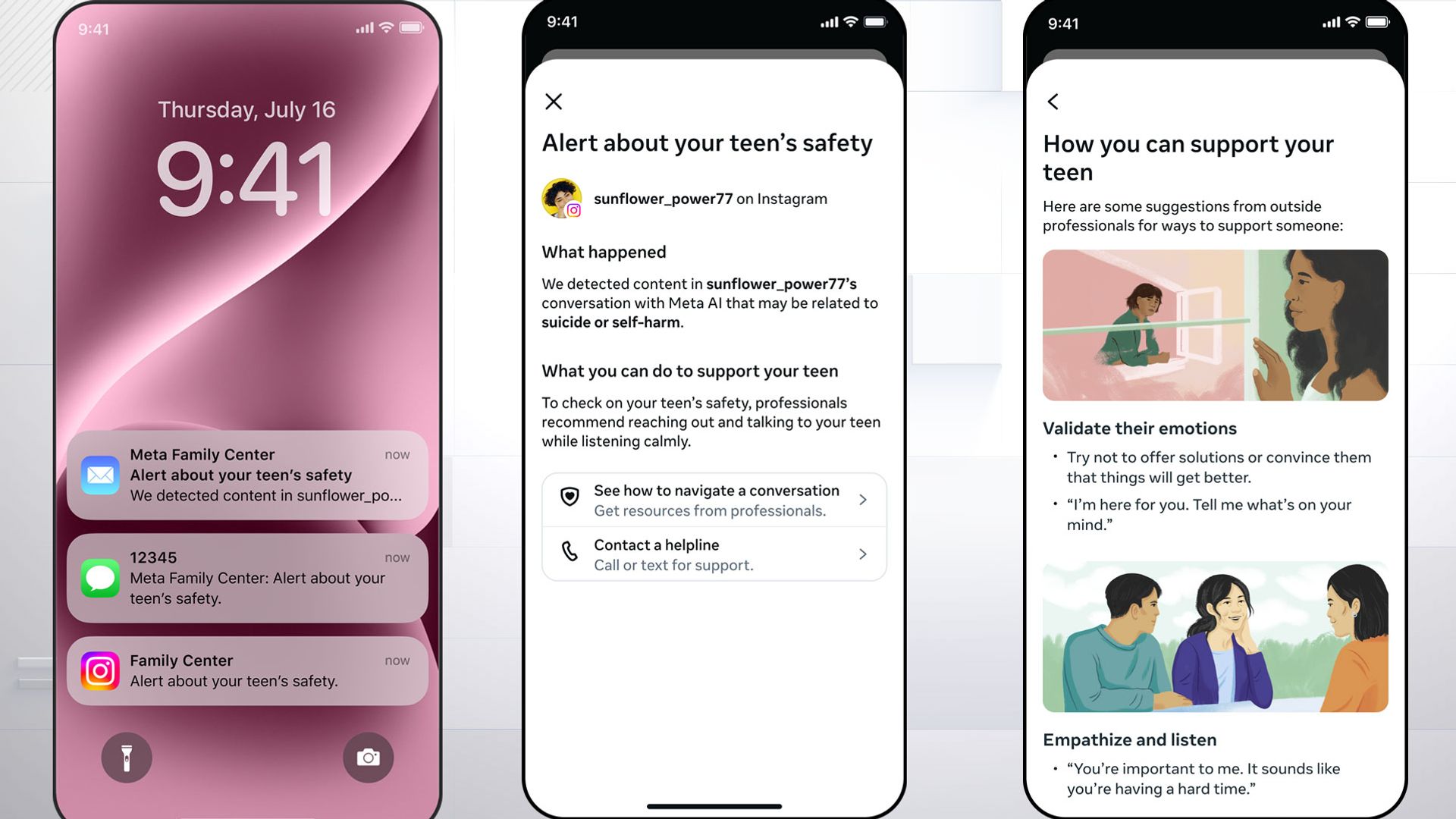
Meta is rolling out a new safety feature on Instagram that will notify parents if their teenage children query its built-in AI chatbot about suicide, self-harm, or eating disorders. Under the guise of child protection, this parental alert system flags keyword-sensitive conversations directly to linked accounts. But this mechanism is not a triumph of corporate responsibility. It is a calculated retreat. By converting private adolescent chats into immediate parental alerts, Meta is attempting to solve a glaring engineering flaw by offloading the psychological fallout of unregulated AI onto families.
This shift in strategy reveals a deeper, more troubling reality about the race to integrate generative models into consumer apps. Tech companies have built systems they cannot fully control, and they are now deputizing parents as unpaid, untrained content moderators.
The Illusion of Corporate Care
For years, social media platforms have operated on a simple playbook when it comes to youth mental health. They promise safety, implement automated keyword filters, and point to their terms of service when things go wrong. Meta’s latest initiative, which connects an adolescent's AI interactions directly to their parent’s Supervision dashboard, represents a fundamental shift in that dynamic.
If a teenager asks the Meta AI assistant on Instagram about methods of self-harm, the system will block the response, offer crisis helpline resources, and send an automated notification to the linked parent.
On paper, this sounds like a logical safety net. In practice, it is a liability shield masquerading as a feature.
By pushing the alert to a parent, Meta effectively transfers the legal and moral duty of care. If a tragedy occurs after an alert is sent, the corporate defense is pre-packaged. We warned you. This maneuver allows Meta to keep its highly addictive, AI-driven features active on teen accounts while insulating itself from the litigation that has plagued the company for the last decade.
The Engineering Failure of AI Guardrails
To understand why Meta is outsourcing this responsibility, one must understand the inherent limitations of large language models. AI safety is a game of whack-a-mole that tech companies are consistently losing.
[User Input] ---> [Keyword/Semantic Filter] ---> [LLM Processing] ---> [Output Guardrails]
                         |                                              |
                  (Jailbreak Attempt)                            (Hallucination)
Large language models do not understand the emotional weight of self-harm. They predict the next logical word in a sequence based on vast statistics. To prevent these models from generating harmful instructions, companies rely on two primary methods:
- Static keyword filtering: Blocking specific, pre-determined words.
- Reinforcement Learning from Human Feedback (RLHF): Training the model to refuse inappropriate requests.
Both methods are incredibly fragile. Teenagers are native speakers of internet subversion. They do not write queries in clinical, easily flagged terms. They use coded language, leetspeak, memes, and metaphors. A teenager asking an AI how to "end my subscription to life" or "disappear permanently" can easily bypass basic filters.
Conversely, the system is prone to false positives. Imagine a high school student using the Instagram AI tool to research a history paper on the suicide of Virginia Woolf or the tragedy of Sylvia Plath. The automated system flags the query, misinterprets the context, and sends an urgent notification to a parent's phone.
The resulting domestic friction is built entirely on a machine's misunderstanding of human intent.
"Generative AI is fundamentally unsuited for crisis intervention because it lacks context, empathy, and consistency," says one veteran systems engineer who worked on Meta's early safety protocols. "When you force an LLM into a consumer app used by kids, you are playing with fire. The parental alert system is essentially an admission that the software cannot be trusted to handle these interactions safely."
The Dangerous Privacy Tradeoff for Vulnerable Youth
The assumption underlying Meta's new feature is that every home is a safe haven. This is a dangerous, historically illiterate assumption that ignores the reality of many vulnerable teenagers.
For marginalized youth, particularly LGBTQ+ teens, the internet is often the only place they can seek answers without fear of immediate judgment. If a closeted teenager is struggling with depression or self-harm thoughts related to their home environment, their online searches are a desperate cry for help.
[Vulnerable Teen] ---> (Seeks Anonymous Help from AI)
                              |
                     (System Triggers Alert)
                              |
                              v
                  [Abusive/Hostile Parent]
If Meta’s system automatically alerts a hostile or abusive parent to these queries, the platform does not save the child. It actively endangers them.
The consequences of this automated outing can be severe:
- Destruction of Trust: Once a teenager realizes their private digital thoughts are being piped directly to their parents, they will stop using those channels for help.
- Migration to Darker Corners: They will not stop hurting; they will simply move to unmonitored, more dangerous platforms where no guardrails exist.
- Domestic Escalation: In homes where mental health struggles are stigmatized or met with violence, an automated Meta notification can trigger immediate physical or emotional abuse.
Privacy is not merely a preference for teenagers. For many, it is a survival mechanism. By stripping away that privacy under the banner of safety, Meta is closing off a pressure valve without providing a viable, safe alternative.
Why Silicon Valley Shifts the Burden
The timing of this feature is not coincidental. Meta is facing a barrage of lawsuits from school districts, state attorneys general, and grieving families who argue that the company's algorithms have actively contributed to a youth mental health crisis.
By introducing parent-facing alerts, Meta achieves several strategic goals simultaneously:
- Regulatory Placating: It gives lobbyists a concrete feature to point to when testifying before Congress, proving they are "giving parents control."
- User Retention: It allows Meta to keep younger users on their platforms. If parents feel they have oversight, they are less likely to delete the app entirely.
- Resource Conservation: Human moderation is expensive. Hiring certified mental health professionals to handle crises in real-time costs millions. Automated alerts to parents cost next to nothing.
It is a brilliant business strategy. It is a disastrous public health strategy.
The Reality of Algorithmic Care
We must confront the reality that AI chatbots are being used as surrogate therapists by a generation suffering from unprecedented levels of loneliness. When a teen turns to an AI, they are often seeking connection, not just information.
An LLM cannot offer connection. It can only simulate it.
When that simulation fails, or when it triggers an automated alarm system that disrupts a fragile family dynamic, the child is left more isolated than before. The solution to the youth mental health crisis is not to build better surveillance tools for parents, nor is it to make chatbots slightly more restrictive.
The solution is to question why we have allowed experimental, highly unpredictable conversational engines to be embedded into the social spaces of minors in the first place. Until tech companies are held legally responsible for the outputs of their algorithms, they will continue to build flawed systems and leave parents to clean up the wreckage.