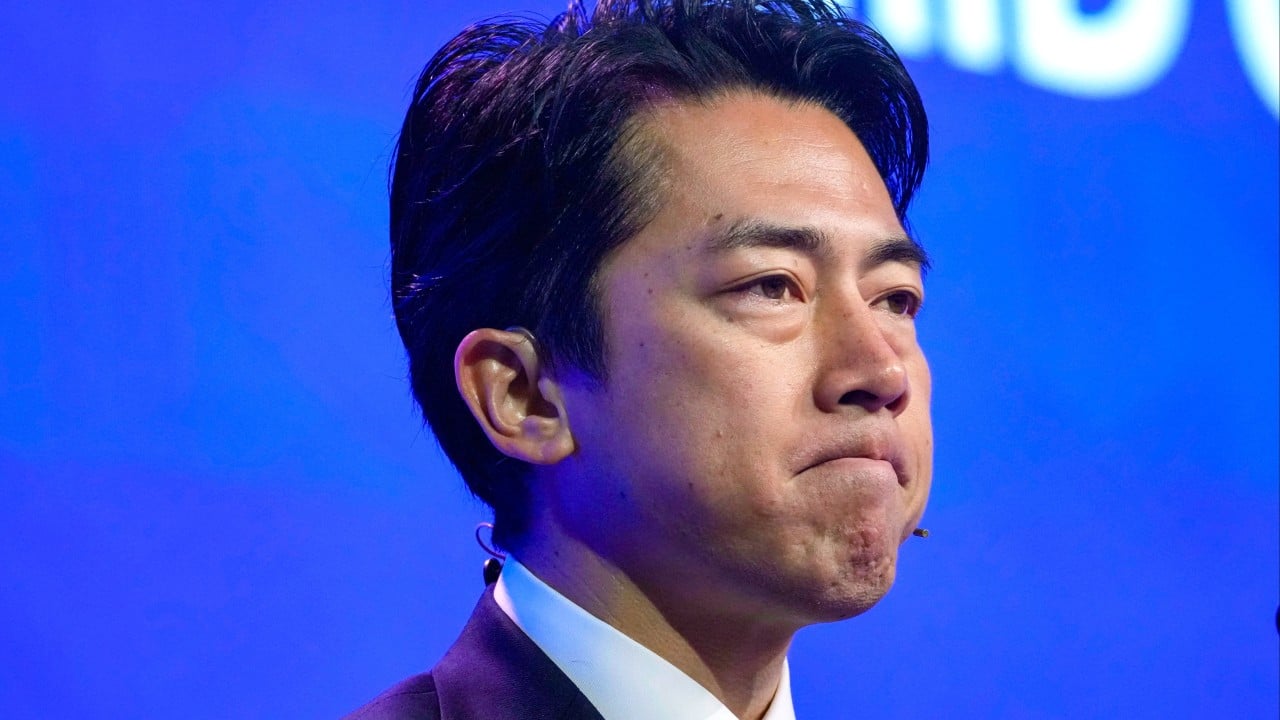
Japan will not back down from its rapid military expansion, despite Beijing accusing the nation of sliding back into its dark imperial past. Speaking at the Shangri-La Dialogue in Singapore, Japanese Defense Minister Shinjiro Koizumi directly rejected China’s allegations of "new militarism," turning the accusation back on Beijing by pointing out China’s own massive nuclear arsenal and strategic bombers—assets Tokyo does not possess. This public clash underscores a deeper, highly volatile reality. Japan is executing its most aggressive defense overhaul since World War II, driven by fear over Taiwan, while attempting to balance its Pacific alliances against an unpredictable global security landscape.
The exchange at the summit exposed the fragile state of Asian diplomacy, where historical ghosts are routinely weaponized to justify modern military build-ups. While Beijing frames Tokyo's actions as a dangerous revival of mid-century expansionism, Japan views its actions as necessary deterrence against a rapidly arming, non-transparent neighbor. Beneath the rhetoric lies a calculated gamble by Tokyo to secure its sovereignty before a regional flashpoint ignites.
The Geography of Panic
The diplomatic sparring between Tokyo and Beijing is not a sudden dispute over definitions. It is the direct result of a fundamental shift in regional geography and defense priorities. For decades, Tokyo operated under a strict interpretation of Article 9 of its constitution, maintaining a purely self-defense posture that relied entirely on the American security umbrella.
That architecture is no longer seen as sufficient in Tokyo. The catalyst for this shift arrived when Prime Minister Sanae Takaichi indicated that Japan could intervene militarily if Beijing attempted to take Taiwan by force.
Taiwan sits a mere 110 kilometers from Japan’s southernmost inhabited islands. If Taiwan falls, the sea lanes that carry the vast majority of Japan’s energy supplies and trade would come under direct Chinese control. This reality has transformed the defense of Taiwan from a geopolitical preference into a core national survival strategy for Tokyo.
The Takaichi administration has accelerated weapons procurement, eased strict regulations on arms exports, and integrated Japanese forces into complex maritime drills alongside the United States and regional partners in the South China Sea. What Beijing labels "new militarism" is, from Tokyo’s perspective, a desperate race to make the cost of a cross-strait invasion too high for China to contemplate.
Weaponizing the Past
During the summit interactive sessions, Chinese delegates took aim at Japan’s historic vulnerabilities rather than its current defensive hardware. Senior Colonel Shen Zhixiong questioned Koizumi on whether Tokyo was prepared to offer an unequivocal apology to Asian nations affected by World War II, pointing to Prime Minister Takaichi's recent wreath-laying at the Australian War Memorial as insufficient for regional reconciliation.
This line of questioning reveals the core of China’s diplomatic strategy. By keeping Japan's wartime record at the forefront of the conversation, Beijing aims to achieve two specific goals.
- Isolate Tokyo: Soften regional support for Japan’s security initiatives among Southeast Asian nations that suffered under Japanese occupation.
- Justify Domestic Build-up: Frame China's own massive naval and missile expansion as a defensive shield against a historically aggressive neighbor.
Koizumi’s response was visibly strained, highlighting the difficulty Japan faces when forced to navigate its past while planning for its future. He argued that Japan’s defense build-up does not target any specific nation. He then shifted focus back to China's surging defense budget and its lack of transparency regarding military modernization.
The Hardware Paradox
The core of Japan's defense argument rests on what it does not build. Koizumi pointed out the absurdity of calling a nation militaristic when it lacks strategic bombers, long-range ballistic missiles, or nuclear weapons—all of which are standard components of the Chinese People’s Liberation Army.
Yet, while Japan avoids these specific classes of offensive weaponry, the lines between defense and offense are blurring. Tokyo is currently converting its Izumo-class helicopter carriers to operate F-35B stealth fighters, effectively giving Japan its first aircraft carriers since 1925. It is also purchasing hundreds of American-made Tomahawk cruise missiles, giving its forces the capability to strike targets deep inside foreign territory if an attack is deemed imminent.
Tokyo classifies these acquisitions as "counterstrike capabilities" designed strictly for deterrence. To Beijing, they look like the foundational pieces of an expeditionary military. This gap in perception creates a classic security dilemma where defensive moves by one side are viewed as offensive provocations by the other, locking both nations into a dangerous escalatory loop.
The Vulnerable Alliance Strategy
Japan’s strategy relies on the assumption that the United States will remain fully committed to the defense of the Western Pacific. Koizumi’s meetings with US Defense Secretary Pete Hegseth on the sidelines of the summit were designed to signal a seamless bilateral front.
However, political uncertainty in Washington introduces a layer of risk that Tokyo cannot openly acknowledge. The possibility of an "America First" shift in US foreign policy forces Japan to prepare for a scenario where it may have to carry a much heavier operational burden.
To hedge against this vulnerability, Japan is building a network of secondary security partnerships. Enhanced defense cooperation with Australia, the Philippines, and the United Kingdom represents an attempt to diversify Tokyo’s security relationships. The objective is to create a web of overlapping alliances that makes unilateral action by China too complicated and politically expensive to execute.
Deterrence Without a Safety Net
The current standoff shows no signs of easing. Japan will continue to increase its defense spending toward the target of 2% of GDP, acquiring the long-range precision weapons it believes are necessary to hold Beijing at bay. China will continue to expand its naval fleet and use historical grievances to challenge Tokyo’s legitimacy as a regional security actor.
The risk in this strategy is the total absence of structural guardrails. Unlike the Cold War era, which featured established hotlines and arms control treaties between competing superpowers, the Indo-Pacific currently lacks effective mechanisms to manage a sudden military crisis. A miscalculation during a maritime encounter in the East China Sea or near the Taiwan Strait could rapidly escalate into a wider conflict that neither side intended, but both sides have spent years preparing to fight.


