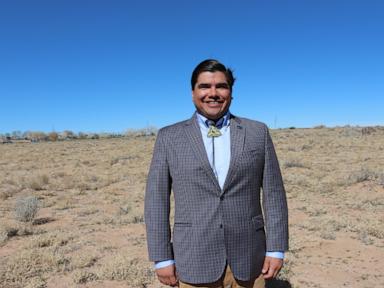
The federal government has a profound, legally binding trust responsibility to provide healthcare to American Indians and Alaska Natives. For over a year and a half, that mandate operated without a Senate-confirmed director at the helm of the Indian Health Service. Mark Cruz, a citizen of the Klamath Tribes of Oregon and former senior adviser to Health and Human Services Secretary Robert F. Kennedy Jr., has officially assumed the directorship following his confirmation by the U.S. Senate. He inherits an agency staggering under deep-seated systemic failures, chronic infrastructure decay, and high staff vacancy rates that threaten the health security of approximately 2.8 million Native people across the country.
The Reality of Chronic Underfunding
Money is the root of the operational decay. The Indian Health Service has long endured funding models that fall severely short of actual need.
Unlike standard federal discretionary programs, the historical funding allocation for Native health systems operates on a fraction of what per capita expenditures reach in other federal programs like Medicare or the Veterans Health Administration. When a clinic in a remote region of South Dakota lacks the basic budgetary capacity to retain competitive nursing salaries, the local population absorbs the blow.
Advanced appropriations have been floated as a remedy to shield the agency from congressional budget stalemates. Yet, legislative momentum remains fragile. Cruz steps into his four-year term facing a financial landscape where inflation eats away at purchasing power faster than Congress can pass appropriations bills.
Infrastructure Failures and the Facilities Backlog
Walk into select IHS-managed facilities, and the structural neglect becomes immediately apparent. Crumbling roofs, outdated plumbing, and aging HVAC units plague hospitals that serve as the sole medical lifelines for entire reservations.
The physical backlog for facilities construction stretches back decades. While recent budgetary discussions have targeted billions to address these dilapidated structures, construction timelines crawl at a glacial pace.
Supply chain bottlenecks and administrative red tape compound the physical decay. A broken diagnostic machine in a rural clinic can take months to replace, turning minor medical issues into emergency evacuations. Cruz must determine how to fast-track these physical repairs without getting bogged down in federal procurement bureaucracy.
The Workforce Drain
Buildings do not treat patients. People do.
The Indian Health Service suffers from persistent staffing shortages across nearly every clinical category. Physicians, nurses, pharmacists, and mental health professionals routinely bypass IHS facilities in favor of private hospital networks offering higher compensation packages and lighter caseloads.
To bridge the gap, facilities rely heavily on temporary traveling medical staff. This dependency drains financial resources at an unsustainable rate while disrupting continuity of care for patients managing chronic conditions like diabetes or kidney disease.
During his confirmation process before the Senate Committee on Indian Affairs, Cruz pointed to the reduction of staff vacancy rates as an immediate priority. Translating that goal into concrete hires requires aggressive recruitment incentives and systemic updates to how the agency processes credentials.
Modernizing Electronic Health Records
An invisible barrier to efficient care is the agency's antiquated digital infrastructure. Modern health administration relies on interoperable, lightning-fast electronic health record systems that allow patient history to transfer securely between tribal clinics, urban Indian organizations, and external regional hospitals.
The current digital framework within many IHS sectors resembles a patchwork quilt of outdated software. Clinicians spend valuable hours wrestling with software glitches rather than focusing on patient diagnoses. Modernizing this infrastructure demands significant capital investment and meticulous technical execution. If Cruz fails to overhaul these digital systems, administrative bottlenecks will continue to impede patient outcomes regardless of budget increases.
Urban Indian Health Realities
While much of the media focus centers on reservation clinics, urban Indian organizations face distinct crises. A significant percentage of the American Indian and Alaska Native population lives off-reservation in metropolitan centers.
These urban clinics frequently operate on shoestring budgets while serving diverse, transient populations. Securing Medicaid parity and stable funding streams for these urban centers remains an uphill battle in Washington. Tribal consultation policies historically lean heavily toward federally recognized tribal nations on trust land, occasionally leaving urban health advocates fighting for a seat at the table. Cruz has pledged to engage early, listen carefully, and maintain transparency with all stakeholders, putting his commitment to urban health providers to an immediate test.
The challenges confronting Mark Cruz are neither new nor hidden. They are entrenched, systemic, and structural. The test of his leadership will not be found in committee testimony or policy memos, but in whether remote clinics receive functioning equipment, whether nurses stay, and whether the federal trust responsibility transforms from a legal obligation on paper into dependable care on the ground.