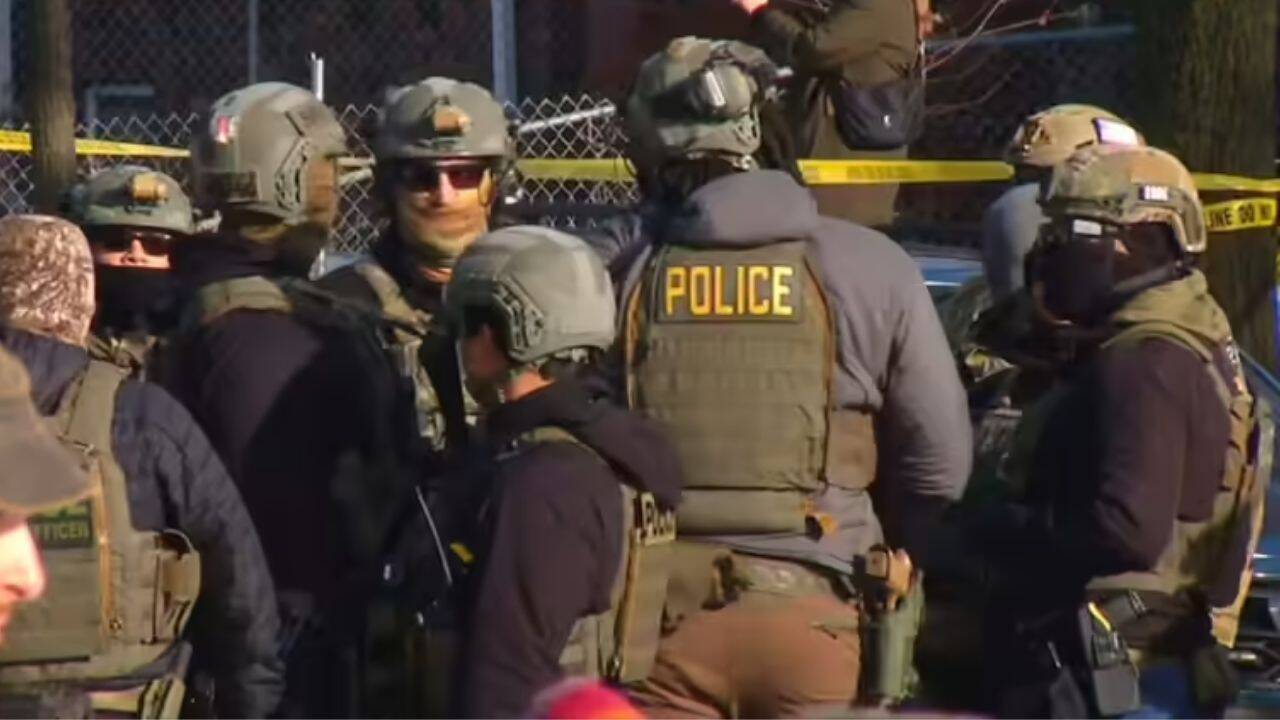
Immigration and Customs Enforcement has operated without a Senate-confirmed director for nearly a decade, a systemic administrative vacancy underscored by the White House's abrupt withdrawal of Lance Schroyer. When the administration pulled Schroyer's nomination following resistance from Kentucky Republican Senator Rand Paul, it exposed much more than a routine Capitol Hill stalemate. It laid bare an institutional design flaw that both political parties find remarkably convenient.
For years, the absence of a confirmed chief has allowed executive branches of varying political stripes to bypass congressional oversight entirely. An acting director answers almost exclusively to the White House and the Department of Homeland Security, shielding major enforcement directives from the grueling, transparent vetting process of a Senate confirmation hearing. If you liked this post, you might want to check out: this related article.
Schroyer, a former Oklahoma Highway Patrol trooper and close ally of DHS Secretary Markwayne Mullin, was supposed to break this streak. Nominated in June to spearhead the administration's aggressive enforcement agenda, his path hit a brick wall in the Senate Homeland Security and Governmental Affairs Committee. Senator Paul stalled the nomination, demanding answers regarding federal investigations into agent-involved shootings in Minnesota. Rather than submit to a public airing of operational controversies, the White House yanked the nomination altogether.
This maneuver highlights a quiet truth about modern federal governance. Temporary leadership is often preferred over accountable leadership. For another look on this story, check out the latest coverage from USA Today.
Consider the mechanics of the acting appointment. Under the Federal Vacancies Reform Act, an administration can install temporary officials without enduring the bruising political battles required to secure a permanent chief. When an agency as sprawling and controversial as ICE is run by an indefinite succession of acting chiefs—such as David Venturella following Todd Lyons' departure—policy can shift dramatically on the whim of executive leadership without lawmakers ever holding a formal vote on the agency's operational doctrine.
Critics on both sides of the aisle frequently decry the erosion of institutional norms, yet neither party moves with genuine urgency to fix the underlying statute. Democrats worry about unchecked enforcement mechanisms, while populist conservatives often view Senate-confirmed bureaucrats as potential bottlenecks to executive authority. The result is a perpetual state of limbo where accountability is diffused, and congressional committees are reduced to trading press releases rather than exercising constitutional oversight.
The collateral damage of this vacancy is borne by the rank-and-file personnel within the agency and the integrity of the oversight process itself. When leadership is perpetually temporary, long-term strategic planning takes a backseat to short-term political mandates. Morale fluctuates, and public trust erodes as policy is dictated from executive suites rather than shaped through rigorous legislative scrutiny.
As long as the White House can bypass the confirmation gauntlet through the revolving door of acting leadership, the title of ICE director will remain little more than a placeholder, and the agency will continue to operate in the constitutional shadows.