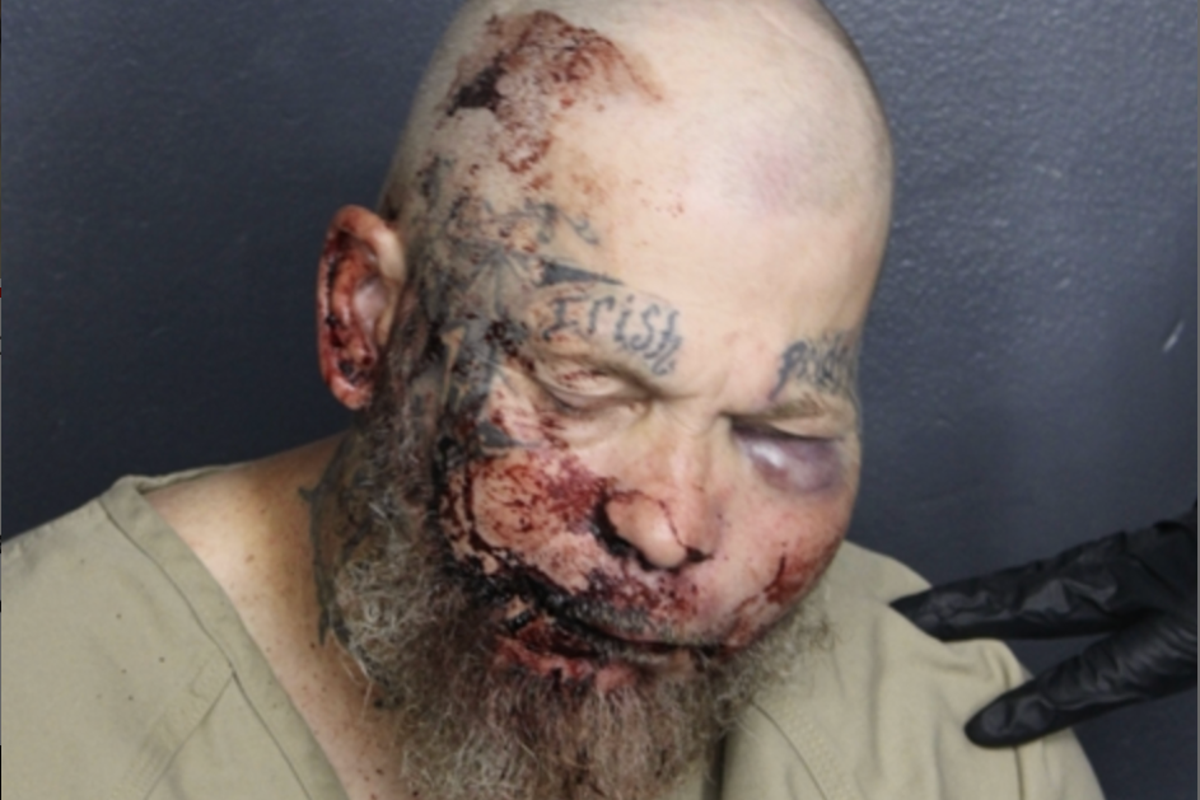
The image is stark. A bruised, blood-stained face stares out from a booking photograph, one eye swollen purple, dried crimson caked around the nose and mouth. This is the mugshot of Ronald Jeffery Johnson, a fifty-one-year-old Florida man whose arrest at Broward Health Medical Center made national headlines after he allegedly challenged a uniformed officer to a fight and triggered a violent struggle.
Tabloid coverage fixates on the shock value of the facial trauma. It treats the photograph as a grotesque curiosity, a single isolated snapshot of institutional breakdown.
That framing misses the larger structural failure. Emergency rooms across the country have quietly transformed into high-stakes combat zones where overworked medical staff and under-equipped security personnel stand defenseless against rising systemic hostility.
When a 240-pound individual can march into a major metropolitan healthcare facility, terrorize a registration desk, and openly invite a physical altercation with law enforcement, the issue extends far beyond one troubled suspect. It points directly to a medical infrastructure buckling under the weight of untreated psychiatric distress, systemic overflow, and chronic under-protection.
The Anatomy of a Hospital Breakdown
Hospitals are designed for healing. They are constructed with open floor plans, accessible waiting areas, and a culture rooted in empathy. These qualities make them uniquely vulnerable.
Unlike airports or courthouses, a medical center cannot simply implement rigid checkpoint screening without compromising its core mandate to save lives. Patients arrive in acute distress, experiencing severe physical pain, drug withdrawal, or sudden psychiatric breaks.
Consider a hypothetical emergency ward on a standard Friday night. Dozens of patients crowd the seating areas. Triage nurses face hours-long backlogs. Security guards, often underpaid and lacking advanced de-escalation training for violent psychotic episodes, are spread dangerously thin across multiple wings.
When frustration boils over, the physical environment offers little protection. Registration desks feature low counters. Waiting rooms lack physical barriers. The transition from a verbal dispute to a physical assault happens in seconds, long before an off-duty detail officer can intervene.
In Johnson's case, reports indicate he was already shouting at medical personnel, creating immediate terror among surrounding patients before a single officer stepped in. The facility had become unsafe long before the punches were thrown.
The Burden on Law Enforcement and Medical Staff
First responders are facing an impossible equilibrium. Police officers stationed at hospitals find themselves acting as makeshift correctional guards, psychiatric evaluators, and frontline bouncers all at once.
The physical toll is documented in emergency room logs nationwide. Officers leave shifts with torn uniforms, bone fractures, and lacerations requiring multiple stitches. Meanwhile, nurses and administrative staff absorb the psychological fallout.
Hospital administration often treats these violent encounters as occupational hazards rather than preventable safety failures. Staff retention plummets. Experienced nurses leave the bedside, exhausted by a daily routine that increasingly involves dodging physical threats.
The criminal justice system downstream offers little corrective momentum. Suspects are processed, booked into county jails on charges like aggravated battery on a first responder and disorderly conduct, and cycled back into the community without receiving the underlying behavioral health interventions required to prevent recurrence.
Re-Engineering Institutional Safety
Protecting healthcare workers requires a departure from reactive policing. Simply posting a uniformed officer near the front desk is a superficial fix for a deep operational wound.
Institutions must look toward comprehensive structural hardening that preserves patient dignity while enforcing strict behavioral boundaries. Metal detectors, panic buttons integrated directly into administrative badges, and secure architectural partitions between waiting areas and triage staff are becoming operational necessities rather than luxury upgrades.
Furthermore, behavioral health crisis teams need to be embedded directly within emergency triage. When a patient arrives exhibiting signs of severe mental destabilization or agitation, routing them immediately past standard registration desks toward specialized psychiatric stabilization units can defuse tension before it escalates to violence.
The bruised face in the booking record serves as a warning sign. Until hospitals are equipped to handle the human volatility walking through their sliding glass doors, these violent confrontations will remain an inevitable fixture of modern civic life.
The system continues to treat the symptom while ignoring the wound, waiting for the next emergency room clash to capture public attention.
Inside the Broward County Main Jail
This archived footage examines the legal proceedings and administrative challenges surrounding use-of-force incidents within Broward County correctional and medical facilities.