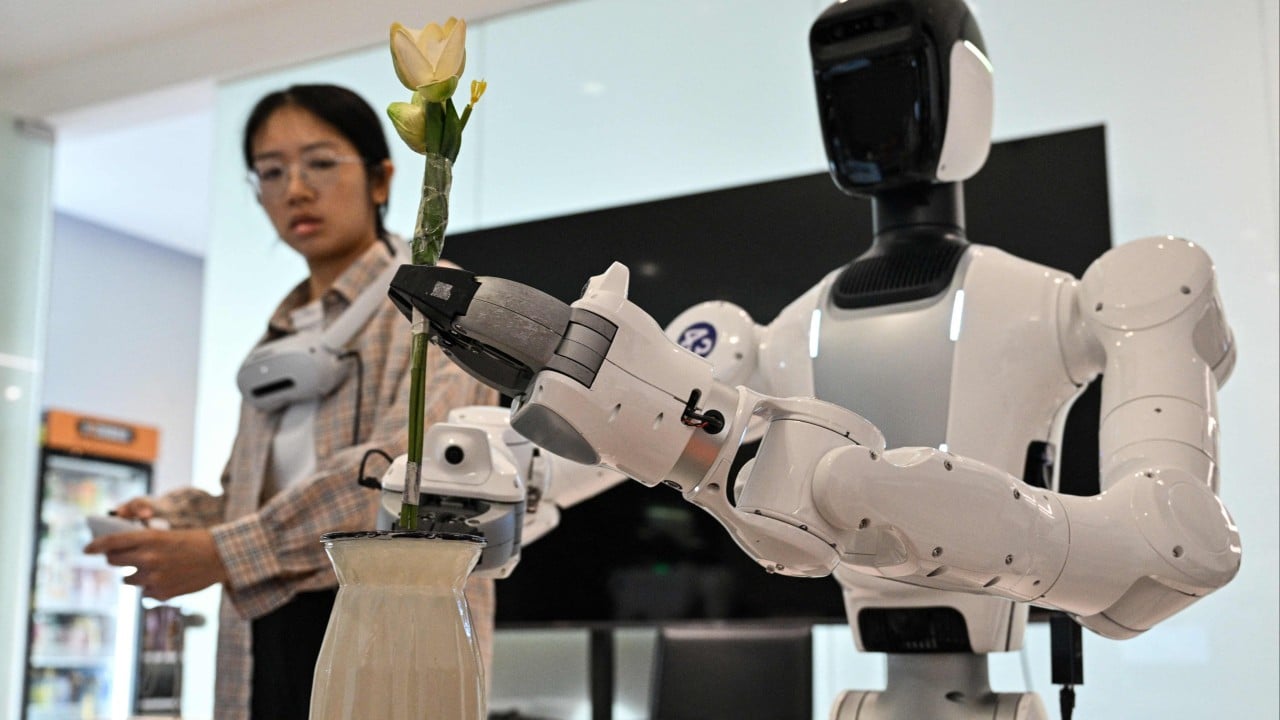
Hong Kong is losing its grip on the artificial intelligence revolution, falling behind its neighboring Greater Bay Area peers not because of a lack of capital or academic talent, but due to a fundamental mismatch between its financialized economy and the physical hardware demands of modern machine learning. While cities like Shenzhen and Guangzhou have spent years anchoring their growth in hardware manufacturing, electronics assembly, and rapid prototyping, Hong Kong remains chained to traditional real estate and financial services. This structural inertia has turned the territory into an external observer rather than an active participant in the regional machine intelligence boom.
The modern intelligence economy is physical long before it is digital. Training large models and running high-performance edge computing requires massive physical footprints, specialized server farms, uninterrupted power supplies, and immediate proximity to semiconductor supply chains. Shenzhen built its dominance on the ability to move from silicon design to mass-produced hardware in days. Hong Kong, by contrast, treats tech policy as a matter of financial grants and office park ribbon-cuttings rather than heavy industrial integration.
The Cost of Financialization
For decades, the territory relied on its identity as a transactional gateway. Money moved through cleanly, property values soared, and tertiary services dominated the gross domestic product. That playbook fails entirely in an era defined by compute clusters and proprietary hardware nodes.
Take data infrastructure as a prime example. Constructing hyperscale data centers requires vast tracts of land, heavy cooling apparatuses, and immense electrical capacity. In a city where commercial square footage commands astronomical rents, building localized computing power is often priced out before blueprints leave the desk. Developers prefer luxury towers over server warehouses. Consequently, local enterprises must rent computing capacity across the border, creating an operational dependency that undercuts local technical sovereignty.
Cross-border friction compounds the physical disadvantage. Initiatives like the Hetao Shenzhen-Hong Kong Science and Technology Innovation Cooperation Zone attempt to marry research capabilities with mainland industrial muscle. Yet, regulatory divergence remains a stubborn bottleneck. Data security laws, divergent tax compliance rules, and separate legal frameworks mean that moving datasets across the boundary often involves bureaucratic friction that slows down iteration cycles. In a sector
Inside Hong Kongs Artificial Intelligence Supply Chain Failure
technology, business
Hong Kong is missing its window to dominate the Greater Bay Area artificial intelligence supply chain, trapped between historical financial comfort and structural inertia while Shenzhen and Guangzhou build the hardware and software pipelines of the next industrial era.
The core issue is not a lack of capital or raw brainpower. The city possesses billions in reserves and world-class universities that produce brilliant computer science graduates year after year. Yet, when it comes to translating academic talent into production-grade infrastructure, cross-border hardware integration, and scalable artificial intelligence supply chains, Hong Kong routinely falters behind its mainland neighbors. Shenzhen handles the silicon and manufacturing velocity. Guangzhou commands heavy data integration and enterprise-scale deployment. Hong Kong, meanwhile, remains an expensive office address with minimal manufacturing footprint and a persistent disconnect from the heavy industrial backing required to train large-scale models.
The Structural Disconnect in Regional Manufacturing
Silicon does not materialize in a financial vacuum. To build a functioning artificial intelligence supply chain, a region needs more than venture capital funds and pitch decks. It needs heavy fabrication plants, specialized cooling infrastructure, high-density data centers, and low-latency physical proximity to semiconductor packaging facilities.
Hong Kong spent decades positioning itself as a service-oriented economy built on trade arbitration, banking, and real estate. That legacy creates an invisible gravity well. Land costs are prohibitive for industrial-scale server farms. Power grids, while reliable, face severe regulatory hurdles when scaled to handle the immense electricity demands of modern graphics processing unit clusters.
Just across the border, Shenzhen solved this equation years ago. Municipal subsidies, streamlined land allocation for high-tech zones, and immediate access to hardware component suppliers have turned Guangdong province into an integrated machine. A hardware startup in Shenzhen can move from a schematic to a prototype motherboard in days. In Hong Kong, founders spend months navigating commercial leasing and logistics just to import specialized development kits.
Talent Drain and the Academic Ivory Tower
University laboratories in Pokfulam produce groundbreaking research papers on neural networks and natural language processing every month. The citation metrics look stellar on paper. But academic prestige rarely translates into industrial execution without a deliberate bridge.
The local ecosystem suffers from a profound mismatch between academic incentives and commercial realities. Professors are rewarded for journal publications, not for commercializing high-throughput computing infrastructure or building resilient supply pipelines. Meanwhile, top-tier engineering graduates routinely look northward to tech giants in Shenzhen or eastward to global hubs because local enterprises rarely offer the infrastructure required to work on foundational model training at scale.
When a local firm attempts to scale an artificial intelligence project, it often discovers a severe shortage of localized talent experienced in supply chain orchestration, data pipeline engineering, and hardware-software co-design. They are left importing expensive overseas consultants or outsourcing core development to teams in mainland tech parks, hollowing out the local value proposition.
The Capital Paradox
Money is supposed to solve everything. Hong Kong financial institutions sit on mountains of liquidity, and the government regularly rolls out ambitious innovation funds, matching grants, and incubation spaces.
Yet venture capitalists in the city remain fundamentally risk-averse. Decades of backing real estate and traditional trade have bred a financial culture that demands predictable, short-term yields. Artificial intelligence infrastructure requires long-term capital commitment with uncertain payoffs over five to ten years. Software platforms can scale quickly with minimal overhead, but the underlying supply chain—the chips, the servers, the physical infrastructure—requires patient, heavy investment.
Startups pitching software wrappers or consumer-facing chatbots find funding relatively easily. Those attempting to tackle deep-tech bottlenecks, hardware acceleration, or enterprise data sovereignty find themselves stranded in the Valley of Death, unable to secure the bridge financing needed to move from a proof-of-concept to an industrial deployment.
Geopolitical Realities and Cross-Border Friction
No analysis of this supply chain deficit is complete without addressing the geopolitical overlay. Export controls, semiconductor restrictions, and shifting regulatory frameworks between jurisdictions have complicated the procurement of high-performance computing hardware.
Hong Kong occupies an awkward middle ground. It maintains a separate customs territory and distinct legal framework, which historically served as its superpower. In the current technological cold war, however, that separation creates administrative drag. Procuring advanced processors involves complex compliance checks, and mainland partners often find it simpler to source components and build domestic supply chains entirely within mainland economic zones rather than routing operations through Hong Kong intermediaries.
The city attempted to market itself as a super-connector between China and the international community. In the realm of artificial intelligence, however, connectivity requires shared standards, seamless data flows, and interoperable hardware. When cross-border data transfer remains restricted and compliance overhead mounts, the super-connector model begins to look less like a bridge and more like a toll booth that companies prefer to bypass.
Reversing the Trajectory
Fixing this structural lag requires more than rebranding exercises or another round of government committee reports.
First, the city must rethink land allocation. Carving out dedicated, subsidized technology zones with heavy power provisioning and specialized cooling infrastructure is non-negotiable if Hong Kong wants to host serious data centers and hardware testing grounds.
Second, financial regulations must evolve to reward risk in deep tech. Institutional investors need tax incentives or co-investment structures that absorb the initial shocks of hardware-heavy artificial intelligence ventures.
Finally, policymakers must drop the pretense of competing with Shenzhen on manufacturing volume and instead double down on what remains uniquely viable: rigorous data governance, cross-border legal advisory for intellectual property, international financing syndication, and deep research collaboration that feeds directly into Greater Bay Area production lines rather than stopping at the border.
If Hong Kong continues to treat artificial intelligence as a software trend rather than an industrial supply chain revolution, it risks becoming a permanent spectator in the most consequential technological transformation of the century. The window to integrate is closing, and the industrial gravity of the north waits for no one.