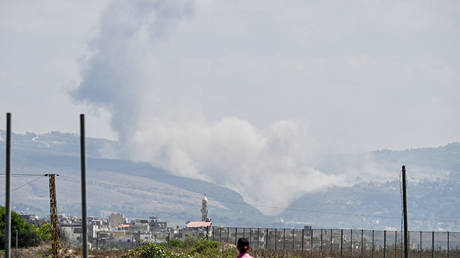
The official death toll in Nepal stands at 734, but numbers printed on government ledgers in Kathmandu fail to capture the scale of the cataclysm unfolding across the high river corridors. Five days after an ice-rock avalanche on the southern slope of Lirung Peak fractured a glacial wall near the Tibet border, sending a wall of mud, stone, and water surging down the Bhote Koshi and Trishuli basins, the search operations have devolved into a desperate race against geography. Nearly 2,500 people remain unaccounted for in Nepal alone, while across the border in Tibet, another 546 are missing alongside 16 confirmed dead. This is not merely a seasonal monsoon overflow. It is a high-altitude structural shock that has laid bare the lethal vulnerability of Himalayan infrastructure, exposing how uncalculated industrial development collided with a ticking cryospheric time bomb.
The Anatomy of an Alpine Collapse
Water does not forgive bad engineering, and mountain slopes do not negotiate with climate physics. When the high-altitude fracture occurred on Lirung Peak, it unleashed a flash flood that bypassed traditional warning windows entirely. Unlike heavy monsoon rains that swell river basins gradually over days, glacial outbursts and ice-rock avalanches act like hydraulic hammers. They pick up millions of tons of loose scree, turning liquid water into a dense, fast-moving slurry of slurry and boulders that scours riverbeds down to bedrock.
By the time the torrent slammed into the border districts of Rasuwa, Nuwakot, and Dhading, it carried enough kinetic energy to flatten entire border complexes and rip steel suspension bridges from their anchorages. Hydropower installations, heavily concentrated along these turbulent Himalayan corridors to feed a regional energy hunger, bore the brunt of the impact.
More than 900 missing individuals are construction and operational workers tied directly to these river-valley energy projects. They were stationed in quarters and tunnel networks that became deadly traps when millions of cubic meters of debris choked the outlets. At the under-construction Upper Trishuli-1 project and surrounding sites, rescue squads from the Nepal Army and specialized foreign teams face an agonizing bottleneck. Soldiers and engineers are working around the clock to clear packed mud from subterranean tunnels, inserting feeder pipes to pump oxygen into pockets where survivors might still hold out. Every hour of delay diminishes the margin of survival, while intermittent rain showers continue to trigger secondary slumps that threaten the rescue crews themselves.
The Logistics of Despair
Reaching the epicenters of the destruction requires navigating a geography that has effectively fractured into isolated islands. Major national arteries connecting Kathmandu to the northern frontier are blocked by massive landslides, turning what should be a straightforward supply line into an obstacle course. Heavy machinery struggles to find purchase in unstable terrain where whole mountainsides have sloughed off into the canyons.
In the valleys below, the immediate crisis has shifted from survival of the impact to a grinding struggle against disease and dehydration. Floodwaters obliterated municipal water systems, snapping supply pipes and contaminating local wells. Displaced communities and injured patients crammed into makeshift clinics now face acute shortages of antibiotics, clean water, and fuel. Local health outposts, operating on dwindling stocks, are overwhelmed by trauma cases and gastroenteritis risks.
International response coordinators have mobilized heavy airlifts, bringing in specialized tunnel-probing equipment, forensic DNA-analysis kits, and modular steel bridges to reconnect severed routes. Yet, ground distribution remains crippled. Even when relief supplies touch down at regional hubs, getting those boxes of water-purification tablets and portable generators to the families huddled on remote hillsides requires a pack-mule effort reminiscent of centuries past.
Blind Spots in Early Warning
The tragedy exposes a glaring systemic failure in cross-border disaster communication and high-altitude monitoring. The Himalayas do not recognize national boundaries, yet early warning systems often stop abruptly at political frontiers. While local telecommunications networks broadcast emergency alerts to mobile phones in districts like Rasuwa just as river spikes were registered, the lead time was measured in minutes. For workers sleeping deep inside river-intercepting hydropower tunnels, mobile alerts are useless.
Environmental analysts have long warned that the rapid proliferation of run-of-the-river hydroelectric plants in narrow, seismically active gorges creates high-density human exposure zones. When developers calculate risk, they frequently rely on historical flood baselines that fail to account for accelerating glacial melting and warming permafrost in the upper ranges. A statistical model built on twentieth-century weather patterns is obsolete in a twenty-first-century alpine environment experiencing rapid cryospheric destabilization.
The financial fallout compounds the human cost. Over 93,000 people are officially categorized as affected, their livelihoods washed downstream alongside livestock, arable topsoil, and micro-enterprises. Tourism routes, including sections frequented by international trekkers and pilgrims heading toward the Tibet autonomous region, are broken for the foreseeable future. Foreign embassies continue to field hundreds of inquiries regarding uncontactable nationals, adding a complex geopolitical dimension to rescue prioritization.
As emergency teams continue their grim work in the tunnels of Rasuwa and the debris fields of the Bhote Koshi, the true test lies ahead. The monsoon season is far from over, and upstream hydrological stations report erratic river fluctuations that keep disaster management committees on perpetual edge. Rebuilding roads and clearing concrete-hard mud from buried infrastructure will take months, but repairing the shattered confidence of mountain communities living beneath unstable peaks will take a generation. The 734 dead are a stark marker of a changing planet meeting unprepared human design, and the rivers carrying the debris show no sign of slowing down